

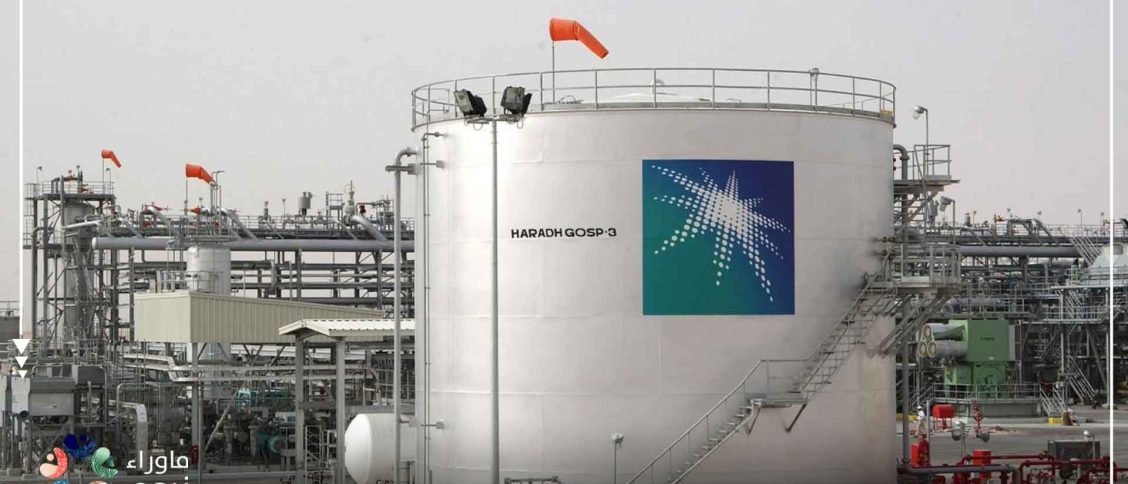
The decline in Saudi Arabia’s global investment appeal is no longer a passing concern—it has become a deepening crisis that threatens the very foundation of the Kingdom’s Vision 2030. Once dubbed the “crown jewel” of the Saudi economy, Aramco now finds itself repeatedly rejected by Wall Street and unable to attract new investment in its shares. Simultaneously, the International Energy Agency (IEA) has issued stark warnings about an impending oil glut, driven by Saudi Arabia’s insistence on ramping up production despite weak global demand. Together, these two forces form an explosive mix of internal financial failure and external market stagnation, rendering the Kingdom increasingly fragile.
Aramco’s IPO: A Stillborn Venture
In a telling sign of lost confidence, Bloomberg has reported that Aramco is failing to sell additional shares in global markets, with recent attempts snubbed by major Wall Street institutions. Crown Prince Mohammed bin Salman had once bet that listing Aramco would attract trillions of dollars to fund his megaprojects. But investors remain sceptical, seeing Aramco as a company burdened by political interference and financial liabilities.
The direct result? Saudi Arabia is turning to debt issuance instead of share sales—not as a strategy, but as a necessity. Global markets no longer see Aramco as a safe haven, but rather as a risky bet.
The IEA Rings the Alarm Bell: Oil Is Losing Its Shine
As if the IPO failure weren’t enough, the IEA’s latest warnings have doubled the pressure. The agency forecasted a significant surplus in oil supply due to increased production spearheaded by Saudi Arabia, clashing with declining global demand. Worse still, it slashed its demand growth forecast by a third compared to January, signalling the weakest pace since 2009 (excluding the COVID-19 crisis).
Every additional barrel the Kingdom pumps now risks going unsold, further dragging prices down and slashing oil revenues—Saudi Arabia’s primary source of income.
Today’s Debt, Tomorrow’s Burden
By issuing more debt instead of attracting equity, Saudi Arabia is merely postponing the crisis. Public debt continues to balloon, interest payments mount, and the economy remains dangerously oil-dependent. This is the very formula that led multiple nations to financial collapse when excessive borrowing replaced real economic diversification.
Currently, the Kingdom is walking the same path: borrowing to cover budget deficits, pouring billions into vanity megaprojects with little return, and watching oil markets wobble under the weight of oversupply and stagnation.
Between Glitzy PR and Harsh Reality
The official narrative still boasts of “economic diversification” and “financial sustainability.” But the numbers paint a starkly different picture:
- Aramco’s IPO lost its investor appeal.
- Oil revenues face steep declines due to oversupply and weak demand.
- Public debt is set to skyrocket with every new bond issuance.
- Megaprojects like NEOM continue to consume billions with no tangible output.
This contradiction between polished media campaigns and bleak economic facts is becoming impossible to hide.
Wall Street’s ‘No’ Is a Political Message
Wall Street’s refusal to invest in Aramco is more than an economic decision—it’s a subtle political message. U.S. investors are fully aware that Aramco is not a free-market entity but a political tool of the Crown Prince, used to advance domestic and foreign agendas. This toxic blend of politics and business renders Aramco a dangerous investment.
Saudi Oil Policy: Short-Term Thinking, Long-Term Damage
Saudi Arabia’s insistence on increasing oil output despite market oversupply reflects dangerously short-term thinking. Instead of cutting production to stabilise prices, it is flooding the market in hopes of maintaining market share. The result? An inevitable price war—hurting all producers, especially the Kingdom itself, which needs high oil prices to sustain its bloated expenditures.
The Stock Market Cracks Under Pressure
The ties between Aramco, the oil market, and the Saudi stock exchange (Tadawul) are now fully exposed. Crown Prince MBS once dreamt of Tadawul joining the world’s top 10 markets. But reality bites:
- The Tadawul index has dropped over 9% since the beginning of 2025—one of the worst global performances.
- IPOs that were expected to bring foreign capital have failed, with average returns dropping from 27% in 2024 to just 4% in 2025.
- Foreign investors are pulling out, realising the market mirrors oil volatility more than it offers independent growth potential.
This toxic connection means that any crisis in Aramco or oil markets will immediately hit the Saudi financial market—amplifying losses and further eroding investor trust.
An Existential Economic Crisis
The message is clear:
- Aramco’s failure to attract investors leaves the Kingdom dependent on growing debt.
- Oil markets are on the brink of a deadly surplus that threatens revenue streams.
- Giant projects continue to drain resources with no real economic transformation.
- The Saudi stock exchange reflects these dangers through loss of confidence and declining foreign investment.
Saudi Arabia is not facing a temporary shock—it is in a full-blown economic identity crisis. Continuing down the same path means ballooning debt, falling oil prices, and vanishing global trust. This triangle alone could collapse the entire economic vision.
No PR campaign will save Aramco’s image on Wall Street. No imaginary oil surplus will rescue the Saudi economy. The only exit is through genuine diversification, structural reforms, and a hard reckoning that oil and debt are a formula for collapse—not for renaissance.


