

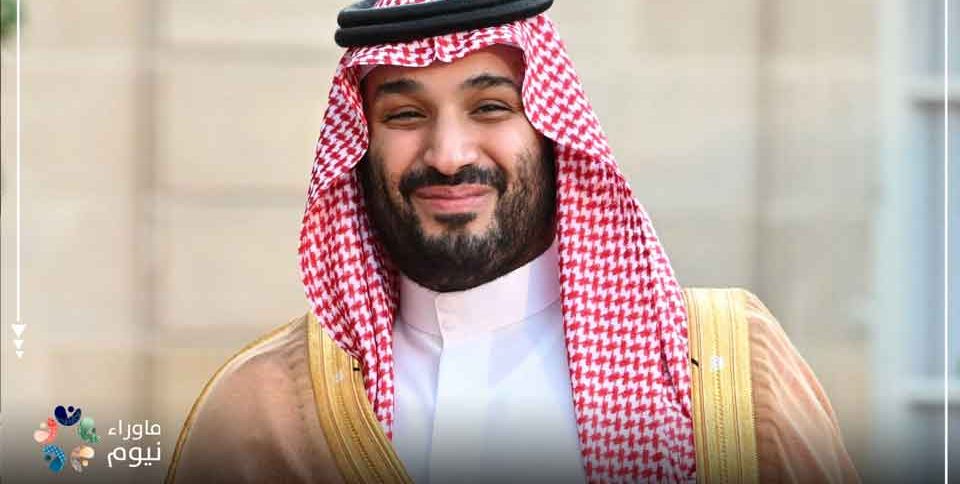
In today’s Saudi Arabia, governance no longer resembles a modern state governed by institutions—it is increasingly concentrated in the hands of a single man: Mohammed bin Salman. Over 34 sovereign, executive, and investment roles are held by the Crown Prince himself, with the remainder divided among just three of his closest allies. The result: a “quadruple state” with no real institutions, only hollow titles disguising absolute one-man rule.
A Man of Many Hats: MBS, the State-Personified
Mohammed bin Salman does not merely hold the official titles of Crown Prince and Prime Minister. He also chairs:
- The Council of Political and Security Affairs
- The Council of Economic and Development Affairs
- The National Risk Council
But the most alarming concentration of power lies in the economic and investment domains:
- Chairman of the Public Investment Fund (PIF)
- Chairman of NEOM
- Chairman of Red Sea Global
- Chairman of ROSHN Real Estate
- Chairman of Qiddiya Investment Company
- Chairman of Soudah Development
- Founding Chairman of AMAALA
This makes him the de facto CEO of the economy, the nation’s top real estate developer, and its largest investor—all roles that should be distributed among independent ministries and agencies.
National Strategy Under His Grip
Bin Salman’s dominance does not end with real estate and sovereign wealth. He chairs the Supreme Council of Aramco, the world’s largest oil company, and heads the General Authority for Military Industries. He also oversees the Kingdom’s strategic tech initiatives via the Supreme Space Council.
Even academia and philanthropy have not escaped his reach:
He controls the Misk Foundation, supervises the Hevolution Foundation, oversees nature reserves, the Martyrs’ Fund, and the Prince Mohammed Bin Salman College of Business and Entrepreneurship.
In short, Saudi Arabia is being run from a single office, with all security, economic, social, and educational files funneling into the hands of one man.
The Supporting Trio: A Complete Monopoly Network
Three other key figures support this system of absolute control:
- Abdulaziz bin Salman: Minister of Energy, also chairs electricity and atomic energy agencies, and presides over the boards of major universities like KAUST and KFUPM.
- Turki Al Alshikh: The regime’s entertainment czar, controlling music, sports, and global events, all used to polish the regime’s image.
- Yasir Al-Rumayyan: The influential governor of the PIF, simultaneously chairing Aramco, Ma’aden, Riyadh Air, golf ventures, and Newcastle United Football Club.
Together, the four men consolidate more than fifty senior governmental and economic roles, effectively running the country as a private enterprise.
The Collapse of Institutional Governance
This hyper-centralization of power carries dangerous consequences:
- No Separation of Powers: The same person creates policies, implements them, and praises their success—leaving no room for checks and balances.
- Paralyzed Institutions: Ministries and agencies are reduced to mere facades, with real decisions made behind closed doors.
- Conflict of Interest: When the head of the national investment fund also leads commercial mega-projects, personal and public interests blur dangerously.
- Fragile Stability: With the fate of the state tied to just four men, any disruption becomes a potential national crisis.
Despite constant rhetoric about Vision 2030, governance, and investment opportunities, any foreign investor can see the truth: business in Saudi Arabia is subject to personal whims, not institutional stability.
From Reform to Regression
What is unfolding in Saudi Arabia is not reform—it is a regression to pre-modern governance, where the ruler is the state, the source of wealth, and the sole authority. Decisions are handed down unilaterally, devoid of shared governance or accountability.
What the Future Holds
The monopolization of power may appear strong in the short term, but it sows the seeds of systemic collapse:
- Loss of Internal Legitimacy: Citizens see a state run not for the people, but for a narrow inner circle.
- International Isolation: Autocracy, repression, and vested interests damage the Kingdom’s credibility.
- Institutional Decay: The longer this monopoly persists, the more state institutions rot—making future transitions dangerously unstable.
Saudi Arabia Inc.: Four Executives, One Shareholder
Saudi Arabia is no longer a nation of institutions. It is a private firm led by four executives, with Mohammed bin Salman as the sole shareholder. Positions are handed out like stocks. Decisions resemble private directives, not public policy.
This model may flatter the Crown Prince’s ego today, but it exposes the nation to immense risk. Without independent institutions, oversight, or power-sharing, the country is sliding toward a primitive form of rule in a modern disguise—projecting an image of modernization while internally cultivating long-term political and economic disaster.


