
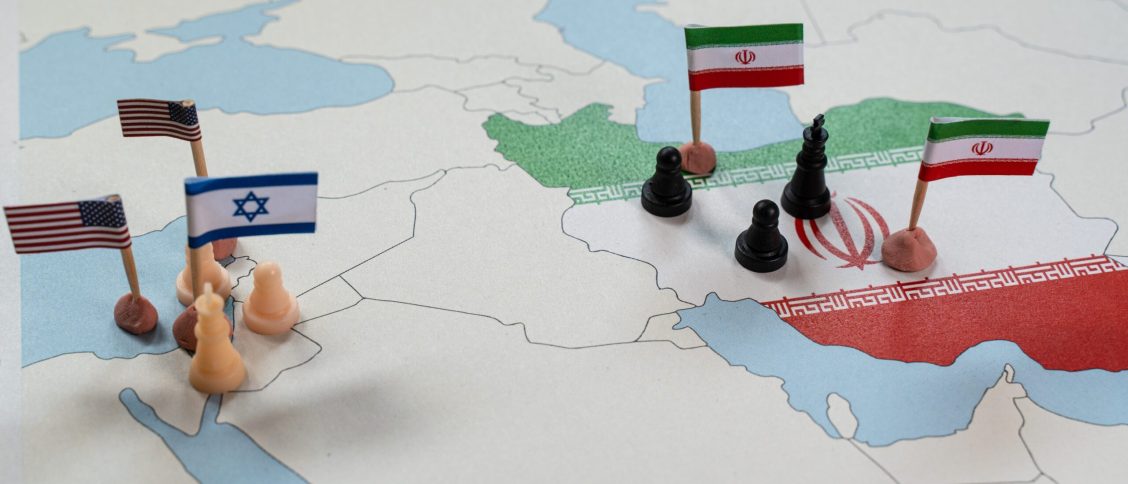
Over the past few years, Saudi Arabia attempted to recalibrate its relationship with Iran, shifting from open confrontation to a policy of de-escalation and diplomatic engagement. This shift was not ideological—it was strategic. Riyadh sought a more stable regional environment that would allow it to advance ambitious economic projects and attract long-term foreign investment.
But the recent regional war has exposed the limits of that approach.
Instead of delivering stability, de-escalation has left Saudi Arabia exposed to the very threats it aimed to avoid. The kingdom now finds itself facing direct and indirect security risks, caught in a rapidly escalating regional conflict it tried to sidestep.
The question is no longer whether de-escalation was the right choice. The question is what it cost—and how it reshaped Saudi Arabia’s position inside a conflict it cannot fully control.
A Strategic Shift Built on Fragile Assumptions
Saudi Arabia’s pivot toward Iran was swift and significant. After years of framing Iran as a primary regional threat, Riyadh moved toward restoring diplomatic ties and reducing tensions. The objective was clear: manage the conflict instead of escalating it.
This shift was closely tied to Saudi Arabia’s economic ambitions. Mega-projects, foreign investment flows, and long-term development plans all depend on regional stability. Reducing the risk of confrontation with Iran was seen as a necessary step toward securing that stability.
But the strategy relied on a critical assumption—that diplomatic engagement could alter Iran’s behavior without changing the balance of power on the ground. The war has exposed the weakness of that assumption.
Military escalation did not stop. Attacks did not recede. Instead, the conflict expanded, reaching sensitive areas across the Gulf and pulling Saudi Arabia back into the center of regional tensions.
De-escalation Without Security
One of the core objectives of Saudi Arabia’s new approach was to reduce direct security threats. That objective has not been achieved.
Recent attacks targeting military positions, strategic infrastructure, and assets linked to U.S. presence in the region demonstrate that Saudi Arabia remains deeply vulnerable to the consequences of regional conflict. The paradox is clear.
Saudi Arabia attempted to avoid direct confrontation—but could not escape its effects.
Geography, strategic infrastructure, and its military alignment with the United States ensure that the kingdom remains part of the equation, whether it chooses to engage or not.
In practice, de-escalation did not remove risk. It may have reduced preparedness for it.
The possibility of renewed attacks from regionally backed armed groups further complicates the security landscape, pulling Saudi Arabia back toward the very threats it sought to neutralize.
Economic Ambitions Under Pressure
The economic implications are equally serious. Saudi Arabia’s transformation agenda depends on sustained stability. Large-scale projects require predictable conditions, investor confidence, and long-term security guarantees. The current war undermines all three.
Foreign investors are watching closely. Rising tensions increase perceived risk, which directly affects investment decisions. Some international events have already been postponed or canceled, reflecting growing uncertainty.
At the same time, prolonged conflict may force the Saudi government to reallocate spending priorities—shifting resources toward defense and security at the expense of development projects.
This creates pressure on timelines associated with Vision 2030 and increases strain on public finances, especially if revenues fluctuate while expenditures rise.
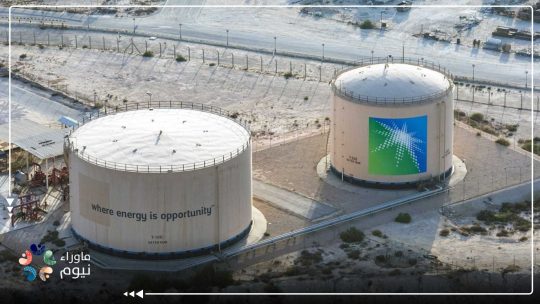
The energy sector—the backbone of the Saudi economy—is also directly exposed. Disruptions to production, export routes, or price stability could further complicate the economic outlook.
A Political Balancing Trap
Politically, Saudi Arabia is navigating a narrowing set of options. On one hand, it seeks to avoid direct military confrontation. On the other, it cannot fully detach itself from the consequences of the conflict. This balancing act reflects a deeper constraint: there are no low-cost options.
Escalation carries significant risk. De-escalation has not delivered security. At the same time, Saudi Arabia’s relationships with major powers add another layer of complexity. The kingdom depends on its strategic partnership with the United States, yet it also seeks a degree of autonomy in its decision-making.
This tension could generate increasing external pressure—particularly if calls grow for deeper Saudi involvement in the conflict.
Domestically, concerns are also rising. Security risks, economic uncertainty, and broader instability are beginning to shape internal calculations, making the management of this phase more sensitive.
A Failed Bet or a Painful Transition?
Saudi Arabia’s shift from confrontation to de-escalation was an attempt to reposition itself within the region. But it collided with a reality far more volatile than anticipated.
The war has demonstrated a fundamental limitation: stability cannot be secured through diplomacy alone in a region defined by overlapping conflicts and competing power structures.
Saudi Arabia now faces a dual challenge—protecting its security while preserving its economic trajectory in an unstable environment.
The de-escalation strategy has not delivered its intended results. Yet reversing course is neither simple nor without cost. This is the core dilemma.
How does a state adjust its strategy in the middle of a storm—without being pulled into a war it does not want, or drifting into a position of strategic weakness it cannot afford?
In a region where power dynamics shift rapidly, changing rhetoric is not enough.
Real power lies in the ability to adapt to reality—not in the assumption that reality will adapt to strategy.
البوست
Saudi Arabia tried to avoid war with Iran through diplomacy. It restored relations. Reduced tensions. Bet on stability.
But the war proved something else.
De-escalation didn’t protect the kingdom.
Attacks continued. Risks expanded.
And Saudi Arabia found itself back inside the conflict it tried to escape.
The strategy wasn’t neutral—it was fragile.
Now the real problem is clear:
You can’t de-escalate a conflict if the balance of power never changed.
التصميم
How Saudi Arabia’s Strategy to Contain Iran Collapsed Under the Pressure of War