
The threat facing Saudi Arabia is no longer abstract or distant. It is explicit, mapped, and publicly signaled. When power plants are identified and accompanied by warnings such as “say goodbye to electricity,” the message is not symbolic. It reflects a shift toward infrastructure warfare—where the target is not the military front, but the foundation of daily life.
Saudi Arabia now faces a dual pressure. On one side, a growing external threat capable of targeting its most sensitive systems. On the other, increasing strategic pressure to enter a broader confrontation it may not be prepared to manage—militarily, economically, or internally.
Between the risk of nationwide blackouts and a shifting U.S. posture that moves from protection to pressure for escalation, the kingdom appears positioned at the edge of a conflict larger than its own calculations.
Infrastructure as the Battlefield
The warnings about targeting electricity infrastructure are not rhetorical. They reflect a transformation in how modern conflicts are conducted.
War is no longer defined solely by direct military engagement. It is increasingly executed through precision attacks on critical systems: electricity, water, communications, and energy.
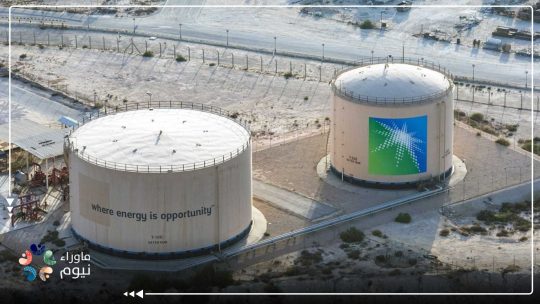
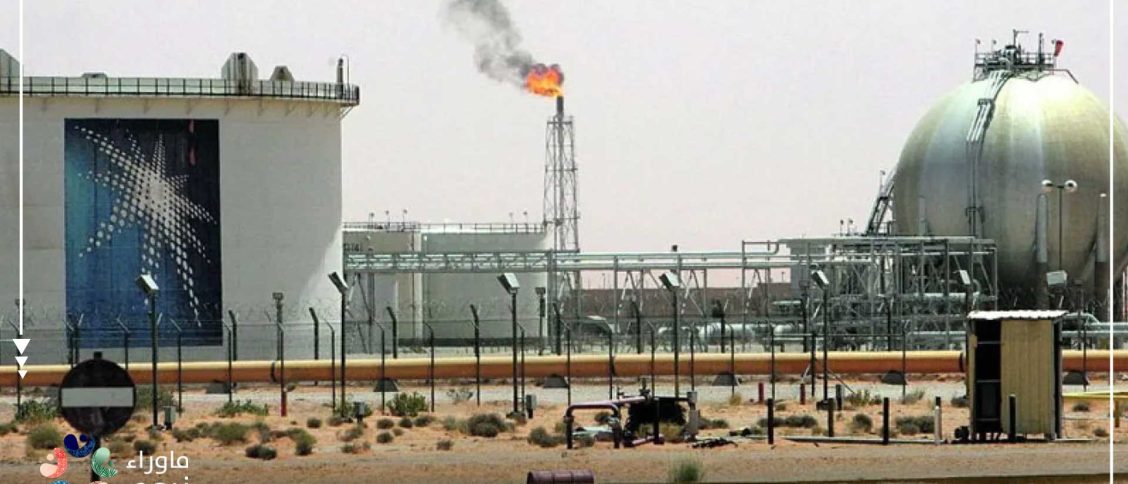
Saudi Arabia’s economic and geographic structure amplifies this vulnerability. The country relies heavily on centralized power generation, particularly in the eastern regions. These facilities are not only sources of electricity; they sustain industrial production, oil operations, water systems, and urban life.
A targeted strike on these installations would not result in localized disruption. It would trigger cascading effects: widespread blackouts, halted industrial output, disruption to desalination systems, and breakdowns in communication networks.
In practical terms, disabling electricity means disabling the state.
The exposure is compounded by geography. Many of these facilities are located near coastal areas, placing them within range of missiles and drones. In an escalating conflict, they become accessible targets.
From Protection to Pressure: A Shift in U.S. Strategy
At the same time, the role of the United States in this equation appears to be evolving.
For decades, Washington positioned itself as a security guarantor for Saudi Arabia. Today, the signals suggest a more complex approach—one that does not stop at defense, but increasingly encourages Saudi participation in confrontation.
This shift carries significant implications.
Direct involvement in a war with a regional power such as Iran is not a tactical adjustment. It is a strategic escalation with long-term consequences for the entire region.
For the United States, such a posture may align with a broader strategy of managing conflict without bearing its full cost. For Saudi Arabia, however, participation would mean exposing its territory, infrastructure, and population to unprecedented levels of risk.
The contradiction is evident.
A state that has spent years attempting to avoid direct confrontation may now find itself being drawn into one—not through internal strategy, but through external pressure.
Internal Fragility Under External Threat
The critical question is not only whether Saudi Arabia can be targeted, but what happens if it is.
Despite advanced infrastructure, the system carries inherent vulnerabilities in a wartime context. Centralized networks and exposed installations make comprehensive protection difficult against precision attacks.
A sustained disruption in electricity supply would quickly escalate beyond a technical issue. Oil production could be interrupted. Water supply would be affected through the shutdown of desalination plants. Major cities would experience service breakdowns, placing immense strain on security and emergency systems.
Such scenarios are not extreme projections. They are direct consequences of systemic dependence on uninterrupted energy flow.
In highly urbanized environments built on continuous services, the margin for disruption is minimal. What begins as infrastructure damage can rapidly evolve into a broader stability crisis.
An Economy Directly Exposed
The economic dimension of this risk is equally severe.
Saudi Arabia’s fiscal model remains anchored in oil revenues. Any disruption to production or export capacity directly affects state income and financial stability.
At the same time, the kingdom’s broader economic transformation strategy depends on attracting foreign investment. That strategy assumes a stable environment.
If the country becomes an active conflict zone—or even a high-risk environment—investor confidence is likely to decline rapidly. Large-scale projects would face delays, capital flows would slow, and financial markets would respond by reassessing risk exposure.
In this context, war is not only a security threat. It is a direct challenge to the economic model itself.
A Defining Moment: Strategy or Escalation
Saudi Arabia now faces a defining strategic moment.
The threats are no longer implicit, and the shifts in alliances are no longer gradual. The kingdom is positioned between two difficult paths: entering a conflict it cannot fully control, or attempting to remain outside a confrontation that increasingly draws it in.
The greater risk may lie not only in the war itself, but in how decisions are made under pressure.
When strategic choices are shaped by external calculations, the cost can exceed that of the threat itself.
Ultimately, state power is not measured by military capacity or alliance networks alone. It is measured by the ability to avoid being drawn into conflicts it did not choose.
The central question now is not about capability, but control:
Is Saudi Arabia making its own strategic decisions—or moving within a conflict defined by others?