
Saudi Arabia enters 2027 with a budget that exposes the widening gap between ambition and financial capacity. Projected revenues stand at SAR 1.2 trillion against expenditures of SAR 1.39 trillion, leaving a deficit of approximately SAR 190 billion ($50.7 billion).
The projected decline in the deficit to 3.6% of GDP cannot obscure a fundamental reality: nearly a decade after the launch of Vision 2030, the government continues to spend hundreds of billions of riyals more than it generates in revenue, while public debt approaches the SAR 2 trillion threshold.
These figures do not indicate an immediate liquidity crisis, but they raise a pressing question: When will Saudi Arabia’s megaprojects shift from consuming financial resources to generating economic returns? And to what extent can the economy sustain mounting financial obligations amid volatile oil markets and geopolitical uncertainty?
A SAR 190 Billion Deficit, Equivalent to Hundreds of Millions Daily: The Financing Gap Remains Unresolved
The projected budget deficit represents approximately 15.8% of anticipated revenues, equivalent to nearly SAR 520 million per day when calculated on an annualized basis.
This does not constitute a daily loss in the commercial sense. Rather, it illustrates the scale of the financing gap that must be covered through borrowing or drawing down financial reserves.
The projected decline in the deficit-to-GDP ratio from 4.9% to 3.6% may be presented as an improvement in fiscal discipline. However, it neither eliminates the need for additional financing nor halts the accumulation of public debt.
The ratio is influenced by the size of the economy, oil market forecasts, and growth expectations.
The real question is not simply how much the deficit has declined, but whether that improvement is supported by sustainable revenues generated through productive economic activity or relies on optimistic assumptions and deferred financial obligations.
A budget built on future projections cannot be regarded as proof of success in advance, particularly in an economy that remains highly sensitive to energy market fluctuations.
From SAR 443 Billion to Nearly SAR 2 Trillion: Debt Obligations Mount Before Investment Returns Materialize
Saudi Arabia’s public debt increased from SAR 443 billion in 2017 to SAR 1.519 trillion in 2025 and is projected to reach SAR 1.923 trillion by the end of 2027.
This represents an increase of approximately 334% over a decade.
Borrowing is a legitimate instrument for financing economic development. However, at this pace, assessing the assets created and the returns generated becomes a necessity rather than a luxury.
The government must bear not only the principal amount of its debt but also the costs associated with servicing and refinancing it.
The longer investment returns take to materialize, the greater the likelihood of continued reliance on borrowing, potentially narrowing the fiscal room for maneuver available to future governments.
These figures do not indicate insolvency. They do, however, underscore the need for accountability regarding the trajectory of public debt and the economy’s capacity to sustain growing financial commitments in an increasingly volatile international environment.
Megaproject Spending Outpaces Returns as the Government Seeks Partners to Share the Financial Burden
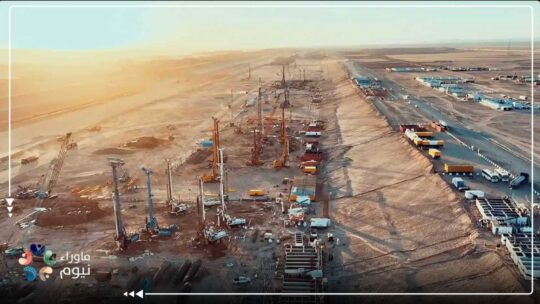
The 2027 budget cannot be separated from an economic model built around massive development projects requiring substantial capital and lengthy implementation periods.
Expenditure is taking place today, while anticipated revenues are deferred to future years, when market conditions and the assumptions underpinning these investments may have changed.
Any scaling back of major projects, should it occur, raises questions about the quality of the original feasibility studies: Were investment decisions driven primarily by economic fundamentals, or did considerations of international image and ambition take precedence?
Meanwhile, attention is increasingly turning toward mobilizing capital from wealthy families to ease pressure on public finances.
Greater private-sector participation can be beneficial when it is grounded in commercial viability and independent investment decisions.
However, if the primary objective is to transfer part of the financial risk without addressing underlying structural weaknesses, a striking contradiction emerges: a strategy that promised to unleash private enterprise could leave businesses increasingly expected to finance priorities determined by the state.
Vision 2030 Becomes a Long-Term Financial Obligation: Who Will Bear the Cost?
The 2027 budget presents a picture far removed from celebratory rhetoric: revenues that fall short of expenditure, a deficit approaching SAR 190 billion, and public debt nearing SAR 2 trillion.
Possessing substantial oil wealth and maintaining access to borrowing do not, in themselves, justify continued spending without clarity regarding investment returns.
After years of promises to build a more self-reliant economy, the public has a legitimate right to demand answers.
Where are the economic returns that justify expenditure on this scale? Why does the government budget still require such substantial additional financing? And who bears responsibility for decisions that have failed to deliver their stated objectives within the announced timeframes?
The most serious legacy of this period may not simply be delayed projects, but long-term financial obligations whose costs could ultimately be borne by a generation that had no role in making the decisions that created them.
Transparency means more than publishing revenue and expenditure figures. It requires disclosing the outcomes of public spending, the final costs of development projects, and the effectiveness of the decisions behind them.
Public funds are national resources—not an open-ended account for financing ambitions without accountability.