
The London-based Al-Arab newspaper, run by the UAE intelligence, exposed the lie of the “The Line” project launched by bin Salman in the Neom last Sunday, promoting it as “a mega smart city with series of Cognitive societies that are interconnected and enhanced with artificial intelligence, free of carbon emissions, no noise or pollution, or vehicles and streets”. The question is: are these illusions real? The UAE newspaper gives the answer.
Bin Salman says that the project will extend at a length of 170 kilometers from the coast of Neom on the Red Sea in the northwest of Saudi Arabia passing through the mountains and desert of Neom to the east.
The Line’s cognitive communities will consist of more than a million peron from all over the world to provide a platform for innovation and thriving businesses to tackle some of the world’s most pressing challenges.
Al-Arab newspaper comments on these illusions by saying: “Although these initiatives are based on economic approaches in the first place, however building smart cities inhabited by smart citizens raises another question about the sociology of smart societies. How could it be possible to have vrews prepared to deal with individuals who develop their perceptions according to every technical addition to the line? How could a citizen not exaggerate in his demands regarding the infrastructure of such cities given these loose promises?”.
“These loose promises are hampered by serious obstacles in the transition to the concept of“ smart societies ”, as the matter is not just the application of technologies, but rather the value system associated with those technologies which cannot be separated. In any case, providing individuals with the ability to communicate and engage to create general values and culture, is in no way compatible with the systems of old or unintelligent societies, so to speak.” Added the newspaper.
“In addition to the economic and technological challenges associated with smart transformation in the Arab world, which revolve around having the necessary capabulitiesp; there are a set of political challenges that prevent the adoption of the values of smart societies.”
According to Fatima Al Zahraa Abdel Fattah, a researcher specializing in media studies, “Smart cities build huge databases that are collected in a participatory manner thanks to technical networking, which are information that is collected, processed and managed through so-called smart city centers, which will be governmental in the first place, thus raising concerns over their use regarding monitoring, control and surveilliance, contrary to the main objective for which these systems were established”.
The researcher added: “Smart societies are linked to the concepts of open data, the right of access to information and other concepts that are based on providing information to citizens. Perhaps depriving individuals of information, in a society dominated by smart devices, does not only prevent the inclusion of citizens in solving public problems, monitoring performance and other matters, but it also opens the way for the spread of rumors, impressionistic judgments and arbitrary evaluation”.
She concludes: “the application of the values of openness, interdependence, networking, engagement, free expression, and transparency may not be consistent with the traditional system that controls many local Arab societies, as these technologies are not isolated from the value system in which they were produced, and their application means, in one way or another, the application of one aspect of the values it carries”.

“Stupid and unsuccessful” UAE newspapers expose lies of the “The Line” project

Further reading
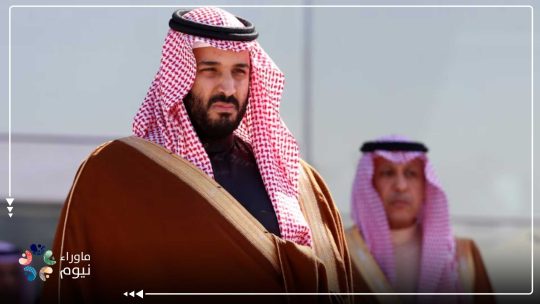
Saudi Arabia’s concentration of political, economic and security authority has accelerated major reforms. But it has also made strategic setbacks more closely associated with the crown prince, raising questions about institutional oversight...
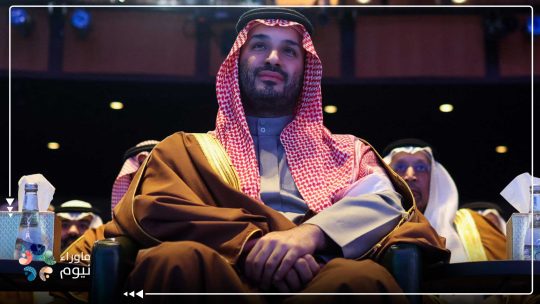
Saudi Arabia is spending billions on futuristic cities, international sporting events and global investment projects. But mounting fiscal pressures and human rights concerns raise a more fundamental question: can the kingdom modernise its image...
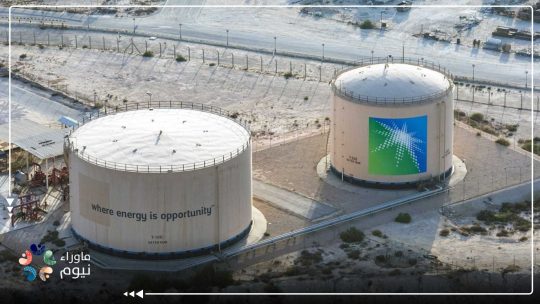
Saudi oil exports are recovering and crude prices remain high. But record shipping costs, insurance risks and disrupted export routes are changing the economics of the Saudi barrel — forcing Aramco to offer Asian buyers its deepest discount in six...
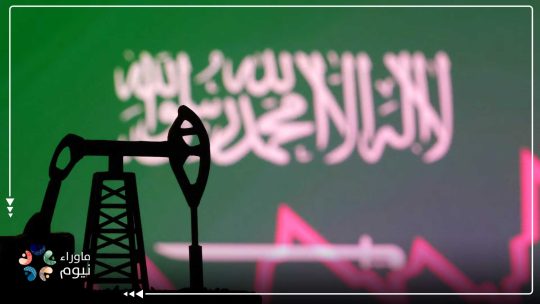
The non-oil economy is bigger than ever. But with GDP contracting, the deficit approaching SAR 191 billion, debt rising and foreign investment weakening, Saudi Arabia is confronting a harder question: can the new economy finance the state when oil...