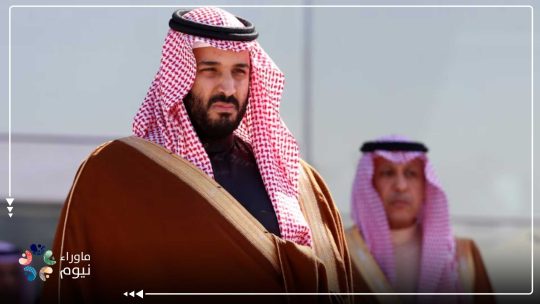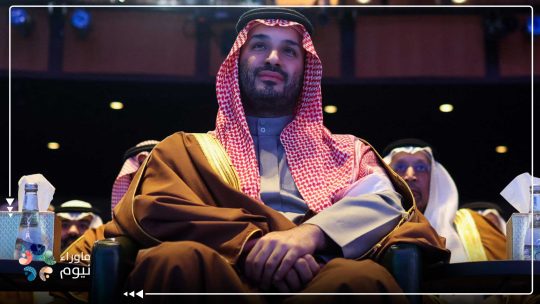

The Atlantic magazine’s recent interview with Crown Prince Mohammed bin Salman revealed megalomania, according to psychological and scientific evidence. Megalomania is an illusion state about one’s capabilities, importance, talents and self-perception. Paranoia takes different forms according to medical studies, among the most important symptoms is being suspicious of the motives and actions of others.
The paranoia was clearly manifested during the interview in more than one place, confirming two contradictory facts; his sense of superiority and his desire for excellence and singularity in everything, and his feeling of persecution and fear, and feeling wronged by others.
Several newspapers preceded The Atlantic in describing bin Salman as “paranoia”, including The Washington Post in 2018, the Daily Mail in 2019 and the National Interest in 2020.
Bin Salman described his projects as unique and unparalleled in the whole world. He used the phrase, “We are not trying to be like Dubai or America… Give me an example that one of the projects is copied? There is none”. He also spoke about Vision 2030, saying “It will never fail, no one on this planet has the strength to fail it, and it can probably only be slowed by 5%.
Ibn Salman also tried to present himself as the “chosen one” to preserve the legacy of the royal family, claiming that there are more than 5,000 members of Al Saud family, and members of the Allegiance Council who chose him to protect the interests of the monarchy.
Bin Salman presented himself as a scholar of Sharia, saying, “The final decision regarding fatwas does not come from the mufti, but rather from the king”, and limiting the mufti’s task to answering people’s daily questions, so that he is alone in making important decisions.
As for the biggest fallout, it was his speech about the arrests of the Ritz-Carlton, as he said “The second option: Asking them if they wanted to take the path of negotiations, and 95% of them chose the path of negotiations, so they were not criminals,”
He also revealed contradiction when talking about the murder of the Saudi journalist Jamal Khashoggi in October 2018, where he said he “never read any full article of him” and downplayed the ugliness of the crime instead of sympathizing with Khashoggi, whose body was dismembered in a horrific way.
He expressed his feeling of persecution and injustice for not implementing Article 11 of the Universal Declaration of Human Rights that “everyone is innocent until proven guilty”, as he felt deprived of this right, which indicates his desire to have people sympathize with him.