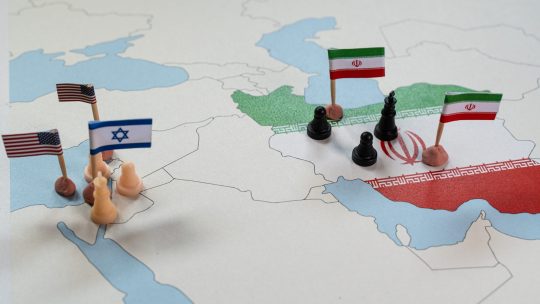


As conflict expands across the Middle East and vital shipping routes face disruption, the consequences are beginning to reverberate through global energy markets. For Saudi Arabia, the world’s largest oil exporter, the crisis is no longer just about price fluctuations or temporary market instability. It has evolved into a serious test of an economic model that remains heavily dependent on exporting oil through geopolitically sensitive maritime corridors.
Recent estimates suggest that Gulf states have already lost around $15 billion in energy revenues since the outbreak of the war, with Saudi Arabia bearing the largest share of the losses. Analysts estimate that the kingdom alone has lost approximately $4.5 billion in a short period, according to energy market assessments.
These figures are more than temporary financial setbacks. They reveal how deeply vulnerable the Saudi economy remains to geopolitical disruptions. When shipping routes slow down or exports are interrupted, it becomes clear that the kingdom’s economy is still tied overwhelmingly to a single industry: oil.
The Strait of Hormuz: A Strategic Lifeline Turned Weak Point
For decades, the Strait of Hormuz has been one of the most critical maritime chokepoints for global energy exports. A significant portion of Gulf oil shipments passes through this narrow corridor, making it a geopolitical pressure point capable of affecting the entire world economy.
The current war has transformed that strategic artery into a source of anxiety for Gulf producers. Threats to maritime navigation and disruptions to tanker traffic have interfered with the steady flow of oil toward international markets, immediately affecting export revenues.
For Saudi Arabia, which exports millions of barrels per day, any disruption to this maritime passage translates directly into reduced export capacity. Even if global oil prices rise during periods of tension, the inability to transport oil efficiently can wipe out much of the potential financial gain.
This dynamic helps explain the billions of dollars in losses Saudi Arabia has already suffered since the conflict began.
The Red Sea: A Partial Alternative, Not a Complete Solution
In response to the crisis, Saudi Arabia has been searching for alternative export routes that bypass the Strait of Hormuz. The most obvious option has been to expand reliance on the Red Sea port of Yanbu.
The kingdom operates a strategic pipeline connecting oil fields in the Eastern Province to Yanbu on the Red Sea coast. This infrastructure was designed decades ago as part of Saudi Arabia’s long-term energy security planning, allowing a portion of exports to bypass the Gulf entirely.
However, experts warn that relying on this route alone is not a simple solution. The pipeline system has never operated continuously at its maximum capacity, and the surrounding infrastructure may face logistical and operational challenges if the kingdom attempts to reroute most of its exports through it.
At best, analysts estimate that the system could redirect around 70 percent of eastern crude exports toward the Red Sea. That still leaves a significant portion of Saudi exports tied to the Strait of Hormuz or dependent on complex logistical alternatives.
In other words, the Red Sea offers breathing room—but not a full escape from the problem.
Storage: A Temporary Buffer, Not a Long-Term Strategy
Another strategy available to Saudi Arabia involves storing oil temporarily until export routes stabilize.
The kingdom possesses extensive storage facilities both domestically and internationally. These reserves allow it to continue supplying customers for limited periods even if shipping disruptions occur.
Yet storage capacity is finite. If export routes remain constrained for an extended period, storage facilities could quickly reach their limits. At that point, Saudi Arabia would face two difficult options: either reduce production or sell oil at discounted prices in order to accelerate shipments. In both scenarios, government revenues would be directly affected.
War Pressures an Already Sensitive Economy
These pressures on the oil sector arrive at a particularly delicate moment for the Saudi economy.
The kingdom is currently pursuing an ambitious economic transformation strategy aimed at diversifying income sources and reducing dependence on oil. However, these reforms remain in relatively early stages, and oil still accounts for the overwhelming majority of government revenue.
Any sustained decline in energy income immediately affects the national budget and the state’s ability to finance large-scale development projects.
The regional war adds another layer of financial strain. In addition to export losses, defense and security spending may rise significantly in order to protect critical infrastructure.
At the same time, international investors—whose capital Saudi Arabia hopes to attract under its economic transformation agenda—are watching the region’s security environment closely. Prolonged instability could elevate geopolitical risk and discourage investment flows.
A Strategic Test for Saudi Energy Policy
The current crisis raises broader questions about Saudi Arabia’s long-term energy strategy.
For decades, the kingdom has sought to maintain its role as the world’s largest oil exporter while simultaneously attempting to diversify its economy away from hydrocarbons. The war has exposed how fragile that balance still is.
When export routes are threatened, the dependence on regional stability becomes immediately visible.
This does not mean Saudi Arabia lacks the resources to weather the crisis. The kingdom retains substantial financial reserves and has historically demonstrated resilience in navigating volatile energy markets.
But recent events serve as a reminder that geopolitics remains a decisive factor in the future of energy.
When War Reveals the Limits of Oil Power
The current crisis is not merely a temporary disturbance in the oil market. It represents a genuine stress test for the Saudi economic model.
A country that holds some of the world’s largest oil reserves now faces a fundamental dilemma: how to move that oil to global markets when the region’s main export routes are under threat.
Billions in losses, vulnerable shipping lanes, and limited logistical alternatives are placing Saudi Arabia under growing economic pressure.
Wars in the Middle East have always affected global energy markets. But what this conflict demonstrates more clearly than ever is a simple truth:
Energy power is not defined only by how much oil a country produces—it is also defined by its ability to deliver that oil to the world.
As Saudi Arabia searches for alternative routes and logistical solutions, one question remains unresolved:
Can the kingdom maintain its position as a global energy powerhouse in a region that is becoming increasingly defined by conflict?