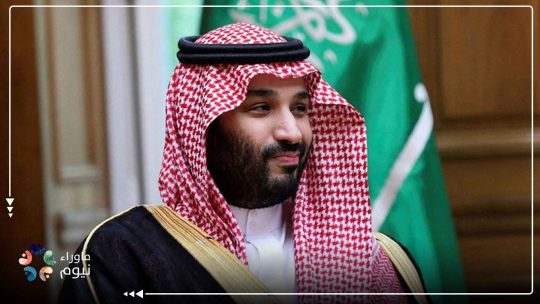

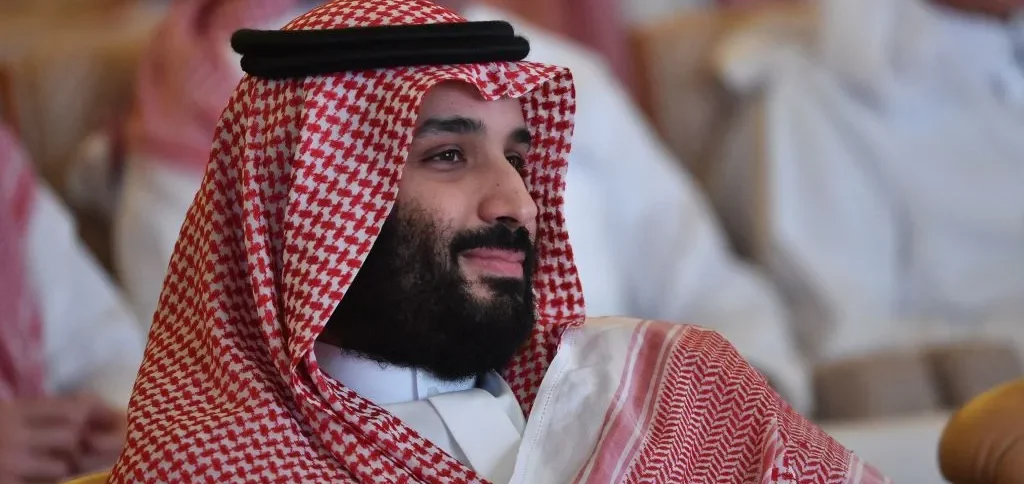
Nine years after Mohammed bin Salman rose to effective power in Saudi Arabia, the reality looks far removed from the early narrative of “reform and openness.” What has unfolded instead is a compressed political, economic, and social transformation—one that has reshaped the state and society at speed, but at a significant cost.
In less than a decade, Saudi Arabia has moved away from a system that—at least nominally—relied on multiple centers of influence within the ruling structure. In its place stands a highly centralized model, where political, economic, security, and social authority converge around a single decision-making core.
This shift has not merely altered policy direction. It has produced layered consequences: costly foreign engagements, strained economic projects, growing fiscal pressures, and a quiet but noticeable social divide.
What was presented as the rise of a “new Saudi Arabia” is increasingly seen by critics as the consolidation of power without institutional restraint—and the accumulation of decisions without meaningful internal review.
Concentration of Power: A State Run by a Single Center
The defining feature of the past nine years has been the restructuring of governance itself.
Mohammed bin Salman has not operated as a conventional political leader. He has combined oversight of key political and economic councils, direct control over the Public Investment Fund, and influence across security, defense, media, culture, and entertainment sectors.
This concentration of authority has created a system that resembles a personalized state, where traditional institutional roles are diminished in favor of tightly controlled decision-making circles linked directly to the leadership.
Such a model carries inherent risks.
Without institutional balance, policy miscalculations face limited internal correction. Without genuine deliberation, confidence in strategic decisions can expand even as those decisions move toward failure.
This dynamic has been reinforced by the handling of dissent. Academics, economists, and public figures who attempted to question policies have been sidelined or detained, contributing to a political environment where critical evaluation is constrained.
The result is not just centralized power—but reduced capacity for self-correction.
Economic Ambition Meets Structural Reality
Economically, Vision 2030 was presented as the blueprint for transforming Saudi Arabia from an oil-dependent economy into a diversified, modern system.
Nine years on, the gap between ambition and execution remains visible.
Mega-projects such as NEOM, the Red Sea developments, and Qiddiya were launched as flagship initiatives. Yet many have encountered challenges related to financing, timelines, and economic viability. Some projects have been scaled back, others reassessed, as fiscal pressures increase.
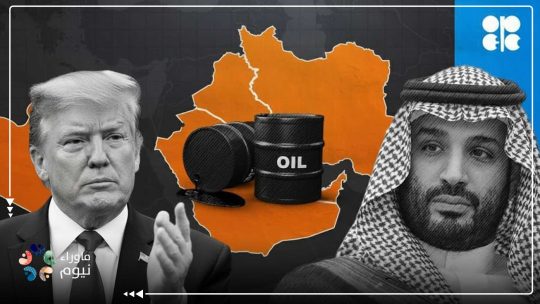
At the same time, the economy remains highly sensitive to oil dynamics. Fluctuations in prices or disruptions in exports continue to have immediate effects on public finances.
Budget deficits have widened during certain periods, even as spending increased on large-scale projects, international events, and high-risk external investments.
The Public Investment Fund, intended as a driver of diversification, has often functioned as a vehicle for large-scale spending across sectors such as entertainment, sports, and technology—without clear short-term returns.
This raises a fundamental question:
Has Saudi Arabia reduced its dependence on oil—or simply redistributed it into a more complex and financially demanding model?
Costly Foreign Policy and Unstable Alignments
Saudi foreign policy over the past nine years has been marked by sharp shifts and costly engagements.
The military intervention in Yemen, launched in 2015, evolved into one of the region’s longest and most expensive conflicts—without a decisive outcome. The war has carried significant financial, political, and humanitarian costs.
Regional relations have also experienced volatility, with shifting alliances and periods of heightened tension undermining policy consistency.
In response, Saudi Arabia has attempted to reposition itself diplomatically—opening channels with new global actors and recalibrating existing partnerships. Yet this approach has often appeared inconsistent, oscillating between escalation and de-escalation, between assertive rhetoric and cautious engagement.
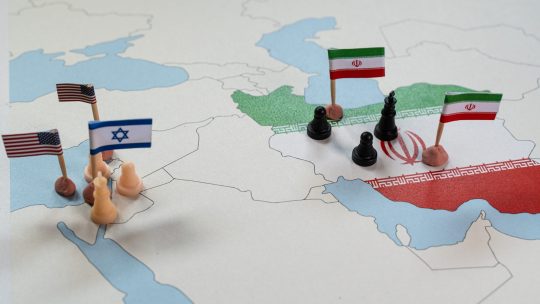
Recent regional crises have further exposed the limits of Saudi influence over unfolding events, despite the kingdom’s financial and military capacity.
At the same time, rising tensions have increased Saudi Arabia’s exposure to regional instability—affecting security, economic performance, and internal stability.
Social Transformation and Silent Division
On the social and cultural front, Saudi Arabia has undergone rapid and unprecedented change.
Restrictions have been eased, the entertainment sector has expanded, and large-scale cultural events have been introduced as part of a broader effort to reshape both domestic life and international perception.
But these changes have not occurred without friction.
The speed of transformation, its top-down nature, and the absence of broad societal dialogue have contributed to a quiet internal divide.
While spaces for entertainment have expanded, space for expression remains constrained. Critics continue to face legal and security pressures, creating a dual reality:
An open environment for leisure—and a restricted environment for dissent.
Efforts to redefine cultural identity through state-led initiatives have also raised questions about whether these changes reflect organic social evolution or a centrally driven project imposed from above.
A Decade of Centralized Power—and an Uncertain Future
After nine years of rapid transformation, Saudi Arabia stands at a critical juncture.
The model built on concentrated authority, accelerated change, and large-scale investment is now being tested under increasing economic, political, and security pressures.
Centralized power enables speed—but also amplifies risk when corrective mechanisms are absent.
Ambitious projects can drive progress—but can also become sources of strain when not aligned with economic realities.
The central question now is unavoidable:
Can this model continue without structural reforms that restore balance between authority and institutions, ambition and feasibility, openness and rights?
Or is the past decade merely the beginning of a trajectory that will face even greater challenges in the years ahead?
التصميم
Saudi Arabia After 9 Years of MBS
البوست
Nine years ago, Mohammed bin Salman promised reform, growth, and a new Saudi Arabia.
Today, the country looks very different.
Power is concentrated in one center.
Mega-projects are under pressure.
Foreign policy has been costly.
And society is changing—without real space for dissent.
What was presented as transformation now raises a harder question: Is Saudi Arabia becoming stronger—or just more centralized and more fragile at the same time?