
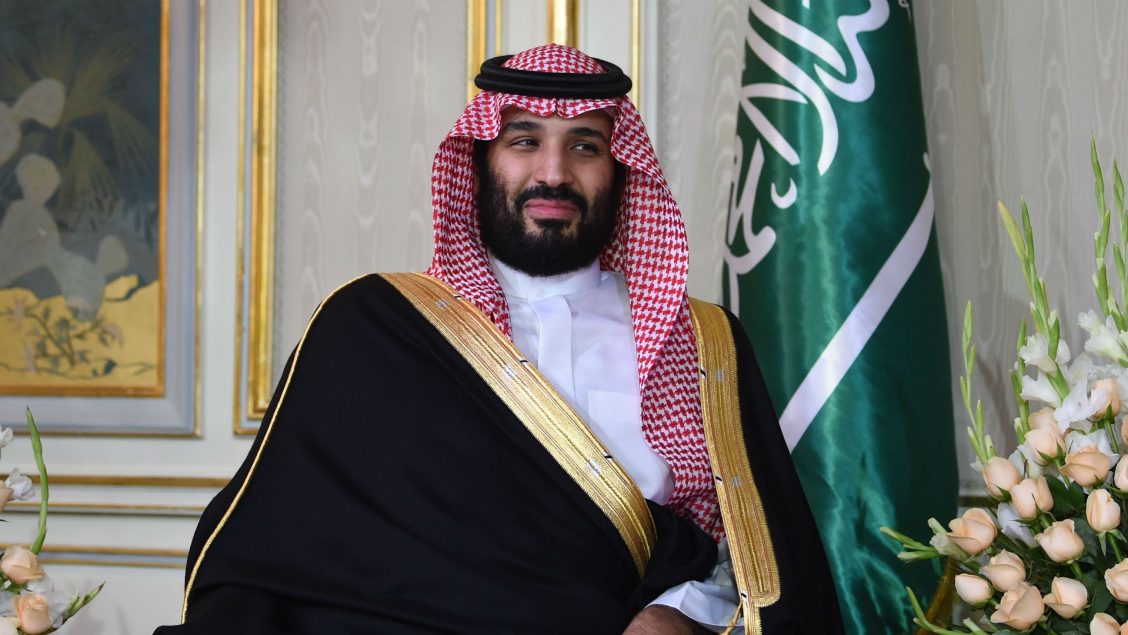
What was once presented as a flagship symbol of transformation under Mohammed bin Salman is now showing clear signs of strain. Saudi Arabia’s multi-billion-dollar push into global sports—framed as a pillar of economic diversification and international influence—is increasingly being exposed as a costly experiment built on spending rather than strategy.
Recent reporting from Financial Times, Bloomberg, and The Athletic suggests that the issue is no longer about “recalibration” or “market adjustment,” but about the early stages of a broader structural retreat. What is emerging is a pattern: rapid expansion fueled by massive capital injections, followed by quiet reversals once financial and operational realities set in.
The clearest example is the LIV Golf project. Backed by Saudi Arabia’s Public Investment Fund (PIF), the initiative has absorbed more than $5 billion (over SAR 18.7 billion) since 2021. Despite successfully attracting high-profile players through unprecedented contracts, the league has struggled to achieve its most basic requirement: a sustainable audience.
As highlighted by the Financial Times, the challenge was never talent acquisition—it was demand. A sports product without consistent viewership cannot function as an industry. It becomes, instead, a subsidized spectacle dependent on continuous funding. Internal expectations that the project may require up to a decade to break even underscore the scale of the miscalculation.
This pattern extends beyond golf. The decision to relocate the WTA Finals away from Riyadh after just a few years reflects limited returns on costly hosting agreements. In football, the PIF’s move to sell its stake in Al Hilal signals a shift away from earlier strategies that prioritized symbolic dominance over long-term sustainability.
Other initiatives reveal even deeper inconsistencies. The indefinite postponement of the Asian Winter Games—planned in a desert environment—illustrates the disconnect between ambition and feasibility. The cancellation of an esports Olympic-style project and the failure to secure entry into European basketball structures further reinforce the absence of a coherent, sector-wide strategy.
According to Bloomberg, Saudi officials are now increasingly focused on profitability, marking a significant departure from earlier approaches where financial return appeared secondary. The shift toward seeking co-investors for World Cup infrastructure—rather than fully financing projects internally—reflects mounting fiscal constraints and growing awareness that previous spending levels are unsustainable.
However, this adjustment does not indicate a fully developed strategic reset. Instead, it suggests a reactive effort to contain losses. Projects that cannot justify their costs are being scaled back or quietly abandoned, while others are being repackaged to maintain external perception.
More revealing is how decisions continue to be made. Reporting from The Athletic indicates that ongoing investment in boxing is driven less by economic rationale and more by personal interest—specifically the enthusiasm of Turki Alalshikh. This raises a fundamental issue: when large-scale public spending is guided by individual preferences rather than institutional planning, outcomes become unpredictable and often unsustainable.
The broader regional context is also playing a decisive role. Escalating geopolitical tensions, particularly the US-Israel confrontation with Iran, are forcing a reassessment of priorities. Defence and security expenditures are increasingly taking precedence over entertainment-driven initiatives. In this environment, it becomes significantly harder to justify continued large-scale spending on sports events, sponsorships, and global promotion campaigns.
At its core, the problem is not isolated to specific projects. It is rooted in a model that assumes financial capital alone can generate rapid success. In reality, sustainable sports industries require infrastructure, audience development, regulatory integration, and long-term planning. Without these foundations, investment translates into short-term visibility rather than lasting influence.
The shift in international reporting—from describing a “sports boom” to a “costly experiment”—reflects growing recognition of this gap. What was marketed as a transformative sector is now being reassessed as a high-risk, low-return strategy.
The current phase is no longer about expansion, but containment. Saudi Arabia is attempting to manage the consequences of a model built on aggressive spending, centralized decision-making, and limited accountability. Whether this adjustment evolves into a coherent long-term strategy remains uncertain.
What is clear, however, is that the assumption underpinning the entire project—that money alone can build influence and legitimacy—has been fundamentally challenged. The outcome is not just financial strain, but a reputational recalibration, as global observers begin to view the sports push not as a success story, but as a case study in the limits of capital-driven transformation.