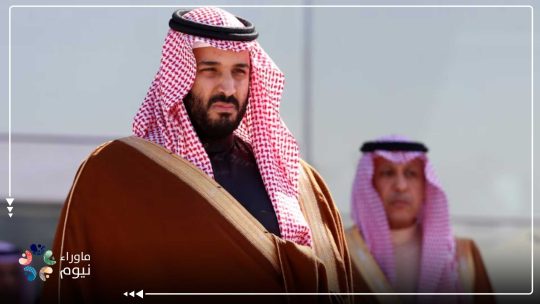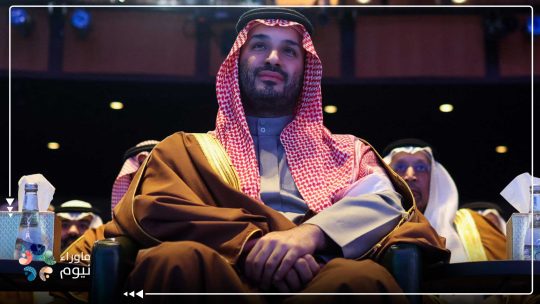

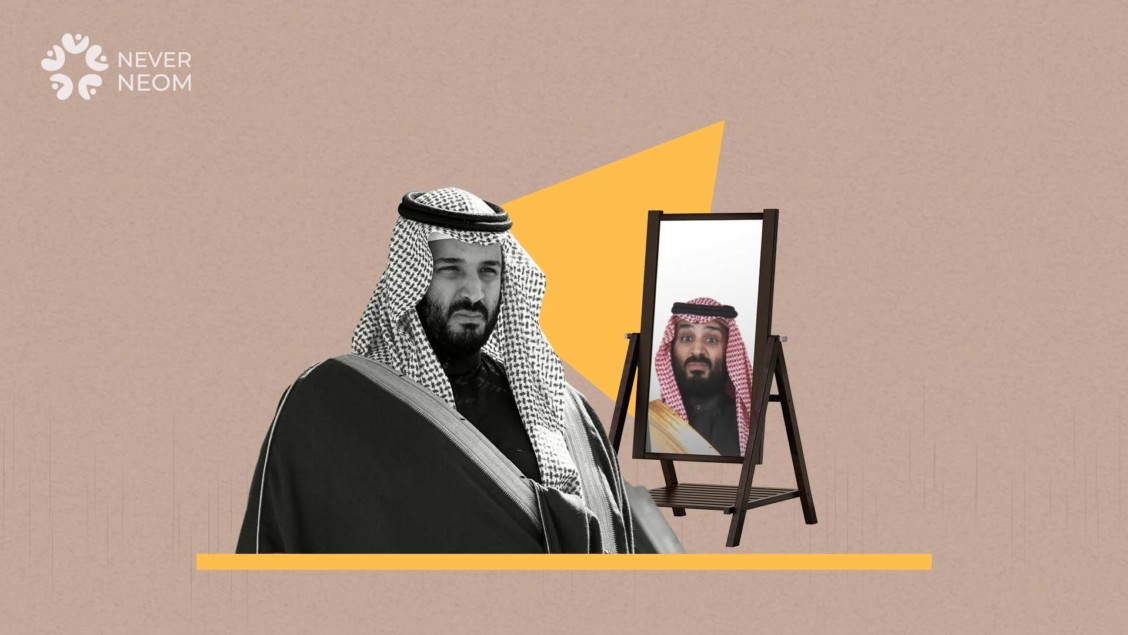
The White House reception for Mohammed bin Salman was presented as a formal diplomatic event, complete with coordinated statements and carefully rehearsed optics. Yet beneath the surface, the scene was something entirely different: an exercise in expanding vague promises, elevating unmeasurable commitments, and crafting a political narrative meant to portray a thriving partnership between Washington and Riyadh. In reality, both governments were engaged in producing a polished image designed to obscure how fragile, detail-free, and strategically hollow the announced agreements truly were.
For the Saudi leadership, the spectacle served as a tool to rebuild its deteriorating reputation in Western capitals. For the White House, it was an opportunity to frame the moment as a foreign-policy victory at a politically useful time. The outcome amounted to a meticulously constructed illusion—one that relied on vibrant language and oversized numbers to conceal how little substance the agreements actually carried.
The “Trillion-Dollar Commitment”: A Loud Claim with No Foundations
Perhaps the most eye-catching moment of the announcement was the claim that Saudi Arabia intended to scale up its investment commitments in the United States toward the trillion-dollar mark. The figure was designed to dominate headlines, but it was never accompanied by a description of how such capital would be structured, which sectors it would target, who would manage it, or the timeframe within which it would be deployed. The announcement functioned less as an economic roadmap and more as a promotional device—an exaggerated number introduced to amplify the appearance of deepening relations.
This lack of detail is particularly striking given that the Saudi government is already struggling to sustain its domestic megaprojects, many of which continue to absorb tens of billions without producing meaningful returns. The notion that Riyadh could simultaneously divert unprecedented resources abroad is questionable at best, and both sides understand this. The trillion-dollar headline will likely remain a political talking point rather than a concrete policy.
Civilian Nuclear Cooperation: A Statement Suspended in Ambiguity
The announcement that negotiations on civilian nuclear cooperation had been “completed” was framed as a significant breakthrough. Yet the White House statement offered no clarity about the nature of the technology under consideration, the structure of the programme, the regulatory standards expected of Saudi Arabia, or the stages through which such cooperation would advance. Without these elements, the declaration resembles a political gesture more than a substantive agreement.
A genuine civilian nuclear project requires an extensive scientific, regulatory, and institutional ecosystem—none of which exists in Saudi Arabia today. Any serious cooperation would place the kingdom under stringent international oversight mechanisms that historically clash with its opaque governance structures. As it stands, the nuclear announcement appears intended to inflate the perceived significance of the visit rather than indicate the start of a realistic energy programme.
Minerals and AI: Expansive Titles Without Operational Depth
The so-called “framework for critical minerals” was introduced without specifying what minerals are involved, where investments might occur, or how production and governance would be structured. The absence of these core elements leaves the initiative functionally undefined.
A similar pattern emerged in the artificial intelligence announcement. The White House claimed that Saudi Arabia would gain access to advanced American AI systems while simultaneously asserting that such technologies would remain insulated from foreign influence. The concept presents an inherent contradiction. Effective participation in AI ecosystems requires infrastructure, expertise, legal frameworks, and institutional safeguards that the kingdom does not possess. This discrepancy indicates that the AI announcement was crafted primarily for rhetorical effect.
The Defence Agreement: A Partnership on Paper, a Transaction in Practice
Among all the statements released, the defence component was the clearest in revealing the underlying dynamic of the relationship. The so-called “strategic defence agreement” largely reinforces longstanding arrangements in which Saudi Arabia finances aspects of the U.S. military presence in the region, while American defence contractors expand their footprint inside the kingdom under favourable terms.
This is not a mutual defence pact in the traditional sense but rather a continuation of the transactional model that has defined U.S.–Saudi relations for decades. The kingdom pays for security, and Washington provides an umbrella whose scope remains entirely under American control. The more uncertain the Saudi domestic environment becomes, the more dependent Riyadh grows on this external shield.
The F-35 Question: A Symbol of Conditional Trust
The mention of future F-35 sales was accompanied by Trump’s suggestion that Saudi Arabia might receive models with reduced capabilities, a remark that underscores Washington’s hesitance to provide advanced technology without reservation. The policy of preserving Israel’s qualitative military edge is one obvious factor, but so too is the persistent concern within U.S. security circles about the reliability of the Saudi system.
This dynamic reveals a deeper truth: although Saudi Arabia is among the world’s largest purchasers of American weaponry, its access to top-tier capabilities remains limited. The resulting arrangement serves more as a political signal than as a genuine enhancement of Saudi defence capacity.
Gregory Meeks Breaks Through the Performance: The Memory of Khashoggi Cannot Be Buried
Amid the ceremonial language and oversized numbers, Congressman Gregory Meeks reintroduced the moral dimension that both governments sought to bury. By emphasizing that Jamal Khashoggi was a respected journalist and that his murder cannot be reframed through politically convenient narratives, Meeks disrupted the attempt to re-engineer history through diplomatic theatrics.
His remarks underscored a point that no press release can erase: every agreement announced during the visit took place against the unresolved backdrop of a political assassination that U.S. intelligence continues to attribute to the Saudi leadership. The effort to dress the visit in the language of progress ultimately collapses when confronted with a truth that refuses to fade.
Promises Without Roots, and a Past That Cannot Be Erased
Taken together, the White House announcements form a picture of political embellishment rather than strategic development: investment pledges without operational paths, technological cooperation without infrastructure, and defence agreements that reinforce dependency rather than advance sovereignty. The entire event functioned as a coordinated public-relations exercise aimed at projecting the image of a powerful, modern alliance.
For Riyadh, the performance offers a way to purchase external legitimacy in the absence of credible internal foundations. For Washington, it provides a wealthy partner whose financial contributions help sustain its broader geopolitical agenda. Yet the partnership remains fragile because it depends not on shared values or structural alignment but on temporary interests, inflated figures, and the careful choreography of appearances.
Underneath these layers, the central truth remains untouched: history is not rewritten through press conferences, and the murder of Jamal Khashoggi is not washed away by colourful promises on white paper.