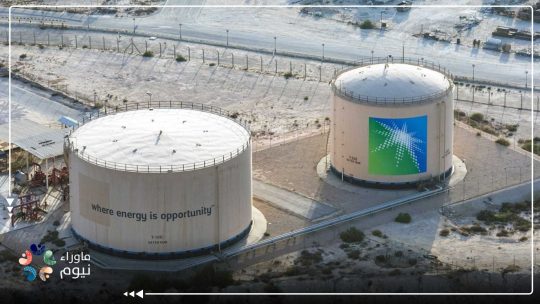

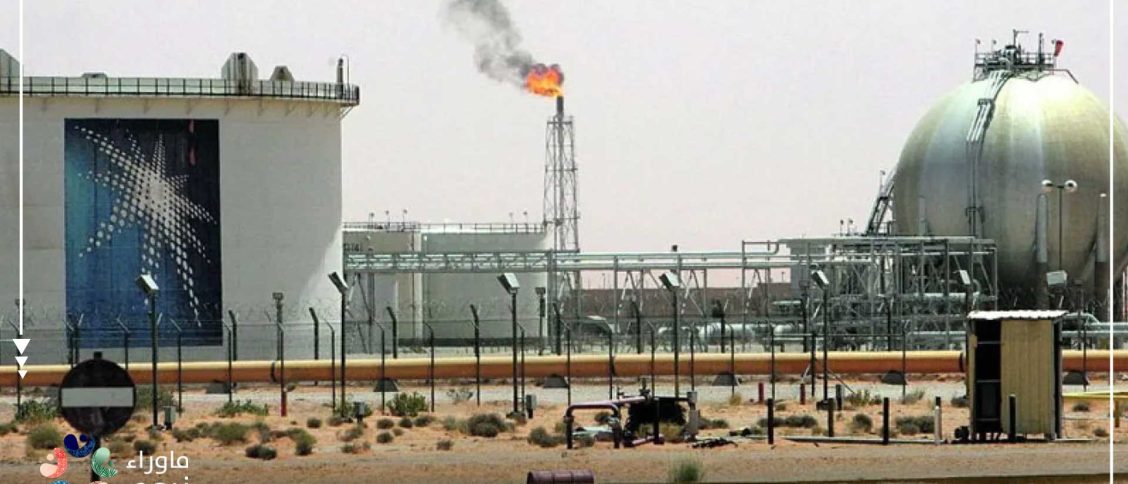
Saudi Aramco, the kingdom’s most valuable economic asset and the primary source of Saudi Arabia’s national wealth, is once again at the center of debate following reports that the company is considering the sale of additional assets to raise billions of dollars for economic diversification initiatives.
According to recent reports, Aramco is exploring a transaction involving part of its sulfur-related operations under an internal initiative known as “Project Yellowstone,” with a potential value of approximately $7 billion.
While the figure is substantial, the broader significance lies elsewhere. Nearly a decade after Vision 2030 was launched with the promise of reducing Saudi Arabia’s dependence on oil, the kingdom continues to rely on oil-generated wealth—and increasingly on oil-related asset sales—to finance that transition.
The development raises a difficult question: if diversification projects are becoming self-sustaining engines of growth, why is Saudi Arabia repeatedly turning back to Aramco for funding?
Aramco as the Financial Backbone of Vision 2030
Since the launch of Vision 2030, Aramco has served as the financial foundation of Saudi Arabia’s economic transformation strategy.
The company has generated enormous dividend payments, supported public spending, facilitated capital market offerings, and contributed directly and indirectly to the financing of major development initiatives.
Over time, however, Aramco’s role has expanded beyond that of a national oil producer.
It has increasingly become a source of liquidity whenever major projects require additional funding.
Whether through dividend distributions, secondary share offerings, infrastructure transactions, or asset sales, the company has repeatedly been called upon to support the kingdom’s broader economic ambitions. This creates a striking contradiction.
Rather than replacing dependence on oil, many of the projects intended to diversify the economy continue to depend heavily on resources generated by the oil sector itself. In effect, oil remains responsible for financing the transition away from oil.
Financing Diversification by Selling Oil Assets
The original promise of Vision 2030 was straightforward: create new sectors capable of generating sustainable growth beyond hydrocarbons.
Yet many of the kingdom’s flagship projects—including NEOM, Qiddiya, the Red Sea developments, sports investments, technology initiatives, and large-scale tourism projects—remain heavily dependent on continuous financing.
While these projects are designed to generate future economic activity, many have not yet reached a stage where they can produce returns sufficient to support themselves. As a result, financing pressures continue to build.
When expenditures rise faster than revenues, Aramco increasingly becomes the easiest source of capital. Asset sales, share offerings, and financial restructuring arrangements provide immediate liquidity without requiring politically difficult spending cuts. However, this approach raises concerns about long-term sustainability.
Selling profitable assets to finance projects whose future returns remain uncertain effectively converts established wealth into long-term economic bets.
Supporters may argue that such transactions represent prudent portfolio management. Critics see something different: a growing dependence on asset monetization to sustain spending commitments.
Project Yellowstone and the Search for Liquidity
The reported sulfur-related transaction may appear relatively modest compared to some of Aramco’s larger operations, but its symbolism is significant.
The proposed deal reflects a broader trend in which portions of Aramco’s business ecosystem are increasingly viewed as assets that can be monetized to generate additional cash.
The internal name—Project Yellowstone—may sound ambitious, but the underlying reality points to a familiar challenge.
Saudi Arabia continues to face budget deficits, rising financing requirements, mounting obligations associated with major projects, and slower-than-expected foreign investment inflows.
Against this backdrop, asset sales become an attractive solution because they provide immediate funding without requiring structural changes.
Yet they do not address the underlying issue: many diversification projects still require substantial financial support long after their launch.
A $7 billion transaction may provide temporary relief, but it does not fundamentally alter the economics of projects that continue to consume large amounts of capital.
The Growing Cost of Ambition
The broader concern is not the sale of a sulfur-related business itself. Large corporations routinely sell non-core assets as part of portfolio optimization strategies.
The concern is the frequency with which Saudi Arabia appears to return to Aramco whenever new funding needs emerge. Each transaction may be defensible individually.
Collectively, however, they create the impression that the kingdom’s diversification agenda remains heavily dependent on the very sector it was designed to move beyond.
This becomes particularly significant at a time when Saudi Arabia faces growing fiscal pressures, increasing debt levels, reviews of major projects, and persistent questions about the pace of foreign investment.
Under such conditions, asset sales can begin to look less like strategic financial management and more like a mechanism for buying additional time.
When the Cost of Diversification Reaches Aramco
Recent reports suggest that the financial burden of Vision 2030 is increasingly being carried not only by government budgets and the Public Investment Fund, but by Aramco itself.
That reality challenges one of the central narratives surrounding the kingdom’s economic transformation.
If diversification requires the continued sale of oil-sector assets to sustain itself, then the transition away from oil remains incomplete.
The kingdom may successfully raise billions through Project Yellowstone and future transactions. Yet the fundamental question remains unresolved: will these funds create self-sustaining industries capable of replacing oil revenues, or will they simply finance another round of projects that require further support in the future?
Financing the Future by Selling the Present
The issue is not whether Aramco should ever sell assets. Global energy companies regularly restructure portfolios and monetize parts of their businesses.
The issue is what repeated asset sales reveal about the broader economic model.
Saudi Arabia continues to present Vision 2030 as a pathway toward a post-oil future. Yet the recurring reliance on Aramco’s assets, revenues, and financial strength suggests that oil remains the primary engine driving that transition. The irony is increasingly difficult to ignore.
Aramco is not only funding the Saudi state—it is funding the vision that was supposed to reduce the state’s dependence on Aramco.
And as long as major diversification projects continue to rely on oil wealth for survival, Saudi Arabia’s post-oil economy remains, in many respects, financed by the very industry it claims to be leaving behind.