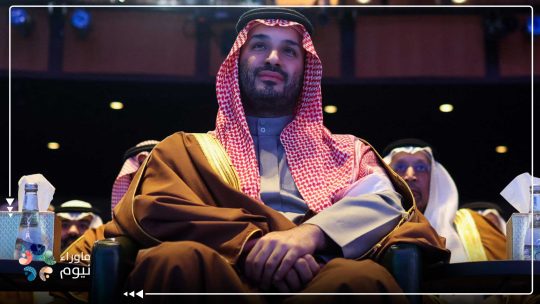


The emergence of new images placing Mohammed bin Salman inside Jeffrey Epstein’s home — in a different room from the office previously shown — is not a trivial visual detail or fodder for tabloid speculation. It is a politically loaded development that raises serious questions about the nature of the Saudi crown prince’s early relationships, the circles he moved within during his rise to power, and the Saudi regime’s consistent refusal to address recurring disclosures linked to one of the most notorious figures in modern American history.
When images, leaked emails, and documentary traces continue to surface from credible Western sources — without clarification, denial, or contextual explanation — ambiguity itself becomes policy. Silence, in this case, is not neutral. It is part of the problem.
Multiple Images, One Location: Why the Setting Matters
According to recent reporting and visual analysis, the two images showing Mohammed bin Salman with Jeffrey Epstein were taken not in the same office, but in what appears to be a meeting room inside Epstein’s residence. The photographs seem to date from the same general period, captured from different angles, suggesting a deliberate encounter rather than an incidental overlap.
This detail is not cosmetic. Epstein’s private residences were later documented by U.S. investigations as closed environments where political, financial, and social power intersected away from public scrutiny. Presence within that space — even absent proof of wrongdoing — carries political significance. It speaks to access, proximity, and judgment at a time when Epstein was already widely known in elite American circles as a controversial and opaque figure.
For a senior representative of a state — let alone a future ruler of a major regional power — the choice of such environments raises legitimate questions about vetting, discretion, and the standards applied to foreign relationships during formative years of political ascent.
Leaked Emails: Epstein’s Network as a Currency of Power
The more troubling dimension lies not only in the images, but in the content of Epstein’s leaked correspondence. Newly surfaced emails, reported by major U.S. outlets including Politico, show Epstein openly boasting about his global connections as a form of social and political capital. Among the names he invoked was Mohammed bin Salman.
In a 2016 email to billionaire Tom Pritzker, Epstein wrote with conspicuous pride: “Can you believe Mohammed bin Salman sent me a tent, with carpets and everything?” Pritzker’s response was dismissive, but the exchange itself is revealing. Whether the anecdote was literal, exaggerated, or part of Epstein’s habitual self-mythologizing, the inclusion of the Saudi crown prince’s name illustrates how Epstein leveraged such associations to enhance his standing within elite networks.
The issue here is not to infer intent or behavior, but to examine how the name of a future head of state was deployed by a man who later became synonymous with exploitation, coercion, and institutional failure. That association — real or performative — carries reputational and political weight.
Official Silence: Denial by Omission
To date, Saudi representatives have declined to respond to requests for comment regarding these images and disclosures. This silence mirrors a broader pattern whenever uncomfortable questions arise about the crown prince’s Western relationships, financial ties, or personal networks.
In systems that respect public accountability, such situations are addressed through timelines, documented denials, or contextual explanations. Here, the vacuum is left intentionally unfilled. That absence invites speculation, amplifies unofficial narratives, and undermines trust far more than a clear statement ever could.
This is not a matter of legal guilt. It is a matter of political responsibility. Mohammed bin Salman is no longer a private individual. He is the de facto ruler of Saudi Arabia. His public record — including the environments he inhabited and the figures he associated with — is a legitimate subject of scrutiny, particularly when those figures are later exposed as serial abusers whose crimes shook U.S. political and legal institutions.
Ambiguity Is Not Neutral
No definitive conclusion about the nature of Mohammed bin Salman’s relationship with Jeffrey Epstein can be drawn from images and emails alone. But the repeated resurfacing of his name in Epstein-related materials, combined with a complete lack of official clarification, places the Saudi regime before a genuine test of credibility.
In such cases, opacity is not restraint. It is refusal.
States are not condemned by photographs, but they are judged by how they confront uncomfortable facts.
At a moment when Saudi Arabia is demanding international acceptance of its narrative of “reform” and “modernisation,” the minimum expectation is transparency proportionate to the claims being made. Continued silence does not erase the images. It deepens their shadow — a toxic one that lingers not because of proof, but because of unanswered questions.