

Public Investment Fund Seeks Liquidity, Aramco Considers Expanding Oil Transport Infrastructure, While Crude Prices Decline Amid War
Saudi Arabia faces a difficult economic equation, with forecasts pointing to a 2.8% contraction in gross domestic product in 2026, mounting pressure to finance Vision 2030 projects, and oil prices declining for the second consecutive week.
Oil revenues are being threatened by export disruptions, megaprojects require continuous financing, and the Kingdom’s sovereign wealth fund is exploring new sources of liquidity. Meanwhile, the gap between Saudi Arabia’s declared ambitions and its actual capacity to finance them appears to be widening.
The challenges are no longer limited to fluctuations in oil prices or temporary regional instability. They increasingly affect the foundations of the Kingdom’s economic strategy.
The war is not only threatening crude oil export routes but also putting pressure on cash flows, increasing risk-related costs, and testing whether non-oil sectors can compensate for declining traditional revenues.
Economic reports published in mid-November 2026 reveal a striking contradiction. At a time when Saudi Arabia needs substantial financial resources to sustain its economic transformation, forecasts point to a contraction in GDP, oil prices are falling, and the Public Investment Fund (PIF) is exploring alternative financing arrangements for its portfolio companies.
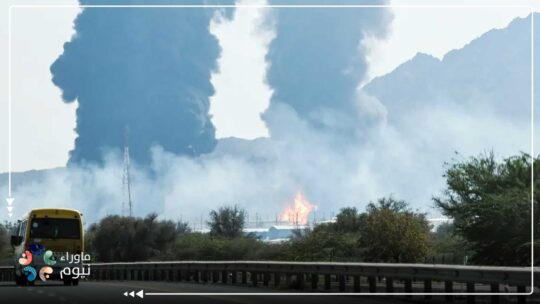
Meanwhile, Saudi Aramco is considering expanding crude oil transportation routes and storage capacity outside the Kingdom.
These developments do not indicate an economic collapse or the insolvency of major projects. However, they raise a fundamental question: To what extent can Saudi Arabia maintain its previous spending ambitions when the economic and security conditions upon which those ambitions were based have changed?
Projected 2.8% Economic Contraction: A Severe Test of Diversification Promises
Economic reports have cited forecasts attributed to Moody’s projecting that Saudi Arabia’s GDP will contract by 2.8% in 2026 before recovering by 5.1% in 2027 and 6% in 2028.
These projections are based on assumptions concerning oil production, exports, and the pace of recovery from regional disruptions.
It is important to emphasize that these figures are forecasts rather than final official economic results. The projected recovery rates also depend on improvements in the conditions assumed by the forecasting institution.
Nevertheless, the prospect of economic contraction carries particular significance for a country that has spent years attempting to reduce its dependence on oil.
If Saudi Arabia has allocated enormous resources to developing tourism, manufacturing, services, entertainment, and technology, why are shocks affecting the oil sector still capable of threatening economic growth on such a scale?
The answer does not necessarily indicate that diversification has failed entirely. It does, however, suggest that expanding non-oil industries does not automatically create an economy capable of absorbing major disruptions to oil production and exports.
This exposes the gap between announcing new projects and establishing a productive economic base capable of generating independent and sustainable revenues.
An economy does not become genuinely diversified simply because more sectors receive investment.
Diversification becomes meaningful when those sectors generate added value, create productive employment, attract private capital, and deliver returns without remaining continuously dependent on government expenditure.
These questions become even more pressing when the projected contraction coincides with the need to finance extensive development and investment commitments.
Instead of providing sufficient relief to public finances, some emerging sectors and projects may themselves require additional support precisely when traditional revenue sources are under pressure.
This is perhaps the most troubling contradiction: projects launched to reduce dependence on oil may find their own financial sustainability threatened by declining oil revenues.
Public Investment Fund: The Search for Liquidity Raises Questions About Project Efficiency
The situation becomes more complicated in light of coverage published by *Enterprise Saudi Arabia* on November 15, highlighting war-related liquidity pressures and their potential impact on spending associated with Vision 2030 projects.
The report also pointed to hesitation among some foreign companies considering establishing new operations in Saudi Arabia, even as other international businesses continue operating in the market.
These developments intersect with an earlier *Reuters* report examining how the Public Investment Fund, which manages assets exceeding $900 billion, was exploring new ways to finance its portfolio companies without continually injecting additional capital from the fund itself.
The options reportedly under consideration include selling stakes in mature assets, leveraging future cash flows through financing instruments, and attracting outside investors to participate in funding subsidiary companies.
Exploring these alternatives does not necessarily mean that the PIF faces an immediate liquidity crisis or is unable to meet its financial obligations.
Capital recycling and attracting investment partners are established practices among major sovereign wealth funds.
However, the economic circumstances in which these alternatives are being considered warrant closer scrutiny.
The question is no longer simply how much the fund’s assets are worth, but what those assets consist of, how effectively they generate cash, and what future financial obligations are attached to them.
Owning assets worth hundreds of billions of dollars does not necessarily mean that an equivalent amount is immediately available as liquid capital.
Some assets may be long-term holdings, unlisted investments, or stakes in projects still under development. Converting their book value into usable cash may require time, favorable market conditions, or specific financing arrangements.
Against this backdrop, greater reliance on selling equity stakes or attracting new investors raises legitimate questions about financial sustainability.
Are these projects attracting capital because they offer compelling economic returns, or because their continuation increasingly requires additional sources of financing?
If foreign companies are becoming more hesitant to enter the Saudi market because of regional risks, some projects may also find it harder to attract investment partners on the terms anticipated before the escalation of instability.
Under such circumstances, announcing targeted investment figures is no longer sufficient.
Greater transparency is needed regarding investments actually deployed, returns already generated, and the financing still required to complete major projects.
Vision 2030 Confronts the Financial Realities of War: Can the Budget Sustain Previous Ambitions?
The current pressures expose a deeper problem concerning the relationship between government spending and Saudi Arabia’s megaprojects.
During years of investment expansion, the Kingdom presented its flagship developments as future engines of economic growth, vehicles for attracting international capital, and instruments for reducing dependence on oil revenues.
The war, however, is imposing a different set of priorities.
Protecting critical infrastructure, securing transportation routes, managing supply-chain disruptions, and maintaining financial stability are all requirements that may compete for resources with long-term development projects.
This does not necessarily mean that spending on Vision 2030 initiatives will stop.
It does, however, place the question of investment priorities at the center of the economic debate.
Will Saudi Arabia continue financing all major projects according to their original schedules?
Or will some be reassessed according to their commercial feasibility, expected returns, and exposure to risk?
Can private investment assume a greater share of the financial burden, or will the government and its sovereign wealth fund remain the primary sources of financing?
These questions do not challenge the importance of economic development. Rather, they concern the efficiency of allocating resources when economic conditions become more difficult.
The problem is not the pursuit of ambitious economic objectives.
It is the possibility of treating every major project as an untouchable priority, even when financing costs, revenue sources, and risk levels have fundamentally changed.
An economy facing simultaneous pressures requires clear choices between projects offering near-term returns, long-term investments, public services, and measures needed to protect economic stability.
Yet insufficient disclosure of project costs, implementation stages, and anticipated returns makes it increasingly difficult to evaluate those choices.
Oil Prices Fall for a Second Week: Higher Risks Do Not Guarantee Higher Revenues
In the oil market, figures showed that Brent crude closed on Friday, November 13, at $95.84 per barrel, marking a weekly decline of 2.52%.
West Texas Intermediate (WTI) settled at $88.56 per barrel, down 2.50% over the week.
The declines came amid expectations of increasing global oil supplies, despite continuing risks associated with the war and disruptions to shipping.
This presents Saudi Arabia with another economic dilemma.
War may increase security threats, transportation expenses, and insurance costs, but it does not necessarily guarantee that oil prices will remain elevated.
Crude prices are also influenced by global demand expectations, production levels in other countries, inventories, and the overall balance between supply and consumption.
Saudi Arabia could therefore face an especially difficult combination: rising costs associated with protecting and exporting oil while international crude prices decline.
More importantly, the price of oil alone is insufficient to determine the scale of petroleum revenues.
Oil income also depends on production and export volumes, actual realized selling prices, transportation costs, and the ability of producers to deliver shipments on schedule.
Consequently, examining crude prices without considering export disruptions can produce a misleading picture of the country’s financial position.
A barrel of oil that commands a higher market price but encounters difficulties reaching buyers does not necessarily generate the revenue suggested by trading screens.
Likewise, falling prices at a time when public finances require substantial resources place additional pressure on economic planning and increase uncertainty surrounding future revenue projections.
Aramco Considers Expanding the East-West Pipeline as Oil Infrastructure Faces Mounting Pressure
In another development, an economic report dated November 15 cited statements attributed to Saudi Aramco Chief Executive Amin Nasser concerning the possibility of expanding oil transportation capacity and storage facilities outside the Kingdom.
According to the reported information, the East-West Pipeline currently has a capacity of approximately seven million barrels per day, with around four million barrels per day being transported through the system to the port of Yanbu amid shipping disruptions.
The pipeline holds considerable strategic importance because it allows crude oil to be transported from eastern Saudi Arabia to the Red Sea coast, providing an alternative route for some shipments potentially affected by risks surrounding the Strait of Hormuz.
However, the consideration of further expansion illustrates the scale of the logistical challenges facing the Kingdom.
If safeguarding oil exports requires stronger pipeline networks, greater storage capacity, and more diversified shipping routes, maintaining crude flows is no longer simply a matter of production.
It increasingly involves additional expenditure to ensure that oil can reach international markets.
The available information does not specify a confirmed expansion budget or final implementation timetable.
It would therefore be inaccurate to treat the proposal as an approved project or assign it an expenditure figure that has not been officially announced.
Nevertheless, the need to examine such alternatives raises questions about whether existing infrastructure is sufficient to withstand prolonged disruptions.
An alternative pipeline can reduce dependence on a particular maritime route, but it cannot eliminate security threats to oil facilities, ports, or other transportation networks.
Similarly, expanding export infrastructure does not independently resolve the challenges posed by declining oil prices or weakening global demand.
In other words, Saudi Arabia can invest in additional crude transportation routes, but it cannot purchase a permanent guarantee against market volatility or geopolitical instability.
This highlights the continuing strategic costs of dependence on oil, even as the Kingdom expands its stated economic diversification initiatives.
The Central Contradiction: An Economy That Needs Oil Revenues to Finance Its Escape From Oil Dependence
Taken together, these developments reveal a structural contradiction that is difficult to overlook.
Saudi Arabia needs oil revenues to finance a significant portion of its economic transformation, yet it faces disruptions threatening production and exports, price volatility, and additional requirements to protect critical energy infrastructure.
At the same time, non-oil projects require long-term financing, while major investment institutions are exploring new mechanisms to attract liquidity and reduce dependence on direct capital injections.
Foreign companies expected to help finance the Kingdom’s transformation are also making investment decisions based on security risks, economic uncertainty, and anticipated returns.
The challenges are therefore interconnected rather than isolated.
Export disruptions may weaken revenues. Lower revenues may make major projects more difficult to finance. Financing pressures may force the government and its investment institutions to reconsider priorities, while persistent risks could make international investors increasingly cautious.
This cycle does not mean that Saudi Arabia has lost its capacity for economic recovery.
The Kingdom continues to possess substantial financial resources, major assets, and significant productive capabilities.
However, the size of those resources alone cannot determine the success of its economic strategy.
The real test is not how many billions of dollars the government can allocate to another project, but how many projects can eventually sustain themselves and generate returns without repeated injections of public capital.
Likewise, even if the projected recovery in 2027 and 2028 materializes, stronger GDP growth alone will not necessarily demonstrate the success of economic transformation.
Such a recovery would need to be accompanied by improvements in productivity, private investment, and the capacity to generate revenues independently of oil.
Vision 2030 Needs Financial Accountability, Not More Promises
The developments of November 2026 place Saudi Arabia’s economy at a stage requiring greater transparency and reassessment.
The projected 2.8% GDP contraction, potential financing pressures affecting Vision 2030 projects, the Public Investment Fund’s exploration of new liquidity mechanisms, a second consecutive week of declining oil prices, and Aramco’s consideration of expanding the East-West Pipeline are not merely unrelated developments occurring at the same time.
Together, they indicate that the economic environment in which Saudi Arabia operates has become increasingly complex, and that maintaining investment ambitions on their previous scale requires far more rigorous financial calculations.
What is needed is not simply further announcements about the value of the PIF’s assets or the size of targeted investments.
Clear answers are required concerning the remaining costs of major projects, returns already achieved, the share of financing provided by private capital, and the ability of public finances to withstand continued pressure if oil disruptions persist.
The economic impact of the war on export costs, insurance premiums, and logistics must also be clarified.
A distinction should be drawn between projects essential to strengthening economic resilience and those whose schedules could be adjusted without undermining fundamental economic interests.
A country investing heavily to build an economy less dependent on oil, while simultaneously allocating additional resources to protect oil exports and using petroleum revenues to finance its transformation projects, faces a contradiction that cannot be resolved through ambitious rhetoric alone.
The question confronting decision-makers in Riyadh is whether Vision 2030 has become sufficiently adaptable to a changed economic and security environment, or whether continuing to implement it according to earlier assumptions will place further pressure on the very resources it is intended to protect.
The greatest risk does not lie in a single year of projected economic contraction or two consecutive weeks of declining oil prices.
It lies in the possibility that enormous investments become accumulating financial obligations before they develop into revenue-generating assets capable of sustaining themselves.
If that happens, the defining question will no longer be how many projects Saudi Arabia has launched, but how much its economy has had to pay to keep them alive.