

Saudi Arabia’s economy has contracted for a second consecutive quarter, with oil activity plunging 20.4% and non-oil growth reaching just 1.9%. For Never NEOM, the figures raise urgent questions about the economic returns of the kingdom’s expensive megaprojects and the resilience of its much-publicised transformation.
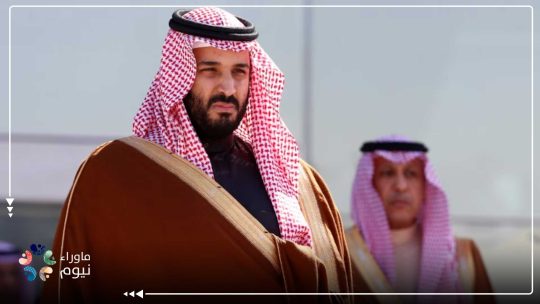
Saudi Arabia’s economy contracted again in the third quarter of 2026, exposing a fundamental weakness in the economic transformation that Crown Prince Mohammed bin Salman has spent years promoting through Vision 2030. Despite billions of dollars committed to NEOM, tourism, entertainment, infrastructure and other diversification projects, the kingdom remains highly vulnerable to disruptions in its oil industry. The latest figures demonstrate that growth outside the petroleum sector has not yet reached a scale sufficient to protect the wider economy from a major oil shock.
According to preliminary figures released by Saudi Arabia’s General Authority for Statistics on 1 November and reported by Bloomberg, real gross domestic product declined by 3.8% year on year in the third quarter of 2026. Although the contraction was less severe than the 4.7% decline recorded in the preceding quarter, it marked the first time since 2023 that the Saudi economy had contracted on an annual basis for two consecutive quarters.
More significantly, these figures cover the period ending in September, before the latest escalation in attacks by the Houthis in October. The kingdom therefore entered a new period of heightened security disruption while its economy was already contracting, raising further concerns about the prospects for recovery and the financial sustainability of its ambitious development agenda.
For Never NEOM, the figures reinforce a central question surrounding Vision 2030: after years of enormous public investment in projects presented as the foundations of a post-oil economy, why does a severe disruption to oil production and exports still have the power to push the entire economy into contraction?
Official Figures Reveal the Scale of Saudi Arabia’s Continued Oil Dependence
The preliminary GDP figures present a striking contrast between the performance of Saudi Arabia’s traditional oil industry and the sectors intended to reduce the country’s dependence on it.
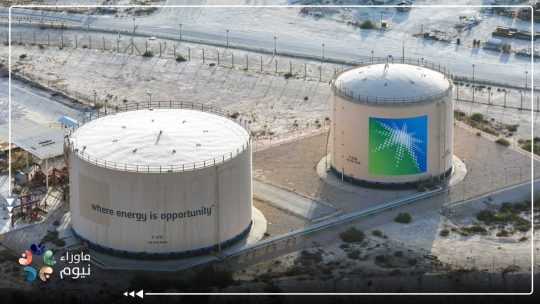
In the third quarter of 2026, real GDP declined by 3.8% compared with the same period a year earlier. Oil activities contracted by 20.4%, while non-oil activities grew by just 1.9%. Government activities also declined by 2.7%.
According to the official estimates, the oil sector alone subtracted approximately 4.7 percentage points from annual GDP growth. Non-oil activities contributed a positive 1.1 percentage points, but that contribution was nowhere near sufficient to offset the contraction in oil production and related activities.
The most revealing figure is therefore not simply the overall 3.8% decline. It is the scale of the oil contraction and the limited ability of the non-oil economy to counterbalance it.
Saudi authorities have repeatedly presented diversification as a strategic priority, arguing that investment in new industries, tourism, entertainment, logistics and major infrastructure projects will gradually reduce the kingdom’s exposure to fluctuations in the oil market.
Yet the third-quarter figures demonstrate how far Saudi Arabia remains from achieving that objective.
Non-oil activities continued to expand, but their annual growth rate of 1.9% was substantially below the approximately 4.9% recorded in the third quarter of 2025. Although growth improved from the previous quarter of 2026, the broader comparison illustrates a slowdown in the very part of the economy expected to drive long-term transformation.
A diversified economy does not necessarily need to compensate immediately for every exceptional disruption to its largest industry. Nevertheless, after years of enormous investment, the limited capacity of Saudi Arabia’s non-oil sectors to absorb such a shock raises legitimate questions about the pace, structure and effectiveness of the diversification programme.
The issue is not whether economic activity outside oil exists or has expanded. It clearly has. The issue is whether that expansion has generated sufficient independent economic strength to protect national output when the oil industry suffers a major setback.
The latest figures suggest that this threshold has not yet been reached.
Two Consecutive Quarters of Contraction Expose a Crisis Predating the Latest Escalation
Saudi Arabia entered 2026 with real GDP growth of approximately 3% in the first quarter. That expansion was followed by a sharp reversal, with the economy contracting by 4.7% year on year in the second quarter and a further 3.8% in the third.
The third-quarter figures did contain some signs of improvement. Seasonally adjusted GDP increased by 1.3% compared with the preceding quarter, indicating that economic activity had partially recovered from the earlier decline.
However, a quarterly rebound does not erase the fact that overall economic output remained substantially below its level a year earlier.
The distinction is important because it prevents a partial recovery from being mistaken for a return to sustained growth.
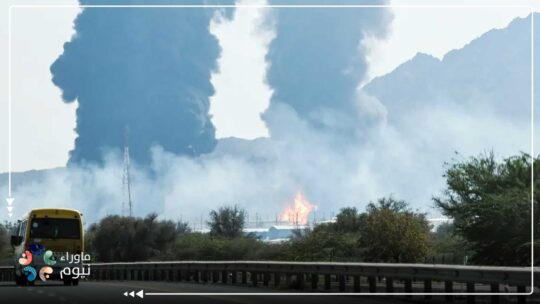
The third-quarter results already reflected significant disruption to Saudi Arabia’s oil industry, including the temporary shutdown of the East–West pipeline in September. The economy was therefore absorbing the consequences of interrupted energy production and transportation before the escalation of attacks in October introduced further uncertainty.
This chronology makes the fourth quarter particularly significant.
Saudi Arabia now faces the challenge of restoring oil production and export capacity while simultaneously managing disruptions affecting aviation, business operations, international events and investor confidence.
If oil activity recovers sufficiently, it could help reduce the scale of the overall contraction. However, continued insecurity and higher operating costs could place additional pressure on the non-oil sectors that Vision 2030 is supposed to strengthen.
The latest GDP figures consequently represent more than a retrospective assessment of economic performance. They provide a warning about the limited resilience with which the kingdom entered the latest phase of regional instability.
Vision 2030 Under Scrutiny: Billions in Megaproject Spending Have Not Eliminated Oil Dependence
Since the launch of Vision 2030, Saudi Arabia has promoted economic diversification as the foundation of its future prosperity. NEOM, the Red Sea tourism developments, Qiddiya, entertainment infrastructure and major international sporting projects have all been presented as instruments for generating new industries, attracting foreign investment and reducing dependence on crude oil.
These initiatives have required enormous financial commitments, much of them supported directly or indirectly by the Saudi state and its Public Investment Fund.
The latest GDP figures raise an increasingly urgent question about the economic returns generated by that expenditure.
If oil activity can contract by 20.4% and pull the entire economy into recessionary conditions despite continued non-oil growth, how much independent economic resilience have the kingdom’s megaprojects actually created?
This does not mean that every investment in diversification has failed. Nor does it establish that individual projects have produced no economic benefits. Saudi Arabia has expanded activity in several non-oil sectors, and some investments may generate returns over longer periods.
But the distinction between spending money and creating a self-sustaining economic sector is critical.
The announcement of a multibillion-dollar project does not automatically translate into productive capacity, profitable businesses, sustainable employment or internationally competitive exports. Similarly, construction activity supported by government expenditure does not necessarily establish an industry capable of maintaining growth once public funding slows.
NEOM illustrates the broader challenge. The project has been promoted as a transformative development capable of attracting international capital, creating advanced industries and establishing an entirely new model of urban and economic activity.
Yet the relevant measure of its economic value is not the scale of its announcements or the ambition of its designs. It is whether the project can eventually generate sustainable revenues, attract private investment on commercially credible terms and produce returns proportionate to the resources committed to it.
The same questions apply to other major Vision 2030 developments.
Are these projects delivering sufficient economic value relative to their costs? Are resources being directed towards sectors capable of increasing productivity, exports and sustainable employment? Or do some initiatives remain dependent on continued government expenditure without generating enough independent cash flow to justify their long-term financial commitments?
These questions become particularly important when the wider economy contracts and public finances come under pressure.
For Never NEOM, the central concern is that the political and promotional value of megaprojects must not be confused with evidence of their economic effectiveness. Genuine diversification should be measured by productive capacity, financial sustainability and resilience to external shocks, not simply by the number or cost of projects announced.
War Disrupts Oil While Threatening the Industries Supposed to Replace It
The economic consequences of the conflict extend beyond the oil sector.
Saudi Arabia has maintained a significant degree of export capacity through alternative routes despite disruptions to energy infrastructure. However, the escalation of attacks in October has raised concerns about aviation, international events, commercial activity and the security of major business districts.
This creates a particularly difficult situation for the kingdom’s diversification strategy.
Higher international oil prices may, under certain circumstances, help offset some of the financial effects of reduced export volumes. Tourism, entertainment, aviation, conferences and international business services do not benefit from regional insecurity in the same way.
Instead, these sectors can face higher insurance and transportation costs, reduced visitor demand, postponed events and greater reluctance among foreign investors to commit capital.
The result is the possibility of two overlapping economic shocks: one affecting the production and export of oil, and another threatening demand for the industries being developed to reduce dependence on it.
This is a significant challenge for projects whose financial models rely on future visitor numbers, international business activity and sustained foreign investment.
Tourism destinations require reliable transport connections and visitor confidence. Major sporting and entertainment events depend on predictable international access and security. Financial and corporate centres require businesses to believe that their employees, assets and operations can function safely.
When those assumptions become uncertain, the projected returns of large development projects may also need to be reconsidered.
The appropriate response cannot simply be to postpone completion dates while leaving the underlying financial assumptions unchanged. Prolonged changes in security conditions, travel demand or investment expectations require a reassessment of project viability, financing needs and expected returns.
For a country attempting to diversify away from oil, the emergence of security-related pressures across both traditional and emerging sectors exposes the difficulty of building a resilient economy through investment alone.
A Widening Budget Deficit Raises Questions About Who Will Finance the Transformation
Saudi Arabia’s economic slowdown is occurring alongside growing fiscal pressure.
Before the latest escalation, the Saudi Ministry of Finance had already revised its projected budget deficit for 2026 to approximately 4.9% of GDP, equivalent to around SAR 245 billion. This was substantially higher than the SAR 165 billion deficit initially budgeted for the year.
A fiscal deficit does not mean that Saudi Arabia is bankrupt or unable to finance its obligations. The kingdom retains significant financial resources and access to domestic and international capital markets.
Nevertheless, the combination of economic contraction, a widening budget deficit and enormous long-term investment commitments creates increasingly difficult choices for policymakers.
The government must continue financing public services, infrastructure, development programmes and existing Vision 2030 commitments. At the same time, security disruptions may require additional spending on infrastructure protection, aviation recovery, logistics and business continuity.
These competing demands make the allocation of public resources more consequential.
Projects that appeared financially manageable under assumptions of stronger growth, stable energy exports and favourable investment conditions may require closer scrutiny when those assumptions change.
The question is no longer simply how much Saudi Arabia can spend on its transformation programme. It is how much long-term expenditure the kingdom can sustain without weakening fiscal efficiency, increasing financing costs or diverting resources from activities capable of generating stronger economic returns.
The ability of Saudi Aramco and other major Saudi entities to secure international financing may provide valuable financial flexibility. But access to credit is not a substitute for demonstrating that investments can produce sustainable cash flows and commercially viable returns.
The more expensive the economic transformation becomes, the more important it is to establish which projects genuinely strengthen the productive economy and which continue to depend on state support.
This is particularly relevant to NEOM and other megaprojects whose projected economic benefits may take years or decades to materialise.
The Saudi Economy Is Contracting. Vision 2030 Must Answer for Its Economic Returns
Saudi Arabia’s third-quarter figures reveal a difficult reality for the government’s economic transformation programme.
Real GDP contracted by 3.8%. Oil activities declined by 20.4%. Non-oil activities grew by only 1.9%, leaving them unable to offset the damage caused by the disruption to the petroleum sector.
These results were recorded before the latest escalation involving the Houthis, which has introduced additional risks for aviation, tourism, investment and commercial activity.
The figures do not prove that Vision 2030 has failed in its entirety. Non-oil activities continue to expand, and the economy recorded a partial quarter-on-quarter recovery. These developments should be recognised when assessing the kingdom’s economic performance.
However, the data also show that the transformation has not yet created an economy capable of withstanding a severe oil shock without an overall contraction.
That finding demands greater scrutiny of spending priorities, investment returns and the continued reliance of non-oil development on government financing.
The contradiction is particularly striking: Saudi Arabia is attempting to reduce its dependence on oil through an investment programme whose financing and broader economic environment remain deeply exposed to oil-sector disruption.
Meanwhile, the industries intended to provide alternative sources of growth face their own vulnerabilities as regional insecurity affects travel, business confidence and investment decisions.
For Never NEOM, this is the fundamental weakness that must be examined behind the promotional language surrounding Vision 2030.
After years of enormous expenditure on NEOM and other ambitious developments, why is a single major oil-sector shock still capable of pushing the Saudi economy into contraction for two consecutive quarters? And how will the kingdom ensure that its non-oil investments become genuinely productive, financially sustainable sources of growth rather than projects that remain dependent on continued state spending?
Economic strength is not measured by the scale of what a government promises to build. It is measured by what its economy can produce, finance and sustain when traditional sources of revenue are disrupted.
Saudi Arabia’s latest official figures do not mark the end of its diversification ambitions. They do, however, expose a test that cannot be answered through ambitious announcements, futuristic designs or promotional campaigns.
After billions spent on Vision 2030, where are the economic returns capable of protecting Saudi Arabia when oil revenues and production come under pressure?
For NEOM and the kingdom’s wider megaproject strategy, that question is becoming increasingly difficult to avoid.