
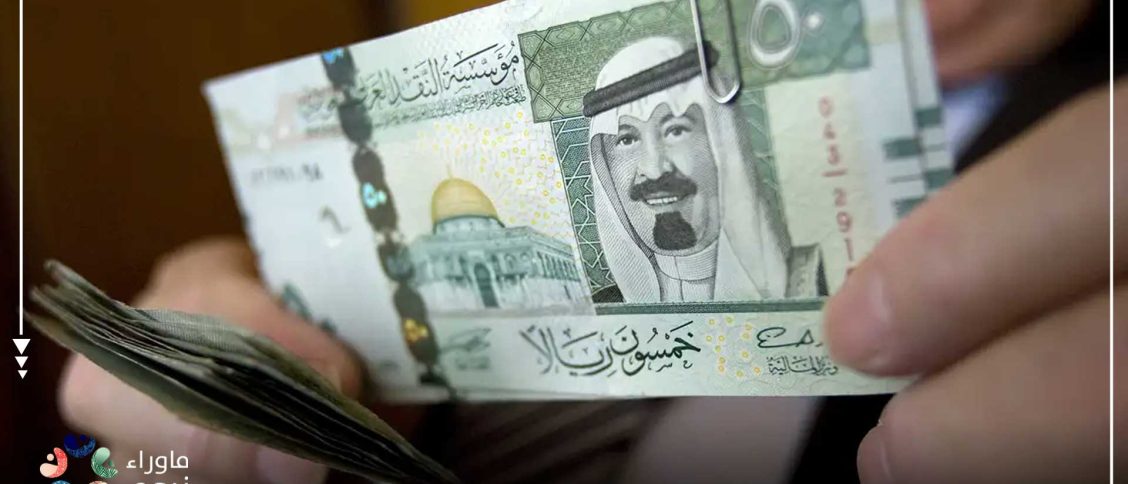
A growing body of financial data and on-the-ground reporting is beginning to reveal a widening gap between Saudi Arabia’s economic narrative and its current trajectory.
According to a March 2026 report by the The Wall Street Journal, the Saudi system has incurred more than $10 billion in direct losses linked to the regional escalation involving Iran. At the same time, the kingdom’s sovereign wealth fund has committed nearly $10 billion to a U.S. entertainment deal in which it will hold no voting rights.
The contrast is striking. Strategic losses are being absorbed quietly, while large-scale external investments continue under terms that offer limited control. Together, these developments point to deeper structural pressures within an economic model built on high expenditure, uncertain returns, and external dependency.
War Costs Expose Structural Vulnerabilities
The reported $10 billion in losses is not simply a short-term financial setback. It highlights the sensitivity of Saudi Arabia’s economy to geopolitical shocks, particularly in a period already marked by fiscal pressure.
The Wall Street Journal notes that these costs include both lost revenues and additional expenditures tied to the regional conflict. This aligns with earlier warnings from the International Monetary Fund, which indicated in October 2025 that Gulf economies would face mounting financial strain in the event of prolonged instability.
At the same time, public debt has risen sharply. The report places Saudi debt at approximately $400 billion, or 32% of GDP, up from just 12% a decade ago. This rapid increase reflects a growing reliance on borrowing to sustain large-scale spending commitments—many of which have yet to generate meaningful returns.
Capital Outflows Without Influence
Despite these pressures, Saudi Arabia’s Public Investment Fund continues to deploy substantial capital abroad.
A report cited by Reuters, drawing on Wall Street Journal coverage, indicates that the fund has agreed to contribute around $10 billion to a major U.S. media transaction involving Paramount Skydance and Warner Bros. Discovery.
The total deal is valued at roughly $110 billion, with Gulf investors providing a significant portion of the financing. However, a critical detail stands out: these investors, including the Saudi fund, will not hold voting rights in the new entity.
This raises fundamental questions about the strategic rationale behind such investments. Large sums are being committed without corresponding influence over governance or direction—reinforcing concerns that capital is being used to secure presence rather than control.
Analysts have previously noted this trend. A Bloomberg report from November 2023 highlighted the fund’s increasing reliance on international investments, partly to offset weaker domestic returns. The continuation of this strategy, despite mounting fiscal pressure, suggests limited room for recalibration.
NEOM: From Vision to Strain
The situation on the ground in Saudi Arabia’s flagship projects further underscores these challenges.
Reporting from the Wall Street Journal describes stalled progress across several NEOM developments. In The Line, a trench stretching roughly 75 miles—intended to host high-speed infrastructure—now sits largely exposed to desert conditions. Worker camps that once supported large-scale construction have reportedly become sparsely populated.
In Sindalah, high-end supplies such as imported caviar have reportedly gone unused, while environmental conditions have affected newly developed facilities. Elsewhere, in the “New Murabba” project, large-scale excavation has been paused amid funding delays.
These examples point to a broader pattern: projects launched at scale without fully secured financing or phased execution strategies are increasingly vulnerable to disruption.
The report also references internal accounts suggesting that design decisions were, at times, driven by top-level preferences rather than conventional feasibility processes—raising further questions about governance and planning structures.
Investment Gap and Fiscal Tightening
Saudi Arabia’s ability to attract foreign investment remains below its stated targets.
According to official figures cited by the Wall Street Journal, foreign direct investment reached $35.5 billion in 2025, well short of the kingdom’s goal of $100 billion annually by 2030.
Regional instability is adding to investor caution. Concerns over potential disruptions in key shipping routes, including the Strait of Hormuz, have heightened perceived risk across the region.
In response, the Public Investment Fund has begun adjusting its strategy—reducing spending, scaling back hiring, and liquidating portions of its U.S. equity portfolio prior to the escalation. By late 2025, the fund had also sought additional capital from domestic investors, including wealthy families and local asset managers.
Fiscal tightening is now visible across government institutions, with measures introduced to reduce travel costs and operational expenditures. While limited in scope, these steps reflect broader financial constraints.
An Economic Model Under Pressure
Taken together, these developments suggest that Saudi Arabia’s current economic model is facing a period of significant strain.
Rising debt, high external exposure, underperforming domestic projects, and persistent geopolitical risk are converging at a critical moment. The gap between long-term ambitions and short-term realities is becoming increasingly difficult to manage.
The core issue is no longer confined to individual projects or isolated investments. It concerns the sustainability of a broader approach—one that prioritizes scale and speed, but is now being tested by financial, operational, and external constraints.
As new data continues to emerge, the question is shifting. It is no longer about the scale of ambition, but about the capacity to deliver—and the cost of maintaining that trajectory.