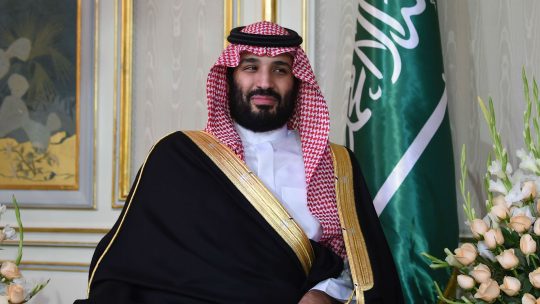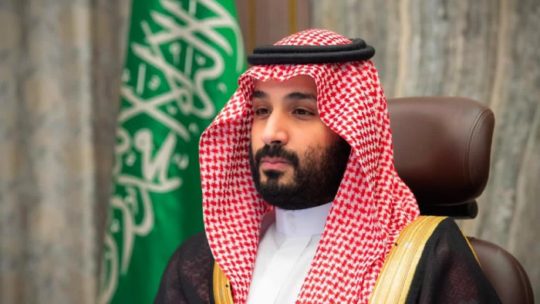


A recent report by the Financial Times has shed light on a widening gap between Washington and Riyadh, revealing what officials describe as growing frustration within the Saudi leadership—paired with a notable absence of any public response.
The report, published in late March 2026, captures a moment of tension shaped by increasingly aggressive rhetoric from Donald Trump regarding a potential confrontation with Iran. At the same time, it points to a deeper structural issue: a relationship that appears increasingly imbalanced, where pressure from Washington intensifies while Saudi Arabia’s room to respond remains limited.
According to the Financial Times, officials in Riyadh are expressing “disappointment and anger” behind closed doors. Yet this sentiment has not translated into any visible shift in policy or tone, raising broader questions about the nature of the alliance between the United States and Mohammed bin Salman.
Uncertainty in Washington, Exposure in Riyadh
One of the report’s central themes is the unpredictability of U.S. policy under Trump, particularly in relation to Iran. The newspaper describes Washington’s approach as inconsistent, with threats of escalation—such as potential strikes on Iranian energy infrastructure—creating uncertainty for regional partners.
For Saudi Arabia, this volatility carries direct risks. As a key player in global energy markets and a country heavily invested in long-term economic transformation, any regional escalation threatens both economic stability and investor confidence.
The report also highlights renewed calls from Washington for Gulf states to shoulder a greater share of the financial burden in the event of conflict. This reflects a familiar position long associated with Trump—that U.S. security commitments should come with a higher price tag for allies.
In this context, the alliance begins to look less like a partnership of equals and more like a transactional arrangement in which responsibilities—and risks—are unevenly distributed.
Public Rhetoric, Private Constraints
The most striking aspect of the report is its reference to Trump’s public remarks about the Saudi leadership, including a widely circulated statement made during a speech in Miami on March 27, 2026.
Despite the sharp tone of these comments, Saudi Arabia has issued no official response.
This silence is not without precedent. Similar statements by Trump in previous years—including his 2018 assertion that Saudi Arabia would not last “two weeks” without U.S. protection—have followed the same pattern: strong rhetoric from Washington, followed by restraint from Riyadh.
The Financial Times suggests that this dynamic reflects underlying constraints. Saudi Arabia’s strategic dependence on the United States—particularly in defense and investment—limits its ability to respond publicly without risking broader consequences.
Investment Without Leverage
The report also points to a key contradiction in the relationship. Despite committing vast financial resources to strengthen ties with the United States, Saudi Arabia appears to have gained limited political leverage in return.
Analysts cited in the report note that Riyadh has invested heavily in U.S. markets and partnerships, particularly through its sovereign wealth fund. Yet these investments have not insulated it from political pressure or public criticism.
This aligns with broader assessments from institutions such as Bloomberg, which have highlighted the extent to which Saudi economic projects depend on Western capital and partnerships. That dependence, in turn, reduces flexibility in moments of political tension.
Meanwhile, ongoing negotiations over issues such as security guarantees and regional normalization continue to tie Saudi policy closely to U.S. priorities—further reinforcing the asymmetry in the relationship.
A Relationship Under Strain
What emerges from the Financial Times report is not simply a moment of diplomatic friction, but a deeper structural imbalance.
Saudi Arabia finds itself in a position where frustration is evident internally, yet constrained externally. Public criticism from Washington continues, while Riyadh’s response remains muted.
The result is a relationship that appears increasingly difficult to manage: one defined not only by shared interests, but by unequal influence.
As regional tensions rise, this imbalance is likely to become more visible—and more consequential.