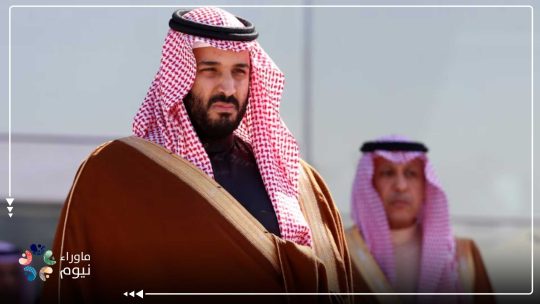


The ongoing and primarily economic conflict between the Kingdom of Saudi Arabia and the UAE started to appear in public. On a political level, the two countries are no more political allies like they were during the war on Yemen, the blockade of Qatar, and the rapprochement with the Israeli occupation.
Over the past ten years, and since the start of the Arab Spring revolutions, Saudi Arabia and the UAE have been on one side, supporting the counter-revolutions, uniting their efforts at all levels in order to finance the coups that occurred against the peoples’ revolutions, and to confront the people’s backed movements that began to appear for the first time. However, after succeeding in countering revolutions, disputes over interests began to erupt between them, and the Emirates had made great progress compared to Saudi Arabia in all files, until Saudi Arabia became known as a follower to the Emirates, and that its sovereign, security and economic decisions are cooked in Emirates, which prompted Saudi Arabia to take action to get rid of this insulting stigma.
bin Salman and bin Zayed were friends, but bin Zayed deluded bin Salman by involving him in the Yemen war, suppressing freedoms, spreading oppression in Saudi Arabia, involving him in the siege of Qatar, and cutting relations with Turkey, in addition to the Khashoggi murder, which all affected the economic, social and security interests of the Saudi people.
The secret disputes between KSA and the UAE were so strong that they became public. Moran Zaga, an expert on the Gulf region at the Israeli Institute for Regional Foreign Affairs (Mitvim), said: Something has happened in the past two decades, which made each country focus more on achieving its own national goals, while working less with the other country.
Zaga noted that the regional shift from the excessive dependence on the United States for military support has perhaps given the UAE the impetus to try to elude the Saudi shadow.
She added: They no longer have the defensive umbrella they had before, and the current desire of both countries is to increase their relative value in the region.
Not just the economy
The dispute affected the defense agenda for the Saudis who consider the Iranians to represent the main security threat for them, while the UAE sees the Muslim Brotherhood – and the Turkish-Qatari axis that supports it – as its main enemy.
Friedman said: Their security goals are different, while the UAE rejects any presence of the Muslim Brotherhood; Saudi Arabia – despite its rejection of its presence at home – has a less aggressive approach towards the Muslim Brotherhood outside Saudi borders.
The Saudis have worked closely with the US and Israel to confront Iran, and in return, the Emiratis maintain open diplomatic channels with Tehran, and a thriving trade relationship from Dubai to the Islamic Republic, as the UAE; a country whose economy depends on shipping, has realized that the US will not protect it as much as it needs, and decided to take matters into its own hands by calming tensions with Tehran, and avoiding to officially call the Iranians as the perpetrators of the sea attacks, rather, Emirati officials began communicating with Tehran about maritime security.