

The International National Interest website said that despite the billions of dollars spent by the Kingdom of Saudi Arabia on the purchase of military and defensive weapons, it is still suffering a catastrophic failure in its defence capabilities, after the repeated Houthi attacks revealed the weakness of the Saudi air defence system. This is the first time that KSA’s missiles have failed to repel Houthi attacks from its regions.
The website added that all types of conventional air defences can combat drone attacks, but the problem is not about the deployment of expensive military equipment with high capabilities, but rather about gathering intelligence to stop any attack before it begins, which KSA has failed to do under MBS leadership.
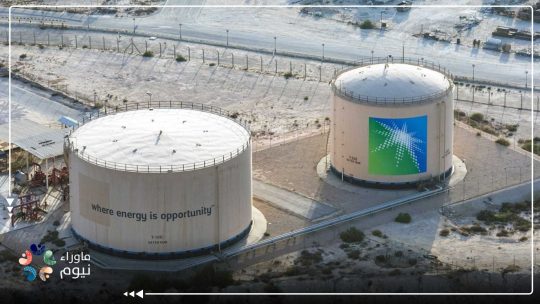
The report said that the missile strikes that severely damaged a major Saudi oil facility on September 14, 2019, remain a mystery to this day, after the Houthis claimed responsibility for the attacks on the two facilities of Saudi Aramco, which were characterised as long-range and precisely targeted strikes. This was followed by accusations of the Iranian Revolutionary Guards supporting the Houthis with weapons, drones, and ballistic missile components.
The only thing revealed by this strong attack is that the limits of the Saudi air defence system, which appears to be developed due to its high prices and capabilities, did not succeed in repelling the attack, so that bin Salman, and his father, the King, created a new failure in the military and defence field of KSA.
The biggest failure became evident when five soldiers did not succeed in repelling the attacks. At least they erred, malfunctioned, or failed when they tried to intercept the barrage of missiles that targeted Riyadh on March 25, 2018.
The Saudi army launched advanced Patriot missiles in an attempt to destroy the Houthis’ missiles in the air, then the Saudi forces claimed that their missiles had hit the target, but the news of the death of a Saudi man due to being hit by metal shrapnel, the source of which was not known, whether it was from a disabled Patriot, a successful interception, or Houthi missiles that fell to the ground, is among the failures of those defence systems.
Also, the video clip broadcast by some citizens on social media platforms, following those skirmishes with the Houthis, showed that many of these attacks exploded in the air, and some of them deviated from their course but fell at another point.
This time, these attacks took place, recalling the memories of the billions that bin Salman and his father the king paid to Trump in order to secure their ruling and the survival of their throne, at the expense of oppression, poverty, and the political and social collapse that struck the country.
Perhaps the words of Theodore Postol, a physicist at the Massachusetts Institute of Technology, and a prominent critic of American missile defences, have validated the state of the Kingdom after all the equipment that it imported from Saudi Arabia, when he said about American defence systems: It is nothing but a series of disasters that doesn’t break with this weapon system, so it seems Riyadh is realising the harsh reality that it still needs better missile defence system.