
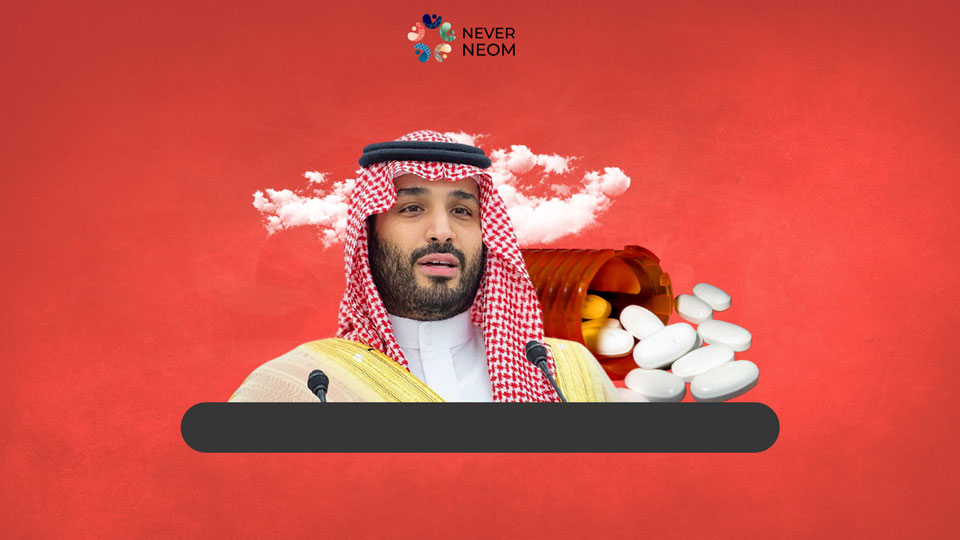
The American magazine “Foreign Policy” classified Saudi Arabia as the drug capital in the Middle East. The classification was based on Crown Prince’s “Mohammed bin Salman” approach in spreading corruption, which turned Saudi Arabia into a hotspot for drug use of all kinds of Captagon, cocaine and heroin. This classification is a shameful stigma for the regime, which has to re-rationalize its open behaviour, and address this phenomenon, exacerbated by the Entertainment Authority.
The magazine said that ill-considered and guided openness to society will generate a catastrophic situation, which may lead to the complete destruction of this society.
Scenes from the videos from the “Middle Beast” festival, were a reflection of this openness, where Saudi youth appeared in an unprecedented way to take drugs with boldness and confidence as if it was part of the rituals of the Middle Beast.
According to the Foreign Policy, these scenes reveal the secret practices as the Saudi regime did not open up to human rights, but rather allowed the youth to react to repression by such behaviour they consider to be signs of freedom that would bring the system closer to society.
Adding, “Three consecutive drug seizures during the past month revealed the extent of the drug problem in the Kingdom of Saudi Arabia.”
It also pointed out that the Syrian government, in a rare gesture of cooperation, confiscated more than 500 kilograms of addictive amphetamines known as “Captagon”, which were hidden in a shipment of pasta for the Saudi capital, Riyadh.
A few days later, the Saudi authorities confiscated more than 30 million narcotic pills hidden in the imported cardamom. Then, in mid-December, the Lebanese Internal Security Forces thwarted an attempt to smuggle four million Captagon pills to Riyadh via Jordan, which were hidden in coffee bags. These quantities of drugs, especially Captagon, are produced in large quantities to meet the Saudi demand, which has become a profitable market for drug dealers, and became a capital for drug consumption in the region, as the Saudi regime loses billions in wrong treatments.
Statistics also show that in one month, dozens of operations to smuggle types of drugs into Saudi Arabia were seized, as well as its success in in entering and reaching the public consumption of drugs by the Saudi youth community.
The United Nations Office on Drugs and Crime (UNODC) confirms that more than half of the quantities of Captagon seized in the Middle East between 2015 and 2019 were in Saudi Arabia.
According to the American “Foreign Policy” magazine, experts believe that Saudis are concerned about the effect of these addictive drugs on their younger generations, as 40% of Saudi drug addicts use Captagon, and the majority of Saudi drug users are between 12 to 22 years old.
In 2009, a symposium organised by Najran University revealed that the drug trade in Saudi Arabia was estimated in 2008 at about 23 billion riyals, equivalent to 6.1 billion dollars.
A study conducted by the Ministry of Justice revealed that 28% of Saudi women are involved in drug cases.
The statistics of the World Health website for the year 2018 recorded that drug abuse in Saudi Arabia caused the death of 311 people during that year, coinciding with the Saudi Ministry of Interior’s claim that the number of addicts amounted to only 200,000 citizens, or 0.7% of the total population (28 million).