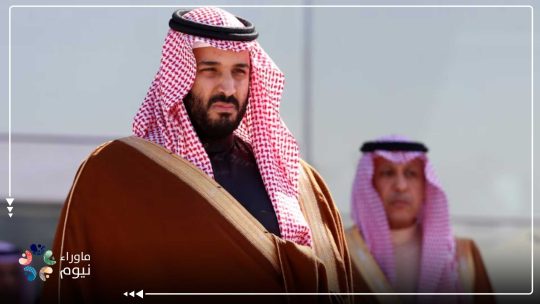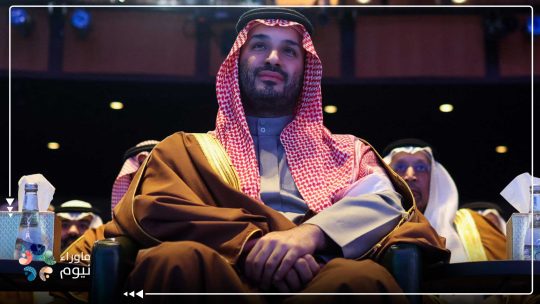

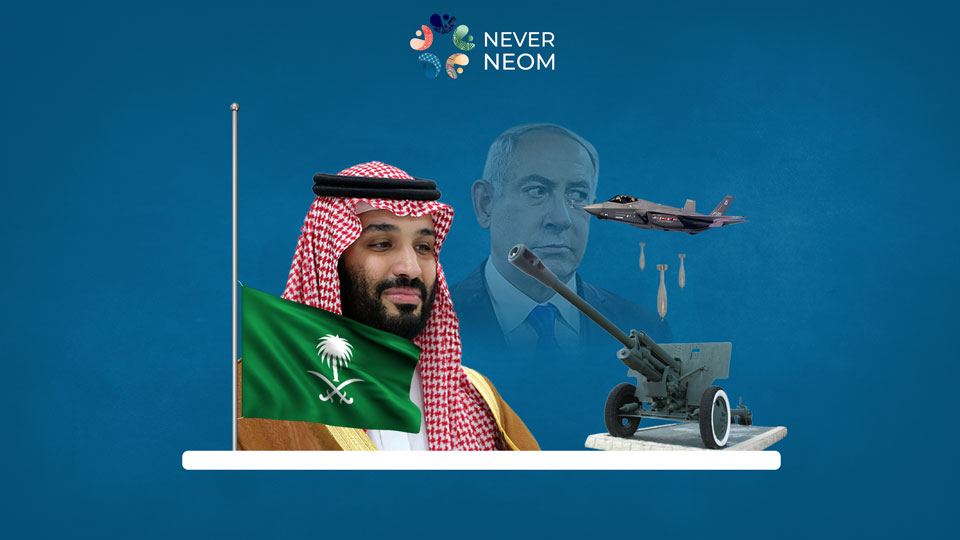
Israeli Prime Minister Benjamin Netanyahu has spoken by phone with Saudi Crown Prince Mohamed bin Salman (MBS) with the mediation of that Bahraini foreign minister, Abdullatif bin Rashid Al- Zayani, security sources revealed.
In the conversation, MBS demanded handing certain powers in the West Bank to the Palestinian Authority forces, and giving the PA forces security-related authority at the Aqsa Mosque and the Church of the Holy Sepulchre in Jerusalem’s Old City.
Israel is under pressure from US President Joe Biden’s administration to agree to Riyadh’s demands for significant concessions to the Palestinians in return for normalizing ties with the Kingdom.
In its part, Saudi Arabia is seeking security guarantees from the US, help with developing a civilian nuclear program and fewer restrictions on U.S. arms sales as its price for normalizing relations with Israel.
Reliable sources revealed that Saudi Arabia is the fifth-largest military spender worldwide, spending some $75 billion last year. Supposedly, this puts Riyadh above the UK, Germany, and France.
Saudi Arabia’s military spending in 2022 increased by 16%, reaching an estimated $75 billion, the largest since 2018, the sources clarified.
In 2022, Riyadh spent an estimated $75bn on its military, according to the sources, up from the $48bn it spent in 2021. This was more than seven percent of the country’s gross domestic product.
Saudi Arabia was last ranked in the top three military spenders in 2020.
Saudi military spending exceeded in 5 years the spending in the education and health sectors, estimated at $273 billion, representing 20.9% of government spending in total.
The Saudi government allocated 17.7% of its 2021 budget for military spending, estimated nearly $46.7 billion, down from the $48bn it spent in 2020.
Since 2016, Saudi Arabia has intensified its military spending, which includes non-military security institutions affiliated with the Ministry of Interior.
Saudi Arabia has spent a fortune buying arms from the US to prosecute a war that has killed almost a quarter of a million people — the world’s worst humanitarian catastrophe in our lifetime.
However, no real achievement was reported, as Saudi Arabia failed to stop Houthi attacks on the Kingdom.
Within the last 10 years, Saudi Arabia has turned itself into the world’s largest buyer of weapons on the world market. Ten years ago, it was buying 90% less than they are today.
The US and UK are the kingdom’s top suppliers. With purchases of astonishingly expensive weapons like helicopters, tanks, and guided missiles, nearly all of its foreign-made weapons (by value) come from these two countries.
A total of 61% of Saudi Arabia’s arms imports came from the U.S., and 49% of British arms exports are allocated to Saudi Arabia.
On the other hand, Saudi Arabia was the third-largest recipient of German arms. The total for 2018 was €416.4 million. The kingdom is also considered France’s second-best arms customer between 2008 and 2017.
The ramp up has been significant since their March 2015 intervention in the Yemen civil war.
Since the start of the Yemen war, Saudi Arabia’s military spending increased to reach an estimated $63 billion, placing it third in the world.
Saudi Arabia has spent a fortune buying arms from America to prosecute a war that has killed almost a quarter of a million people — the world’s worst humanitarian catastrophe in our lifetime. However, no real achievement was reported, as Saudi Arabia failed to stop Houthi attacks on the Kingdom.
Saudi Arabia declared its war on Yemen in 2015 and said it would last for a few months. The Kingdom bet on its military forces and Gulf allies. However, the war has resulted in heavy military and economic losses.
MBS repeatedly said that his war with the Houthis would only last a few days. The actual military losses, however, are much higher than those declared.