

It doesn’t take a seasoned observer to notice the signs of financial suffocation gripping Saudi Arabia this past week. The markets are in steady decline, foreign reserves at the central bank are hemorrhaging tens of billions in a single month, and the authorities are scrambling to impose new, record-breaking real estate fees under the guise of “market regulation.”
The picture is clear for anyone willing to see: a regime doubling down on taxation when liquidity runs dry, boasting about foreign investment promises while its domestic indicators scream crisis.
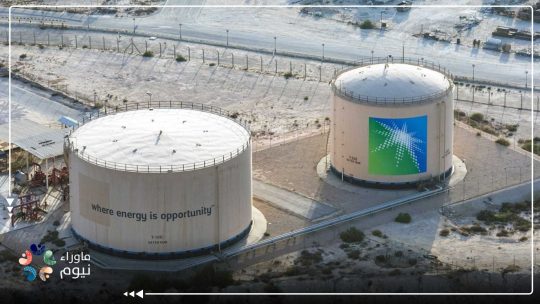
The simultaneous plunge in the stock market and the fall of oil prices to around $68 a barrel was not a minor blip—it was a headline that revealed, once again, the fragility of Crown Prince Mohammed bin Salman’s so-called post-oil salvation plan.
A Wobbling Stock Market with Every Oil Shock
It started with the financial markets. The Saudi stock index suffered losses for the fifth consecutive session, mirroring the drop in oil prices and expectations of increased OPEC+ output. The deep, structural link between oil price movements and budget stability remains unbroken, despite years of fanfare over “economic diversification.” Major company shares tumbled on Sunday, responding immediately to the oil price shock.
But deeper than the index’s red streak was a number from the central bank: Saudi Arabia’s net foreign assets fell by about $13.3 billion in July alone. This monthly bleed suggests that the government’s appetite for spending and foreign obligations far exceeds what’s coming in from exports and bond revenues. The message is loud and clear: reserves are being depleted at a rate no propaganda campaign or summit can disguise.
Real Estate Fees: Taxation Masquerading as Reform
The government responded in its usual fashion: new taxes and levies, cloaked in the language of “market reform.” The Ministry of Municipal and Rural Affairs and Housing announced tiered white land fees in Riyadh reaching up to 10% annually for top categories, with lower brackets at 7.5%, 5%, and 2.5%.
Marketed as a solution to speculative landholding and a boost to housing supply, the move instead reflects a desperate need for additional cash flow amid declining oil indicators and widening asset gaps. When real estate fees reach such heights in the capital, it’s a sign that the state is no longer banking on “efficiency gains” alone—it’s resorting to direct extraction to support the treasury and soften the blow of falling oil revenue and ballooning mega-project costs.
Talk of “regulation” cannot hide the simple truth: both citizens and developers are being asked to foot the bill for showy policies that turn public fees into tools to plug budget holes.
Forum Promises Cannot Cover Financial Bleeding
Defenders of these measures were quick to parade the usual “success” stories: reports of surpassing housing ownership targets and celebratory headlines from bilateral forums and investment expos presented as signs of economic resilience.
But the real test lies in hard numbers, not PR statements. Memoranda of understanding—like those signed with Syria and spun as economic breakthroughs—do not change the fact that the stock market is tumbling, reserves are shrinking, and oil prices have fallen below the assumptions on which government spending was based.
Relying on taxes and levies as a financial quick fix won’t heal the deeper ailment: a growth model still tethered to the cyclical fate of oil revenues. Brent crude falling to $68 a barrel is enough to expose the fragility of the budget, because no matter how slick the branding, the core funding pillar remains oil.
These announcements are pumped out to simulate vitality, even as warning signs of cash shortages and financial strain continue to pile up beneath the surface.
The Oil Dependency Still Rules
Every dollar lost in oil prices means a more complicated deficit equation, forcing the government into more borrowing or further asset drawdowns to pay for mega-projects, public sector salaries, and state fund allocations. Each drop in oil triggers a ripple effect across markets, real estate, and credit—all of which were visible in the past week without any sugarcoating.
Real Estate Developers Feeling the Pinch
The new real estate fees carry side effects the government doesn’t acknowledge in its official statements. While higher holding costs may push some landowners to sell—triggering auctions, as some reports suggest—it also raises the costs of development and stock financing for developers. This inevitably affects housing prices or freezes investment decisions at a time when the economy needs real activity, not paper-shuffling.
Combine these new fees with higher global interest rates and volatile oil prices, and credit conditions become tighter. Banks are less willing to finance long-term residential or infrastructure projects, rendering the declared goal of “market regulation” little more than a pretext for rapid revenue collection.
Investors Caught Between Falling Screens and a Struggling Sovereign Fund
Worst of all, these measures come amid growing market pressure, dragging the index down and eroding local investor confidence. The individual investor watching the index drop for five straight sessions isn’t convinced by talk of “structural reform”—they’re alarmed by the bleeding value in their portfolio.
The Public Investment Fund (PIF), once a reliable stabilizer through strategic injections, now faces limited room to maneuver. Volatile Aramco profits and cautious 2025 dividend projections, combined with ballooning domestic project demands, have squeezed its operational space.
In the end, the burden falls on the consumer facing new fees, the investor navigating red screens, and a government crashing into fiscal reality each time oil drops.
The Truth Behind the Spin
This week’s “Riyadh Fees” announcement was meant to signal that the state can reshape the real estate market at will. The deeper truth is that the state is tacitly admitting its previous tools have failed to curb speculation or generate sustainable housing supply. The funding gap is now so large that waiting is no longer an option.
If the diversification project had truly succeeded, the stock market wouldn’t have crumbled at the first oil shock, and the central bank wouldn’t have had to burn $13.3 billion in foreign assets in just one month—all while the press celebrates summits and agreements.
Numbers don’t lie: an economy gasping to the rhythm of oil prices, a treasury plugging holes with taxes, and a market losing confidence as every new promise fades at the trading bell.
Taxation Masks the Cracks of a Crumbling Model
One week told the full story: a falling index, $68 oil, $13.3 billion in evaporated reserves, and 10% real estate taxes in the heart of Riyadh. What is branded as “diversification” hasn’t shielded the Saudi system from market shocks, and what is framed as “regulation” is simply taxation dressing up fiscal desperation.
The economy supposedly freed from oil remains its hostage. The treasury once promised sustainable non-oil revenues now begs for domestic levies and foreign asset liquidations to stay afloat.
No linguistic polish can hide the stark reality: MBS’s economic model is on life support, and every new “success story” merely postpones the moment of reckoning.