
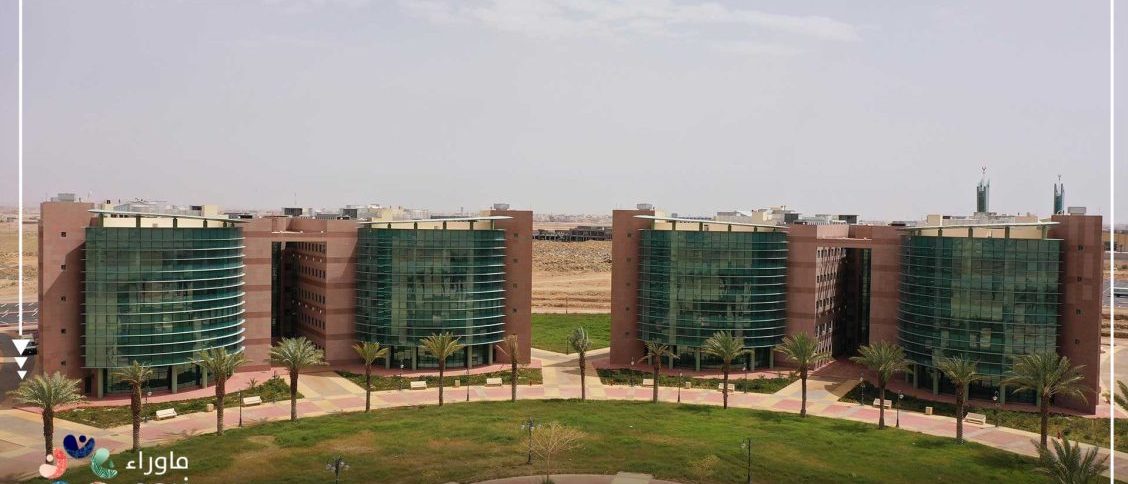
NEOM University did not need a formal cancellation announcement. According to Times Higher Education, something quieter appears to have happened: the name disappeared, senior figures left, detailed references to the university were removed from NEOM’s website, and what had once been presented as an ambitious academic and research institution was replaced by much broader language about education, research and innovation.
After almost four years of preparation, the project that had been described as potentially becoming one of Saudi Arabia’s best-funded research institutions does not appear to have reached the point at which it could admit students and be judged on its academic performance.
That is precisely what makes the story significant. The university did not fail after decades of academic competition. It did not fall in global rankings, lose students or see its research output collapse.
It appears to have stalled before becoming a fully functioning university at all.
That turns the story of NEOM University into more than a small education story. It becomes a miniature version of a much larger problem surrounding parts of NEOM: maximum ambition is announced first, while basic questions about governance, financing, structure, timelines and viability are dealt with later.
It Wanted to Rival KAUST Before Settling a Simpler Question
From the beginning, NEOM University was not presented as a modest college or pilot institution.
The ambition was much larger. It was supposed to become a major research university, with enough funding and prestige to compete with institutions such as King Abdullah University of Science and Technology, or KAUST.
That is an enormous undertaking. A world-class research university is not created simply by constructing buildings and putting the word “University” on the entrance.
It requires academic independence, clear governance, long-term funding, international recruitment, accreditation, laboratories, doctoral programmes, research networks, degree-awarding authority and, above all, an institutional identity stable enough to survive for decades.
Yet researcher Annalisa Pavan has pointed to a much more basic unresolved issue: what exactly was NEOM University supposed to be?
Public or private?
Part of NEOM?
Under the Ministry of Education?
An independent institution?
Who would accredit its programmes?
Who would ultimately govern it?
If such fundamental questions remained unclear, it is difficult to understand how the project was preparing to become one of the kingdom’s leading research institutions.
That is one of the recurring weaknesses of megaproject thinking. The process starts with the final image: build one of the best universities in the world. Only afterwards do the institutional details appear. A global ranking can be placed in a presentation. An academic institution cannot be built by presentation. enior Leaders Left — Then the University Vanished From the Website
Leadership changes alone do not prove that a project has been cancelled.
Andreas Cangellaris, the university’s founding president and former dean at the University of Illinois Urbana-Champaign, left his role in March after almost four years and moved into a senior advisory position at Riyadh University of Arts.
Donal Bradley, the former Oxford physics professor who led the NEOM Education, Research and Innovation Foundation, left in July after roughly three and a half years. Institutions change leadership all the time.
But when two senior figures leave at around the same time that references to the university disappear from the project’s website and detailed descriptions of its academic ambitions are replaced with broad statements about education and research, it becomes increasingly difficult to treat each development as unrelated.
If the project has been redesigned rather than cancelled, then basic transparency should explain what happened.
Was it frozen?
Merged into another institution?
Restructured?
Delayed?
Were its programmes transferred elsewhere?
Or was it abandoned completely?
Silence answers none of those questions.
Deleting old webpages also does not erase the fact that teams of employees, advisers and international experts spent years working on the project.
That leads to the question that is often missing when ambitious projects quietly disappear:
How much did those four years cost?
Executive salaries.
Consultants.
Institutional planning.
Recruitment.
Research programmes.
Office space.
Contracts.
Design work.
Administrative systems.
Time.
A project does not need to open its doors in order to consume substantial amounts of money.
If NEOM University has effectively been cancelled, then the cost of getting from announcement to disappearance should be part of the public accounting.
From “University of the Future” to General Language About Education
The university story becomes more important when placed inside the wider context of NEOM.
NEOM was never presented simply as a property development.
It was supposed to be a city, an economy, a technology laboratory, a tourism destination, an industrial hub, an AI centre, a new kind of society, and an education and research ecosystem at the same time.
That ambition created a structural problem.
The more things NEOM is expected to become, the more capital, management capacity and specialist expertise it needs in order to execute any one of them well.
A world-class university on its own is a huge undertaking.
A global city is a huge undertaking.
Luxury resorts are a huge undertaking.
A port, industrial system, energy network, hydrogen industry and supporting infrastructure are all huge undertakings.
Trying to build all of them at once inevitably creates competition inside the project itself.
When capital is abundant, every ambition can remain alive.
When budgets tighten, priorities become painful.
Does the next billion go to the university?
The Line?
Trojena?
Sindalah?
Oxagon?
Or the basic infrastructure required by all of them?
At some point, some ideas have to be reduced, delayed or abandoned so that others can survive.
That is why NEOM University matters symbolically.
If a project once presented as the intellectual and research engine of NEOM can disappear with so little explanation, the obvious question is how many other elements of the original vision remain because they are genuinely executable — and how many are simply waiting for their own restructuring.
Cancelling a Weak Project Is Not the Real Failure
There is nothing inherently scandalous about cancelling a project that no longer makes economic or strategic sense.
In fact, doing so can be responsible.
If NEOM or the Public Investment Fund concluded that Saudi Arabia did not need another expensive research university, or that the same goals could be achieved more efficiently through KAUST, existing universities or a more focused institution, stopping the project may have been the correct decision.
The real mistake would be continuing to spend simply because the project had already been announced.
That is the classic sunk-cost problem: money has already been spent, therefore more money must be spent to avoid admitting that the original investment did not deliver.
If Saudi Arabia stopped a weak project before it consumed billions more, that should be described as a correction rather than a defeat.
But a correction still requires an explanation.
Christopher Davidson’s observations about Gulf megaprojects are relevant here: projects whose ambition outruns reality do not always receive a formal funeral. They can gradually disappear, be absorbed into something else or quietly lose prominence because explicit cancellation creates political and reputational costs for those who originally announced them.
That is the culture that deserves scrutiny.
Admitting failure is not the most dangerous thing that can happen to an investment institution.
The more dangerous situation is one in which admitting failure becomes impossible, so institutions continue defending decisions they no longer believe make sense.
At that point, protecting the reputation of decision-makers becomes more important than protecting the capital.
You Can Delete the Name From the Website — Not the Cost of Four Years
NEOM University offers a lesson that extends far beyond education.
There was a name.
A founding president with international credentials.
Senior leadership for education and research.
Plans.
Research ambitions.
A stated intention to compete with KAUST.
A promise to create an exceptional academic institution.
Then, after almost four years, the founding president left, the senior research leader departed, and the university’s name disappeared from NEOM’s public-facing material without a clear public explanation of what happened to the project.
Perhaps the restructuring was sensible.
If so, it should be explained.
What was cancelled?
What was transferred?
How much was spent?
What assets or programmes remain?
What lessons did NEOM and the PIF take from the experience?
These are not questions asked for the sake of embarrassment.
They are basic questions of governance.
Every serious investor cancels projects.
The problem is not failure.
The problem is an institution that is very good at announcing births but has no visible system for recording deaths.
NEOM was launched as a place that would redefine cities, work, tourism, technology, education and research.
After years of scaled-back ambitions and shifting priorities, what it increasingly needs is something far less futuristic:
clear accounting.
NEOM University was not simply an architectural rendering that could be edited and forgotten.
If international executives, specialists and project teams spent four years building it on paper and in planning systems, then money, time and alternative opportunities were consumed.
Removing the name from a website, if that disappearance really reflects the end of the project, does not close the file.
It opens it.
A project can be deleted from the internet in minutes.
The money spent on it has no delete button.
For years, the question around NEOM was: what will it build next?
A more important question is beginning to emerge:
How many projects did NEOM say it would build — and how many of them will actually survive long enough to open, operate and deliver what the money was supposed to buy?