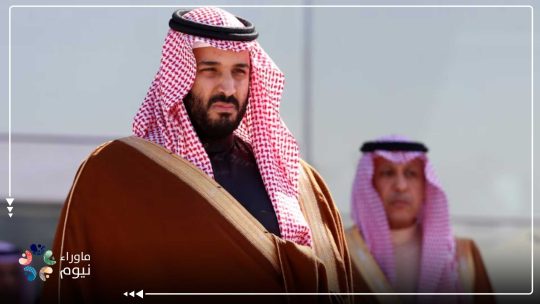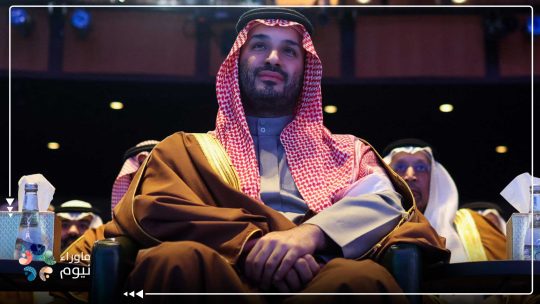

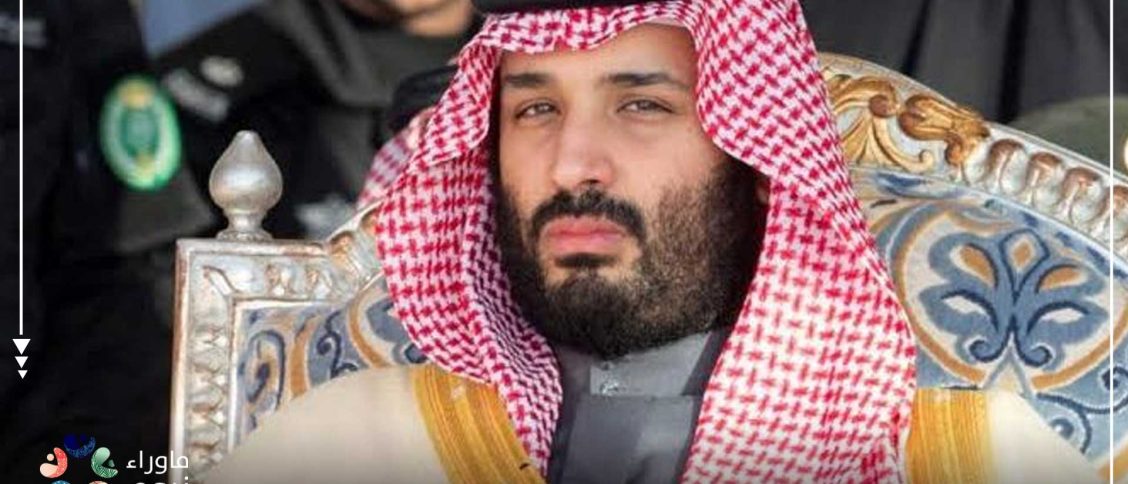
Saudi Arabia today stands at a moment when the regime exposes itself without even realising it—a moment in which the words of scholars close to the Crown Prince collide with an escalating wave of arrests, revealing a political landscape stripped of illusions. What emerges is a state that no longer governs through law, no longer trusts its society, and no longer grounds its stability in institutions, but in fear alone. The recent remarks by Bernard Haykel—an American academic at Princeton and one of Mohammed bin Salman’s closest intellectual allies—are not an academic interpretation. They are a rare document that opens a window into the mindset of the ruler himself. When Haykel says that MBS believes repression is “necessary to preserve stability,” the reality on the ground makes it clear that this so-called stability is nothing more than a mask for an unprecedented campaign of state violence that has become the identity of the system rather than its exception.
At the same moment that Haykel describes a ruler who justifies force as the only way to prevent the system from “shaking,” the regime continues arresting citizens in batches, using the General Commission for Audiovisual Media as a convenient legal wrapper to silence any voice that questions, critiques, or refuses. The latest arrests of six citizens—including journalist Fahad Al-Ruways, lawyer Sultan Al-Mutawe’, and content creator Falah Al-Masradi—are not isolated incidents. They are part of a machine that operates continuously, a conveyor belt of intimidation disguised as law enforcement. The Commission issued a statement claiming it detected “violating content,” and the authorities immediately used it as a pretext to detain them and refer them to the Public Prosecution—as if expressing an opinion is a crime, and as if the state fears words more than it fears weapons.
The Sentence That Exposed the Strongman: A Regime Admitting That Repression Is Its Only Tool
When Bernard Haykel—who is neither an opponent nor a dissident but one of the most establishment-friendly scholars in the West—states openly that MBS sees himself as compelled to use “a great deal of repression” to maintain stability, that admission is more dangerous than any human-rights report. Haykel explains that if asked about repression, MBS would say he had to do it because he “was shaking the system” and needed force to prevent collapse.
This is not political analysis.
This is the signature of every authoritarian regime in modern history.
It is the same justification spoken by junta leaders across Latin America.
It is the same rhetoric used by Bashar Al-Assad as he devastated half of Syria.
It is the same narrative used by Egypt’s Sisi as he crushed civil society.
And now, it is the same language used by MBS to rationalise the imprisonment of intellectuals, the silencing of journalists, and the pursuit of every citizen who expresses a thought that does not suit the palace.
Haykel calls it “the logic of every autocrat”—and the recent Saudi arrests confirm it without ambiguity. This is not a state building participation. It is a state disciplining society. This is not reform. It is rule through submission.
Repression is not a by-product of the Crown Prince’s project.
It is the project.
This is why the circle of victims expands every year: preachers and activists, scholars and YouTubers, lawyers and civil servants, even citizens who support some government policies but express mild criticism of others. No one is immune. The logic is simple: fear first, governance later—if governance even matters.
Mass Arrests and Manufactured Charges: A Strategy to Silence, Not to Protect Law
The recent arrests reveal the core of the Saudi security apparatus. The Audiovisual Media Commission claimed it detected “violating content,” but the real accusation was not a legal breach—it was simply an opinion that contradicted the official narrative.
Fahad Al-Ruways was detained with no clear explanation of what the supposed offense was.
The authorities did not explain the “content,” did not demonstrate its danger, and did not present evidence.
The real reason—widely understood by Saudis—is that he expressed an opinion the state found inconvenient.
Lawyer Sultan Al-Mutawe’—long known for addressing legal issues and citizens’ rights—was arrested because he commented on a case and mentioned economic boycott as a “legitimate right.” One sentence became a threat to national stability.
Content creator Falah Al-Masradi posted a harmless video expressing a simple viewpoint—no insults, no incitement—and suddenly found himself called in for interrogation. The state could not tolerate even mild satire.
These arrests are not anomalies. They follow a pattern now deeply entrenched:
Anyone who questions a government decision.
Anyone who critiques performance of an authority.
Anyone who comments on inflation, corruption, or legal processes.
Anyone who expresses an opinion that can be interpreted—by an increasingly paranoid system—as “unacceptable.”
All of this is now criminalised.
The official statement made the objective unmistakably clear: to intimidate the entire society.
From now on, any word the authorities dislike can be turned into a case that sends its author to prison.
This is the definition of a police state.
Repression Devouring the Inside While External Voices Confirm the Truth
When MBS says—through Haykel—that he is “changing the entire system,” the reality unfolding in Saudi Arabia tells a different story. The transformation he speaks of is not institutional reform, not civic participation, not political opening. It is the systematic dismantling of what remained of the public sphere.
Since 2017, every major decision has carried the same direction:
- The destruction of civil society.
- The silencing of independent voices.
- The closure of intellectual space.
- The imprisonment of every figure with social influence.
- The conversion of media into a propaganda division.
- The elimination of any avenue for peaceful opposition.
- The criminalisation of rights activism.
- The erasure of public debate under vague legal pretexts.
Every new authority, every new “initiative,” every new law—from the Culture Ministry to the Audiovisual Commission—has been designed to serve one aim: control the society and eliminate its ability to resist.
When the state arrests journalists and ordinary citizens over “content violations,” the message is clear: the mechanisms of repression are expanding, and the regime fears its own people more than it fears any foreign adversary. The internal threat—public opinion, criticism, questions, even jokes—is the danger the regime is desperately trying to contain.
This fear is exactly what surfaced in the Axios leak days ago, when MBS told Trump he cannot move forward with normalization because Saudi society is “deeply hostile” to Israel.
A regime that crushes dissent is a regime terrified of the population it rules.
Repression is not a “mistake.”
It is policy—deliberate, systematic, foundational.
When Fear Becomes Governance, Legitimacy Dies
What is happening in Saudi Arabia today is not a temporary crackdown but a new stage of political rule—one in which the regime relies exclusively on repression as its governing tool, treats society as a threat to be subdued, and frames coercion as “necessary for stability,” exactly as Haykel stated.
A state that arrests its journalists for expression,
uses a media regulator as a front for thought policing,
punishes lawyers for discussing rights,
detains citizens for not applauding loudly enough,
and fears its population because it knows it has lost their trust—
such a state does not build stability, nor does it create a future.
It builds only one thing: the conditions for its own crisis.
When fear becomes the ruler, legitimacy collapses.
And that collapse has already begun.