
Saudi Arabia is spending billions on futuristic cities, international sporting events and global investment projects. But mounting fiscal pressures and human rights concerns raise a more fundamental question: can the kingdom modernise its image without building institutions capable of transparency and accountability?
Saudi Arabia wants to be recognised as a global centre for tourism, sport, technology and investment. Through Vision 2030, the kingdom has committed enormous resources to futuristic cities, world-class stadiums, entertainment destinations and international events intended to transform both its economy and its reputation. Yet in the autumn of 2026, two increasingly difficult challenges are converging: financial pressures are forcing Riyadh to reconsider some of its most ambitious development promises, while growing scrutiny of executions, judicial safeguards and migrant workers’ rights is raising questions about the institutional foundations of the transformation.
The contrast is becoming difficult to ignore. Reports indicate that a $2.5 billion World Cup stadium planned for NEOM has been placed on hold indefinitely. Saudi Arabia’s preliminary 2027 budget projects a deficit approaching SAR 191 billion, while Aramco has reduced its selling prices for Asian customers despite elevated global oil prices. At the same time, the European Saudi Organisation for Human Rights (ESOHR) has documented 108 executions during the first six months of 2026, most involving either drug-related offences or foreign nationals.
These developments are not identical in nature, but they expose different weaknesses in the same national transformation strategy. New stadiums, cities and international events can reshape Saudi Arabia’s global image, but they cannot, by themselves, resolve questions about fiscal sustainability, judicial fairness or the treatment of workers. The central issue is no longer simply whether Riyadh can finance an extraordinary physical transformation. It is whether the kingdom can convert that spending into sustainable economic development supported by transparent decision-making, predictable laws and institutions capable of being held accountable.
Megaprojects Face Financial Scrutiny as Ambition Collides With Cost
NEOM has been among the most recognisable symbols of Saudi Arabia’s promised transformation. Its futuristic urban concepts, technological ambitions and enormous investment commitments have been presented as evidence that the kingdom can move beyond conventional development models and establish itself at the forefront of global innovation. But reports in early October 2026 indicated that the proposed $2.5 billion World Cup stadium within The Line had been shelved indefinitely as part of a broader reassessment of spending priorities.
Suspending an expensive project can be a financially responsible decision, particularly when economic conditions change and governments need to redirect resources towards more productive investments. Yet the decision to reconsider a project does not automatically justify the assumptions on which it was originally approved. How were its costs estimated? What financial and construction risks were identified? How realistic were the announced completion dates? How much money had already been committed before the decision was made to reconsider the project?
These questions carry particular weight because NEOM was not presented merely as a collection of commercial developments. It became a central symbol of the government’s claim that Saudi Arabia could deliver a transformation of unprecedented scale and speed. When a prominent component is delayed or removed from the timetable, the consequences extend beyond construction schedules. They raise legitimate questions about the relationship between public ambition, investment discipline and the institutional processes governing major spending decisions.
Effective financial management should not be measured solely by a government’s willingness to suspend a costly project after years of planning. It also depends on whether independent scrutiny, credible feasibility assessments and transparent approval mechanisms were in place before billions were committed. A project may disappear from a development plan, but the money, administrative resources and years already devoted to it cannot simply be erased.
A SAR 191 Billion Deficit Reveals the Limits of Saudi Arabia’s Financial Diversification
Saudi Arabia’s preliminary 2027 budget provides the financial context for these decisions. The Ministry of Finance projects revenue of approximately SAR 1.202 trillion against expenditure of SAR 1.392 trillion, producing a deficit of roughly SAR 190–191 billion, equivalent to about 3.6% of GDP. These figures do not suggest that the kingdom faces imminent insolvency. Saudi Arabia retains substantial assets, financing capabilities and access to debt markets. Nevertheless, persistent deficits increase the importance of examining how public money is allocated and whether the projects it finances can eventually generate returns sufficient to justify their costs.
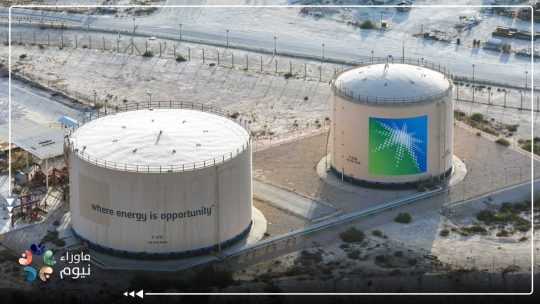
The problem becomes more complicated when oil is considered. Although non-oil economic activity has expanded significantly under Vision 2030, government finances remain highly sensitive to oil revenue. The disruptions of 2026 have illustrated that dependence in practical terms. Aramco has adjusted selling prices for Asian customers amid extraordinary shipping and insurance costs, while alternative export routes and pipelines have become increasingly important to maintaining crude deliveries.
There is a fundamental difference between diversifying economic activity and achieving fiscal independence from oil. A growing non-oil share of GDP does not necessarily mean the public treasury is insulated from changes in crude prices, production volumes or export capacity. Some non-oil industries also depend directly or indirectly on government spending and investments originally financed through hydrocarbon revenues. Consequently, a larger non-oil economy does not automatically translate into an equally diversified or self-sustaining fiscal model.
The security environment adds another layer of pressure. Protecting energy facilities, transport corridors and critical infrastructure requires resources that must compete with spending on development, defence, international events and industrial diversification. As those obligations accumulate, the most important economic question is not how much Saudi Arabia can afford to spend in the short term, but how effectively that spending creates sustainable value. Equally important is whether the government provides sufficient transparency when projects are delayed, redesigned or judged unlikely to deliver their original objectives.
108 Executions in Six Months: Saudi Arabia’s Global Image Faces a Human Rights Challenge
Alongside the financial questions, Saudi Arabia’s use of the death penalty continues to attract international criticism. According to figures documented by the European Saudi Organisation for Human Rights, Saudi authorities carried out 108 executions during the first half of 2026. Of those executed, 59 were foreign nationals and 49 were Saudi citizens. The organisation recorded 71 executions in drug-related cases and 83 involving offences that did not include intentional killing.
These figures are based on monitoring by a human rights organisation rather than independent judicial examination of every individual case. Nevertheless, they raise substantial concerns about the scope of capital punishment, particularly when applied to non-lethal offences. Under international human rights standards, the death penalty, where it has not been abolished, must be restricted to the most serious crimes, a threshold interpreted by United Nations human rights bodies as offences involving intentional killing.
The concerns become especially significant in cases involving foreign defendants. Effective access to legal representation, interpretation services, consular assistance and adequate opportunities to challenge evidence are essential safeguards in proceedings where the consequences are irreversible. Saudi Arabia has the right to combat drug trafficking and serious crime, but that responsibility does not remove the obligation to provide fair trials and protect defendants from arbitrary or disproportionate punishment.
The contrast with the kingdom’s international ambitions is striking. Saudi Arabia is seeking to attract millions of visitors, foreign professionals, investors and migrant workers while promoting itself as an increasingly open and globally connected society. Yet the credibility of that openness depends not only on the number of people entering the country, but also on whether its legal system offers clear, consistent and enforceable protections to citizens and foreigners alike.
The question is therefore larger than the number of executions recorded in any six-month period. It concerns the relationship between the state’s expanding international profile and the safeguards available to individuals who encounter its criminal justice system. A country can build internationally recognised sporting venues and attract major global events, but those achievements do not resolve concerns about due process, access to justice or the irreversible use of capital punishment.
Migrant Workers, Freedom of Expression and the Institutions Behind the New Cities
The human rights concerns surrounding Saudi Arabia extend beyond executions. Human Rights Watch and other organisations have repeatedly raised concerns about restrictions on freedom of expression, the treatment of human rights defenders, fair-trial guarantees and the conditions faced by migrant workers.
These issues have direct relevance to Vision 2030. NEOM, Red Sea developments, Qiddiya and the infrastructure associated with the 2034 World Cup depend on extensive construction and service-sector workforces, including large numbers of migrant workers. As the scale of these projects increases, so does the importance of enforceable protections concerning wages, recruitment costs, occupational safety, freedom of movement and access to effective complaints procedures.
Saudi Arabia has introduced labour reforms and expanded women’s participation in the workforce, developments that should be acknowledged in any assessment of the country’s social and economic transformation. Human rights organisations nevertheless argue that important gaps remain in legal protections, enforcement and workers’ ability to seek remedies without facing retaliation.
The distinction matters because the success of a development project cannot be measured exclusively by the number of jobs it announces or the scale of the infrastructure it delivers. It must also be assessed through the conditions under which that infrastructure is built, whether workers receive their wages, whether safety standards are enforced and whether those who experience abuse can obtain meaningful redress.
The same principle applies to investment confidence. Foreign investors assess more than tax incentives, transport networks and government support. Predictable regulations, credible dispute resolution, transparent administrative procedures and an effective legal system all influence the risks associated with long-term investment. Institutional accountability is therefore not a separate concern that can be postponed until after economic modernisation. It is part of the environment on which sustainable development depends.
Architectural modernisation can change the appearance of a city within a relatively short period. Institutional trust is more difficult to construct. It depends on rules that remain enforceable when a worker files a complaint, a defendant challenges a prosecution, a journalist questions public policy or a major government project fails to meet its original targets.
Vision 2030’s Real Credibility Test Lies Beyond Stadiums and Futuristic Cities
The developments of 2026 reveal a central tension in Saudi Arabia’s transformation. The kingdom has achieved measurable changes in economic activity, infrastructure and parts of its social environment. At the same time, fiscal pressures, security risks and continuing human rights criticism raise questions about the depth and durability of those changes.
A budget deficit does not establish economic failure, but it makes scrutiny of spending priorities more urgent. Suspending a megaproject does not invalidate an entire national development strategy, but it creates legitimate questions about earlier decisions and the transparency of subsequent revisions. Growth in non-oil industries represents economic progress, but it does not eliminate the vulnerability of public finances to oil-market disruption. Similarly, international investment and major sporting events may expand Saudi Arabia’s global influence, but they cannot substitute for credible legal safeguards or effective protection of fundamental rights.
The Saudi government presents its reforms as an effort to modernise the kingdom, strengthen competitiveness and create a more diversified economy. Human rights organisations, meanwhile, maintain that these changes have not adequately addressed serious concerns about the death penalty, freedom of expression, judicial protections and migrant workers. The practical standards for assessing progress are therefore not difficult to identify: measurable returns on public investment, transparency in expenditure, fiscal sustainability, fair-trial guarantees, effective labour protections and the ability of individuals to exercise fundamental rights.
Saudi Arabia’s international reputation will ultimately depend on more than the image it finances. It will depend on whether the economic and institutional realities of the country increasingly match the image it presents to the world.
The kingdom may build world-class stadiums, futuristic cities and some of the world’s largest entertainment and tourism developments. It may also host major international events capable of attracting global attention. But the broader credibility of Vision 2030 will be determined by questions that cannot be answered through architecture or publicity alone: whether public investment produces sustainable returns, whether government decisions are subject to meaningful scrutiny, and whether the people living and working within this new economy enjoy reliable legal protections.
The real test of Saudi Arabia’s transformation is not simply what the kingdom can build in front of the world’s cameras. It is what changes within its institutions when the cameras are gone.