
Saudi Arabia’s concentration of political, economic and security authority has accelerated major reforms. But it has also made strategic setbacks more closely associated with the crown prince, raising questions about institutional oversight, accountability and the ability to correct costly decisions.
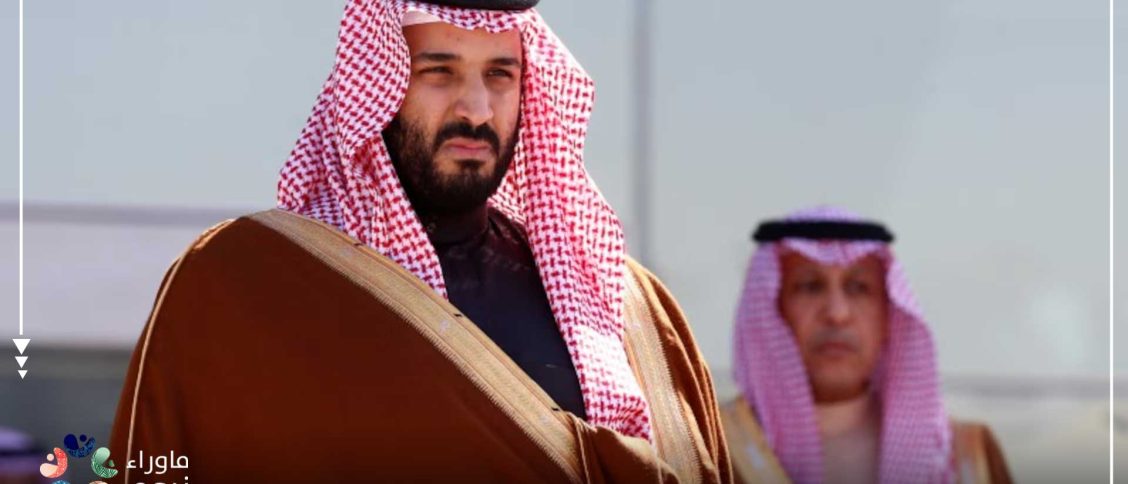
The more concentrated decision-making authority becomes, the more directly responsibility for its consequences falls on those who exercise it. This is the central governance dilemma facing Saudi Arabia today. Statements attributed to a former intelligence analyst and observations about changes in Crown Prince Mohammed bin Salman’s public appearances are less important than the broader questions they raise about the kingdom’s governing structure. Major strategic decisions concerning the economy, national security and society have become closely associated with one individual, to the extent that setbacks are increasingly linked to his leadership rather than treated as institutional problems that can be independently examined and corrected.
The speed enabled by this concentration of authority has helped Saudi Arabia launch major projects and introduce sweeping reforms. At the same time, it has increased the potential cost of mistakes. When independent centres of decision-making have limited capacity to challenge or rigorously review major policies, setbacks can become direct tests of political leadership rather than administrative or institutional failures that can be addressed through established mechanisms.
The issue is therefore not simply how much authority the crown prince exercises, but whether Saudi Arabia’s institutions possess sufficient independence and oversight mechanisms to identify weaknesses, question assumptions and recommend changes before expensive decisions become difficult to reverse.
When One Leader Controls the Decisions, Responsibility Becomes Harder to Distribute
Saudi Arabia’s decision-making structure has undergone a substantial transformation over the past decade. Major economic, security and social policies have increasingly been directed through a narrow circle of authority centred on Crown Prince Mohammed bin Salman. This consolidation has facilitated rapid changes, including institutional restructuring, the expansion of sovereign wealth fund investments, the launch of ambitious megaprojects and the relaxation of longstanding social restrictions.
These developments demonstrate one of the practical advantages of centralised decision-making: the ability to establish priorities and implement policies without the prolonged negotiations that can accompany more dispersed institutional authority. In systems where competing bodies have limited influence over strategic direction, major initiatives can move from announcement to implementation relatively quickly.
Speed, however, is not the only measure of effective governance. Highly centralised systems face structural risks when independent review is weak, when officials have limited opportunities to challenge costly proposals, and when the boundaries between those who make decisions and those responsible for scrutinising them become blurred.
Under such conditions, political responsibility also becomes concentrated. Major achievements are closely identified with the leader who authorised them, while failures are more difficult to attribute to independent institutions or competing decision-makers. The concentration of authority therefore creates a corresponding concentration of political accountability, even where formal mechanisms for enforcing that accountability remain limited.
This is fundamentally an institutional question rather than a matter of individual personality. The effectiveness of a governing system depends not only on the judgment of its leadership but also on whether it contains mechanisms capable of identifying errors early, evaluating competing options and correcting policies before their financial or political consequences become severe.
Without those safeguards, a decision that might otherwise be treated as an administrative miscalculation can develop into a broader challenge to the credibility of the leadership itself.
Social Reform Has Changed the Balance of Authority, but Not Necessarily Expanded Political Freedom
The transformation of the relationship between the Saudi state and religious institutions has been among the most visible features of Mohammed bin Salman’s leadership. The powers of the religious police have been curtailed, entertainment opportunities have expanded, women have gained the right to drive, and their participation in economic life has increased.
These changes have affected everyday life for many Saudis and represent significant departures from earlier social arrangements. They have also demonstrated the capacity of the political leadership to reshape established institutions and longstanding restrictions through decisions made at the highest level.
Yet a distinction remains between social liberalisation and political accountability.
The central question is whether these reforms have expanded society’s ability to scrutinise political authority, or whether they have primarily transferred the power to determine acceptable public behaviour from traditional religious institutions to the political centre.
Reducing the influence of established religious authorities does not automatically create greater freedom of public debate, independent oversight or institutional checks on government power. It can change the source and character of restrictions without necessarily removing them.
Saudi Arabia’s progress in certain social and economic areas has coincided with continuing restrictions on public criticism and independent political activity. This creates a model in which social modernisation can advance alongside further concentration of political authority, rather than through a corresponding redistribution of power.
The distinction matters because the ability to introduce reforms from above is different from the existence of institutions through which citizens can independently influence, challenge or scrutinise government decisions.
A society may experience substantial changes in its social environment while remaining subject to a highly centralised political structure. Assessing the depth of reform therefore requires examining not only which restrictions have been relaxed, but also whether independent institutions and meaningful mechanisms of accountability have developed alongside those changes.
Economic and Security Pressures Expose the Institutional Costs of Centralisation
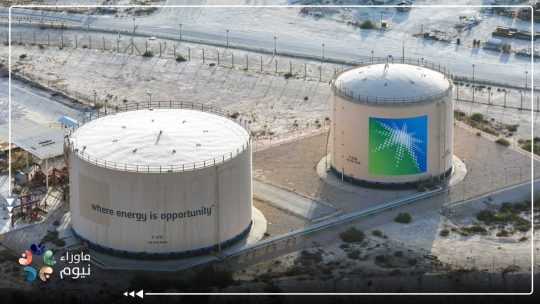
Current economic and security pressures make the question of decision-making structures increasingly relevant. Attacks affecting critical infrastructure and airports, the gap between ambitious investment targets and actual capital inflows, and the reassessment of major development projects all illustrate the complexity of the challenges facing Saudi policymakers.
These pressures are not necessarily caused by centralised governance. External security threats, changing market conditions and the practical difficulties of delivering large-scale development programmes can affect governments operating under very different political systems.
Centralisation can, however, influence how effectively institutions identify risks and respond when circumstances change.
When strategic decisions are closely associated with the highest political authority, officials and institutions may face greater difficulty questioning the assumptions behind those decisions or recommending substantial revisions. The risk is particularly significant when a project has already become a symbol of national ambition or a prominent element of the leadership’s public agenda.
Several questions consequently become essential to assessing the quality of governance. Who independently evaluates the feasibility of major projects? Which institutions review earlier financial projections when costs increase or expected returns fail to materialise? Who determines responsibility when strategic assumptions prove inaccurate? And what mechanisms allow alternative policies to be considered without criticism being interpreted as opposition to the political leadership?
These are not merely procedural concerns. They affect the government’s ability to allocate resources efficiently, manage financial exposure and prevent unsuccessful policies from consuming additional public funds.
Centralised authority may provide speed and policy continuity in the short term. But when independent scrutiny is insufficient, the same structure can allow mistakes to accumulate because challenging an established decision becomes politically or institutionally difficult.
The problem is therefore not that decisions are made too quickly. It is that reversing them may become more complicated and expensive once they have been publicly endorsed at the highest level.
This distinction is particularly important for Vision 2030, whose major projects involve substantial financial commitments, long implementation periods and considerable uncertainty about future economic returns. Effective oversight requires more than the ability to announce revisions when circumstances demand them. It requires credible systems capable of questioning project assumptions before commitments become irreversible.
Concentrated Authority Brings Concentrated Responsibility
The central issue is not how to interpret an absence from a public event or assess the significance of remarks attributed to an individual analyst. Such observations cannot, by themselves, establish the condition of a political system or the circumstances surrounding its leadership.
The more consequential issue concerns the relationship between the concentration of decision-making authority and responsibility for the outcomes of those decisions.
Saudi Arabia’s governing model has enabled the rapid implementation of major social and economic changes. At the same time, the close association of strategic policies with Mohammed bin Salman means that difficulties involving those policies are also likely to be examined in relation to his leadership.
As the kingdom confronts security challenges, fiscal pressures and revisions to major Vision 2030 projects, the importance of credible institutional review becomes greater. The ability to announce ambitious developments or introduce rapid reforms cannot substitute for institutions capable of independently assessing policies, scrutinising expenditure and recommending corrections.
The more decision-making authority expands without corresponding mechanisms of oversight, the greater the risk that manageable policy errors will develop into more expensive and politically consequential problems.
Ultimately, the sustainability of a governing system cannot depend exclusively on the speed or authority of its leader. It also depends on whether institutions can function effectively, evaluate competing options and correct mistakes, including when the decisions requiring reconsideration originated at the highest level of government.
Concentrating power may make it easier to launch ambitious policies. But it also makes responsibility for their outcomes harder to separate from the person who authorised them. Saudi Arabia’s longer-term governance challenge is whether its institutions can provide meaningful scrutiny and correction even when doing so requires questioning decisions made at the very top.