
The non-oil economy is bigger than ever. But with GDP contracting, the deficit approaching SAR 191 billion, debt rising and foreign investment weakening, Saudi Arabia is confronting a harder question: can the new economy finance the state when oil cannot?
Within roughly a single day, Saudi Arabia presented several apparently contradictory pictures of its economy. The Ministry of Finance announced that non-oil activities had reached a historic 57.3% of GDP in the first half of 2026. Yet the same pre-budget statement estimated that the overall economy would contract by 3.6% this year as oil activity plunged by 21.8%. The government then laid out a 2027 budget framework in which expenditure of SAR 1.392 trillion would substantially exceed projected revenue of SAR 1.202 trillion, producing a deficit of about 3.6% of GDP — roughly SAR 190 billion. At almost the same time, new investment data showed net foreign direct investment falling to SAR 19.1 billion in the second quarter, down 19.5% from a year earlier.
These are not separate stories. Together, they reveal one of the central contradictions confronting Vision 2030 as it approaches its final years: Saudi Arabia has built a larger non-oil economy, but it has not yet built a fiscal system that can comfortably finance the scale of its ambitions when oil weakens.
The relevant question is no longer whether Saudi Arabia has more restaurants, hotels, entertainment, tourism, construction and private-sector activity than it did when Vision 2030 was launched in 2016. It clearly does. Nor is it credible to claim that economic diversification has produced nothing. Non-oil revenues increased from SAR 166 billion in 2015 to SAR 505 billion in 2025, according to the Finance Ministry, while non-oil activity has expanded substantially.
The harder test is different: can the economy that Vision 2030 has built carry the financial weight of the Saudi state when oil falters?
The numbers for 2026 suggest that the answer, at least for now, is not yet.
Non-Oil Activity Is 57.3% of GDP. A 21.8% Oil Slump Can Still Pull the Whole Economy Down
There is genuine structural progress in the Saudi numbers. Non-oil activities accounted for a record 57.3% of GDP in the first half of 2026, according to the Finance Ministry, and the government expects them to grow by 3.2% for the full year despite severe regional economic and geopolitical disruption. Saudi unemployment also fell to 6.5% in the second quarter. Those are significant achievements, and dismissing them would obscure the economic changes that have taken place since 2016.
But another number in the same government statement is considerably harder for Vision 2030 to explain away: Saudi Arabia expects real GDP to contract by 3.6% in 2026 because oil activity is projected to collapse by 21.8%. The non-oil economy may now represent a historically large share of GDP, but its growth is still insufficient to prevent a severe oil shock from dragging the entire economy into contraction.
That distinction goes to the heart of what economic diversification actually means. Increasing the size of non-oil sectors is one stage of diversification; reducing the state’s underlying vulnerability to oil is another. Saudi Arabia has made substantial progress on the first. The second remains unfinished.
There is also a more difficult question beneath the headline GDP figures. Parts of Saudi Arabia’s new economy have themselves been stimulated directly or indirectly by government spending, PIF investment, infrastructure programmes and the enormous capital deployment associated with Vision 2030. Hotels, construction, entertainment, tourism infrastructure and new urban developments may all be non-oil activities in national accounts, but that does not necessarily mean their growth is financially independent of an economic system whose principal source of accumulated capital remains hydrocarbons.
That is why the real test for NEOM and the wider Vision 2030 portfolio is no longer how many projects Saudi Arabia can announce or build. It is how much economic activity can continue generating sustainable returns if the state eventually stops injecting capital at anything resembling the current scale.
There is genuine private investment, job creation and non-oil growth. But the oil-financed bridge carrying Saudi Arabia towards diversification remains more important than the images of new cities and resorts sometimes suggest.
A SAR 190 Billion Deficit: From the Oil Cheque to a Growing Debt Bill
The 2027 pre-budget statement makes that dependence increasingly expensive. Saudi Arabia expects revenue of SAR 1.202 trillion against expenditure of SAR 1.392 trillion, leaving a gap of roughly SAR 190 billion and a deficit estimated at 3.6% of GDP. The direction is as important as the number. The 2025 pre-budget statement projected a deficit equivalent to 2.3% of GDP. The final 2026 budget projected 3.3%. The preliminary 2027 figure is now 3.6%.
Saudi Arabia is not bankrupt, nor do these numbers suggest that it is approaching bankruptcy. The kingdom retains substantial assets and reserves, has access to domestic and international capital markets, and continues to carry investment-grade sovereign ratings. Fitch and S&P both maintained A+ ratings with stable outlooks during 2026, with the agencies pointing to Saudi fiscal buffers and assets as important strengths.
But the financing structure is changing. During the first half of 2026, government expenditure reached SAR 759.8 billion against SAR 599.8 billion in revenue, producing a cumulative deficit of roughly SAR 160 billion. Public debt had risen to SAR 1.685 trillion by the end of the second quarter, equivalent to 33.9% of projected GDP according to the National Debt Management Center. Financing costs also increased sharply during the period.
Debt itself is not evidence of economic failure. Borrowing to finance an asset that generates returns above its financing cost can be entirely rational. The question Saudi Arabia increasingly has to answer is not whether it can borrow, but what the borrowing ultimately buys.
If debt finances infrastructure, companies or industries capable of generating durable productivity, exports, taxes and cash flow, it can accelerate the transition Vision 2030 was designed to achieve. But if borrowed money finances projects that still require substantial government support a decade later simply to remain viable, the state has not eliminated the bill. It has postponed it — and added interest.
That is why the recalibration of NEOM and other megaprojects should no longer be treated primarily as a question of branding, ambition or international perception. It is becoming an increasingly straightforward question of capital allocation.
Foreign Investment Falls 19.5% — Because Investors Do Not Finance a Dream Simply Because It Is Big
The second-quarter foreign investment figures add another warning. Net FDI inflows reached SAR 19.1 billion, down 19.5% from the same period in 2025 and 15.8% from the previous quarter. Gross inward FDI fell 16.9% year on year to SAR 22.3 billion.
One weak quarter does not establish a long-term trend, particularly during an exceptionally unstable regional year. But the direction matters because Vision 2030 was never designed on the assumption that the Saudi government would permanently finance the transformation by itself. Foreign and domestic private capital were supposed to assume a progressively larger share of the burden.
That makes the demands of investors increasingly important. International capital does not invest because a proposed city is 170 kilometres long or because a tower will break a record. Investors ask considerably less glamorous questions: What return will the project generate? When will it generate it? Who is the customer? What are the risks? How can the investor eventually exit?
Those questions become more important, not less, as Saudi fiscal deficits widen. A project that attracts private capital only when the government absorbs most of the downside risk has not necessarily proved that the private market believes in its economics. It may simply have found a costly mechanism for bringing private money into what remains fundamentally a state-supported project.
This is one of the most important transitions Vision 2030 now faces. In its first phase, Saudi capital could create markets, subsidise infrastructure and absorb enormous development risk. The next phase requires proving that the resulting economy can attract capital because investors expect commercially competitive returns rather than because the state is willing to underwrite the experiment.
Then Oil Returned Through the Back Door
Just as the fiscal pressure intensified, oil once again demonstrated why it remains so central to almost every Saudi economic calculation.
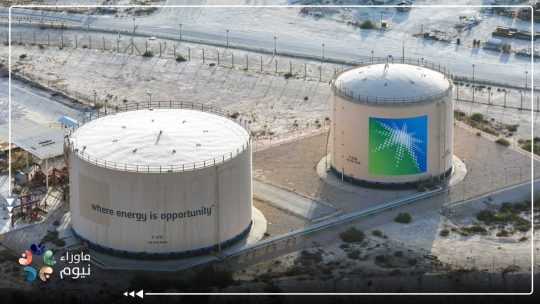
Saudi Arabia resumed crude loading from Yanbu after restarting the East-West pipeline in late September, restoring an important export route after disruption caused by regional conflict. Saudi crude exports subsequently rebounded sharply, while Brent crude was trading above $100 a barrel at the beginning of October. Reuters reported that analysts had raised their average Brent forecast for 2026 to about $89 a barrel.
This matters far beyond Saudi Aramco.
For Riyadh, oil revenue is a function of price, production volume and the kingdom’s ability to move crude to customers. When any of those variables changes substantially, the effects travel through government finances and ultimately into the environment in which Vision 2030 is being financed.
The East-West pipeline is therefore not merely an energy story. Neither is the reopening of Yanbu. Both are budget stories, debt stories, NEOM stories and Vision 2030 stories.
Saudi Arabia has made genuine progress in diversifying what its economy produces. The Finance Ministry’s own numbers show non-oil government revenues rising from SAR 166 billion in 2015 to SAR 505 billion in 2025. That is not an illusion, and any serious assessment of Vision 2030 has to acknowledge it.
But diversifying what an economy produces and diversifying what ultimately finances the state are not the same achievement.
Saudi Arabia has moved much further on the first than on the second.
Vision 2030 Is Entering the Return-on-Investment Phase
None of the individual numbers in the 2027 budget amounts to a fiscal catastrophe. A 3.6% deficit does not prove insolvency. Rising debt does not prove a debt crisis. One quarter of declining FDI does not prove that foreign investors have abandoned Saudi Arabia. And a contraction driven heavily by an extraordinary oil shock and regional conflict does not prove that economic diversification has failed.
Taken together, however, the numbers reveal the test that matters as Vision 2030 approaches its target year.
The era in which success could be measured primarily by the number of projects announced, districts master-planned, resorts opened, sporting events acquired or billions deployed is reaching its limit. Saudi Arabia is entering the stage in which those investments increasingly have to justify themselves economically.
The question is becoming brutally simple: for every riyal the Saudi state puts into the new economy, how many riyals can that economy eventually generate without requiring the state to put them back in?
Oil can finance a deficit. Debt can buy time. Reserves can absorb shocks. Higher crude prices can rescue a difficult fiscal year. Saudi Arabia’s substantial assets give it more room to manoeuvre than many indebted states could ever hope to possess.
But none of those advantages can permanently substitute for economic returns.
That is what makes the 2027 budget more than another set of government accounts. It is an early balance sheet for the economic model Saudi Arabia has spent a decade building.
The kingdom has unquestionably constructed a larger economy around oil.
The uncomfortable reality exposed by the latest numbers is that the barrel is still helping to pay the bill for building it.