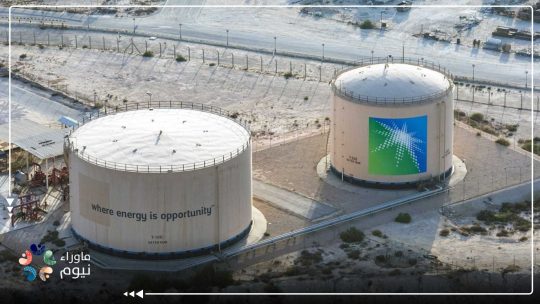

What unfolded in the Saudi market is neither a temporary fluctuation nor a routine technical correction. The nearly 1% decline in Tadawul, led by energy and banking stocks as reported by CNN Business Arabic, reflects a deeper structural exposure that years of “diversification” rhetoric have failed to address. The timing is critical: oil prices weakened, global risk appetite tightened, and Saudi Arabia was immediately revealed for what it still is—an economy acutely sensitive, thin on buffers, and heavily dependent on a single commodity.
This was not an external shock of exceptional magnitude. It was a normal movement in oil prices combined with predictable global uncertainty. A genuinely diversified economy would have absorbed such pressure. Saudi Arabia did not.
Oil still holds the steering wheel
The trading session sent a clear message. A drop of just over 2% in crude prices was enough to drag the index and its heavyweight stocks lower. Energy and banking shares, supposedly the pillars of stability, were among the first to fall. This confirms that the financial system itself remains structurally tied to oil revenues, with no meaningful insulation against price volatility.
Every modest oil correction is instantly transmitted into market stress, exposing how shallow the transformation really is. The system does not react like a resilient economy adapting to price cycles, but like a mono-resource structure that tightens at the first sign of pressure.
Diversification as branding, not protection
Years of massive investment announcements, giga-projects, and sovereign fund expansion have not translated into a market that can decouple from oil dynamics. What exists is diversification by headline, not by return. Public revenues, investor confidence, and market direction remain tethered to the barrel.
Worse still, much of this “diversification” has been financed through borrowing and expectation management. When oil prices weaken, fiscal margins shrink, confidence erodes, and the market absorbs the shock directly. Entertainment projects, overseas bets, and media narratives offer no real protection. Only productive diversification would—and it remains largely absent.
The trillion-dollar promise: numbers as political theatre
Against this backdrop, Saudi Arabia’s pledge to expand its investments in the United States toward the one-trillion-dollar mark, as reported by the South China Morning Post, appears less like an expression of surplus strength and more like economic theatre. Analysts, including Xin Chun, have pointed out that the figure resembles a political signal rather than a financially grounded plan, particularly given the existing trade imbalance and the scale of capital flows required to sustain such commitments.
Even under optimistic assumptions of rapidly growing US exports to Saudi Arabia, the structural gap remains. These pledges function as instruments of political leverage and image management, not as indicators of financial immunity. More critically, they are announced while the domestic market remains exposed, liquidity fragile, and confidence easily shaken.
Thin liquidity, fragile confidence
Seasonal factors such as holidays may explain lower volumes, but they do not explain the depth of the reaction. The response reveals a market lacking robust liquidity and sustained investor confidence. Participants read the situation plainly: weaker oil prices, geopolitical tension, potential fiscal strain, and an economy still breathing through one lung.
The contrast between the official narrative of exceptional stability and the market’s behaviour is striking. The story being sold is far more resilient than the structure supporting it.
When the barrel shakes, the promises fall
Tadawul’s decline under oil pressure, combined with trillion-dollar investment rhetoric of questionable feasibility, offers a precise diagnosis of an economy sustained by narrative rather than structural strength. An economy that has not built real buffers against commodity volatility will remain exposed at every test.
Until diversification becomes an actual productive base rather than a branding exercise, and until domestic resilience replaces external spectacle, oil will continue to dictate outcomes—and the market will continue to be the first casualty.