
For years, Saudi Arabia has promoted Vision 2030 as the blueprint for building a diversified economy capable of reducing the kingdom’s dependence on oil. Hundreds of billions of dollars have been invested in tourism, entertainment, sports, mining, logistics, and futuristic megaprojects, all presented as the foundations of a new economic model. But the latest economic figures tell a different story.
According to data reported by Semafor, Saudi Arabia’s economy contracted by 4.8% in the second quarter, marking its weakest quarterly performance since the COVID-19 pandemic. Even more striking, the non-oil economy—the sector intended to become the engine of future growth—expanded by just 0.6% year-on-year, raising fresh questions about how far the kingdom has actually progressed in reducing its dependence on hydrocarbons.
The figures expose a central challenge facing Vision 2030: despite years of unprecedented investment, the Saudi economy remains highly vulnerable to disruptions in the oil sector.
Oil Shock Exposes the Limits of Diversification
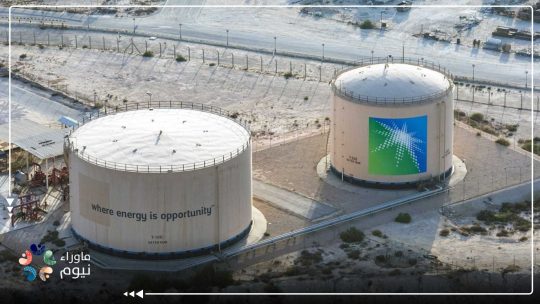
The contraction followed a decline in Saudi oil production after disruptions linked to the temporary closure of the Strait of Hormuz affected regional energy markets.
For an oil-exporting country, lower production naturally affects economic output.
What makes the latest figures significant, however, is not that the oil sector contracted—but that the broader economy contracted with it.
If diversification had reached the level repeatedly presented in official narratives, the non-oil economy would have been expected to absorb at least part of the shock.
Instead, the economy recorded its sharpest contraction since the pandemic.
The episode illustrates that Saudi Arabia’s economic cycle continues to move largely in step with oil production, despite years of reforms aimed at reducing that dependence.
Is 0.6% the Economy of the Future?
Vision 2030 identified tourism, entertainment, sports, real estate, mining, logistics, and advanced services as the pillars of a new Saudi economy.
Yet during one of the most significant economic tests in recent years, those sectors collectively delivered only 0.6% annual growth.
That figure suggests an economy that continues to expand, but not at a pace capable of offsetting weakness in the kingdom’s traditional source of income.
After years of large-scale investment in NEOM, Qiddiya, the Red Sea developments, Diriyah, global sporting events, entertainment infrastructure, and international investment initiatives, expectations were that non-oil activity would provide a stronger cushion against oil-related volatility. The latest data suggests that transition remains incomplete.
Every Road Still Leads Back to Oil
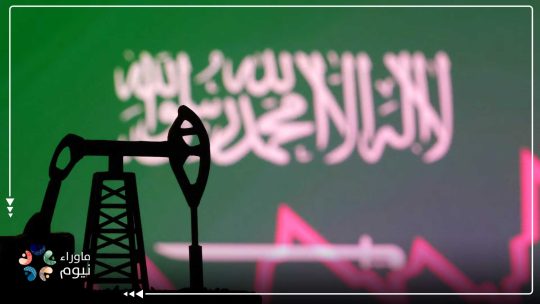
The latest figures reinforce an uncomfortable reality. When oil production declines, overall economic growth weakens. When oil prices recover, government revenues improve.
Even the International Monetary Fund, while acknowledging the resilience of Saudi Arabia’s economy, noted that higher oil prices could partially offset weaker export volumes.
In other words, even discussions about economic resilience ultimately return to the same variable: oil.
That dependence is precisely what Vision 2030 was designed to reduce.
The latest quarter indicates that breaking this relationship remains a work in progress rather than an accomplished objective. IMF Optimism Accompanied by Clear Warnings The IMF has described Saudi Arabia’s economy as resilient. But its assessment also contains important qualifications.
The Fund continues to warn that the economic outlook remains subject to considerable uncertainty and downside risks.
Saudi Arabia’s economy remains exposed to factors largely outside its control, including oil prices, regional geopolitical tensions, shipping disruptions, and global demand.
As long as these external variables continue to shape overall economic performance, sustaining the kingdom’s ambitious spending plans becomes increasingly dependent on conditions beyond domestic policymaking.
Have the Megaprojects Begun to Deliver?
Over the past decade, Saudi Arabia has committed hundreds of billions of dollars to flagship developments intended to transform the country’s economic structure.
Projects such as NEOM, Qiddiya, The Red Sea Project, and Diriyah, alongside massive investments in tourism, sports, and entertainment, were expected to generate new sources of growth independent of oil revenues.
The latest economic data inevitably raises questions about the pace at which those investments are translating into measurable economic output.
If the non-oil economy expands by less than one percent during a period when it is expected to compensate for weakness in the oil sector, observers are likely to question whether these projects are producing economic returns at the scale originally anticipated.
Large investments alone do not guarantee rapid structural transformation.
Ambition Meets Economic Reality
There is little doubt that Saudi Arabia has made significant progress in opening new industries and attracting international investment.
Yet building a diversified economy requires more than launching large projects.
It requires productive sectors capable of generating sustainable output, creating private-sector employment, attracting long-term investment, and maintaining growth regardless of fluctuations in oil markets.
The latest figures suggest that this transition remains unfinished.
The economy has evolved—but not yet to the point where non-oil activity can consistently replace oil as the principal driver of growth.
The Quarter That Tested Vision 2030
One weak quarter does not determine the long-term success or failure of an economic transformation strategy.
Temporary disruptions in energy markets undoubtedly contributed to the contraction. But the significance of the latest figures lies elsewhere.
They demonstrate that Saudi Arabia remains deeply sensitive to developments in the oil sector despite nearly a decade of diversification efforts.
Ultimately, the success of Vision 2030 will not be measured by the number of megaprojects announced or the scale of government investment.
It will be measured by whether Saudi Arabia can sustain economic growth when oil no longer does the heavy lifting.
The latest quarter suggests that this remains the defining challenge facing the kingdom’s economic transformation.