

Saudi Arabia’s ambitious Vision 2030 development program is facing growing scrutiny as a series of recent developments highlights the financial, engineering, and logistical challenges confronting several of the kingdom’s flagship projects.
Individually, the stories appear unrelated. Collectively, they reveal a broader pattern.
Reports indicate that Saudi Arabia is seeking external investors to help finance one of its proposed stadiums for the 2034 FIFA World Cup through a sale-and-leaseback structure. At the same time, industry data continues to show that the kingdom imports large quantities of construction-grade sand because its abundant desert sand is unsuitable for reinforced concrete. Meanwhile, NEOM’s flagship project, The Line, remains the subject of ongoing international attention over its escalating costs, implementation challenges, and the displacement of local communities.
Taken together, these developments suggest that Saudi Arabia’s most ambitious projects are increasingly confronting the practical realities of financing, engineering, and execution.
World Cup Infrastructure Turns to Outside Financing
Winning the right to host the 2034 FIFA World Cup was presented as evidence of Saudi Arabia’s financial strength and ability to deliver one of the largest sporting infrastructure programs in history.
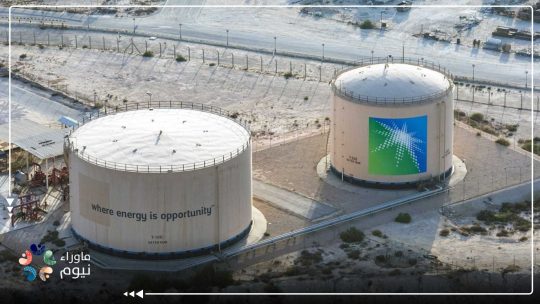
Recent reports that advisers are exploring outside investment for Aramco Stadium through a sale-and-leaseback model, however, indicate that financing strategies are becoming more complex.
Such arrangements are widely used in international markets to unlock capital while providing investors with long-term, predictable revenue streams.
Yet the move also raises broader questions about financing priorities at a time when Saudi Arabia is simultaneously reviewing spending across several major Vision 2030 projects.
For observers, the issue is not the financing mechanism itself, but what it may indicate about growing pressure to diversify funding sources for large-scale developments.
A Desert That Imports Construction Sand
Another challenge lies not in finance but in engineering. Despite being one of the world’s largest desert countries, Saudi Arabia imports significant quantities of construction sand because desert sand, shaped over thousands of years by wind erosion, lacks the physical properties required for producing reinforced concrete.
Instead, suitable aggregate must be sourced from riverbeds, quarries, or imported from abroad, increasing both construction costs and dependence on international supply chains.
The issue illustrates how even seemingly abundant natural resources may not meet the technical requirements of modern megaprojects.
As construction expands across multiple giga-projects simultaneously, access to suitable building materials becomes an increasingly important logistical consideration.
The Line Continues to Face Questions
Among Saudi Arabia’s flagship developments, The Line remains the project most closely associated with the gap between architectural ambition and practical implementation.
Initially promoted as a revolutionary model for future urban development, the project has increasingly been discussed internationally alongside reports of rising costs, revised timelines, financing challenges, and concerns surrounding the displacement of the Howeitat tribe.
International coverage has shifted away from futuristic renderings toward questions about whether the project can be completed at the scale originally announced. The discussion has evolved from design to feasibility.
Engineering Follows Physical Constraints
Large-scale infrastructure ultimately depends on practical realities rather than promotional narratives.
Cities require sustainable financing, reliable supply chains, suitable construction materials, transportation networks, and realistic implementation schedules.
Any disruption in one of these elements can significantly affect costs, timelines, and overall project viability.
Saudi Arabia’s recent experience illustrates how engineering challenges and financial considerations often become inseparable in projects of unprecedented scale.
From Unlimited Expansion to Financial Prioritization
During years of exceptionally high oil revenues, Saudi Arabia launched numerous giga-projects simultaneously, including futuristic cities, tourism destinations, entertainment hubs, global sporting initiatives, and major international investments.
More recently, however, official discussions have increasingly emphasized efficiency, project prioritization, phased implementation, and attracting external investment.
This shift reflects changing economic conditions rather than unlimited fiscal expansion.
The growing use of alternative financing structures, project reviews, and revised timelines suggests a transition from rapid expansion toward more selective capital allocation.
Beyond Construction: Human Rights Concerns
The international debate surrounding The Line has never focused solely on engineering or finance.
Human rights organizations have repeatedly raised concerns regarding the displacement of members of the Howeitat tribe linked to the project’s development.
As a result, discussions about NEOM increasingly combine questions of financial sustainability, technical feasibility, and human rights, making the project one of the most closely scrutinized elements of Vision 2030.
Ambition Meets Practical Reality
No country is immune to construction delays, revised financing strategies, or evolving project plans.
What distinguishes Saudi Arabia’s current situation is the unprecedented scale of its simultaneous ambitions.
The need to attract outside investors for major infrastructure, import essential construction materials despite abundant natural landscapes, and continue addressing questions surrounding NEOM’s feasibility all point toward the growing complexity of delivering projects on this scale.
Ultimately, the long-term success of Saudi Arabia’s Vision 2030 agenda will be judged less by architectural renderings or international launch events than by whether these projects can demonstrate financial sustainability, engineering practicality, and successful delivery over time.
As these flagship developments move from concept to implementation, the central question is no longer how ambitious they appear—but how effectively they can withstand the economic, logistical, and technical realities that determine whether visionary projects become lasting achievements.