
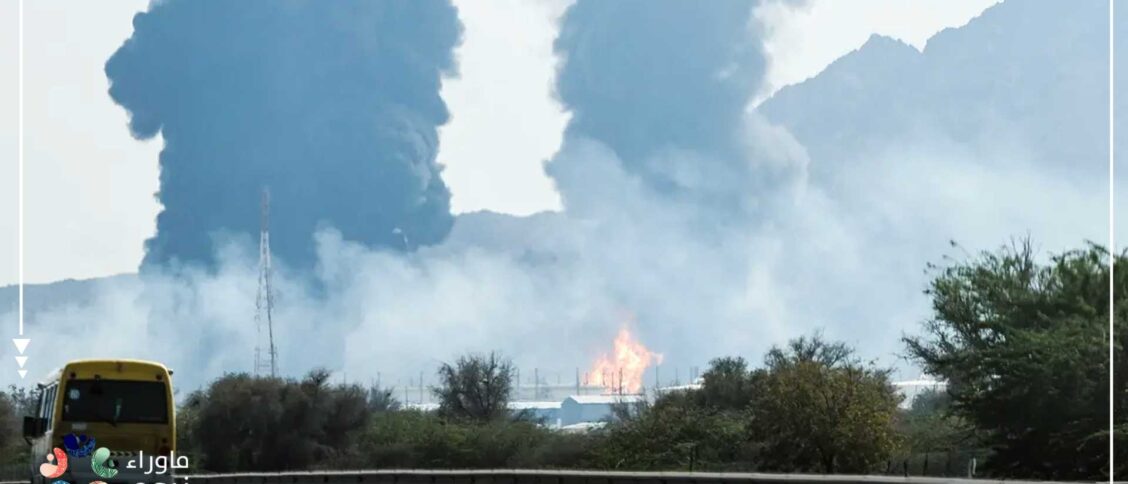
Saudi Arabia has spent billions positioning Riyadh as a global business and investment hub. Yet eight consecutive weeks of stock market declines, more than 5,500 cancelled flights and growing corporate security concerns are exposing the vulnerability of an economic strategy built on attracting international capital, regional headquarters and foreign visitors.
For years, Saudi Arabia has promoted Riyadh’s transformation into a global business centre as one of the defining achievements of Vision 2030. Billions have been committed to modern infrastructure, international connectivity, corporate incentives and major development projects intended to attract foreign investors, multinational companies and millions of visitors. Yet the latest developments reveal how quickly the foundations of that strategy can come under pressure when security risks begin to disrupt the movement of people, capital and business operations.
The Saudi stock market has recorded eight consecutive weeks of losses, its longest weekly losing streak in more than three decades. More than 5,500 flights have reportedly been cancelled, major international airlines have postponed their return to Riyadh for months, and private aviation costs have surged by more than 50%. Meanwhile, reports that some Western companies are considering relocating senior executives outside the Saudi capital raise further questions about the sustainability of Riyadh’s ambitions as a regional corporate headquarters hub.
These developments extend beyond temporary market volatility or travel disruption. They highlight a fundamental challenge facing Saudi Arabia’s economic transformation: attracting international investment requires more than modern buildings, financial incentives and ambitious government announcements. It also requires reliable access, operational continuity and confidence that businesses can function safely even during periods of regional instability.
The recent attacks have not merely damaged infrastructure or interrupted flight schedules. They have also forced investors, airlines and multinational companies to reassess the risks associated with operating in the Saudi capital. Those risks are now reflected in market valuations, transport costs and corporate contingency planning.
Eight Consecutive Weeks of Losses: The Stock Market Challenges Riyadh’s Optimistic Narrative
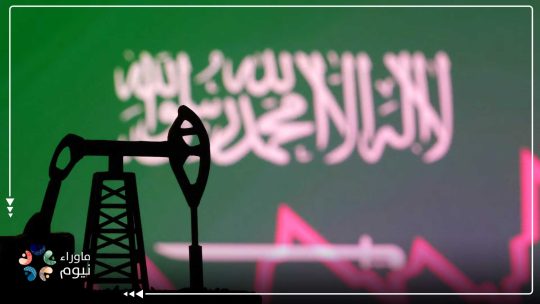
Saudi Arabia’s benchmark stock index has fallen for eight consecutive weeks, reaching its lowest closing level in more than five and a half years. The losing streak is reportedly the longest since 1994, reflecting a sustained period of investor caution rather than an isolated episode of market volatility.
Stock market movements cannot be attributed to a single cause. Corporate earnings, global financial conditions, oil prices and investor expectations all influence valuations. Nevertheless, the prolonged decline has coincided with escalating security risks, creating an increasingly difficult environment for a government seeking to present its economy as an attractive destination for long-term private investment.
The implications extend beyond the losses recorded by shareholders. Vision 2030 depends heavily on the ability to mobilise private capital, attract foreign investment and reduce the financial burden of major development projects on the public sector. A weakening stock market can complicate those objectives by increasing the cost of capital, discouraging new investment and reducing companies’ ability to raise financing on favourable terms.
This creates a difficult contradiction for Saudi policymakers. Riyadh is asking international investors to commit capital to projects whose expected returns may take decades to materialise, while financial markets are sending increasingly cautious signals about the risks associated with the current environment.
Government spending can initiate major projects, finance infrastructure and create investment opportunities. It cannot, however, compel private investors to disregard deteriorating market conditions or commit funds when they believe the potential risks outweigh the expected returns.
The challenge is therefore not simply to reverse the stock market’s losses. It is to restore confidence in the economic and security conditions necessary for private capital to support Saudi Arabia’s long-term transformation.
Riyadh’s Airport Reopens, but International Airlines Remain Reluctant to Return
The reopening of King Khalid International Airport has not brought an immediate return to normal aviation operations. Despite the announcement that the airport was ready to resume services, a substantial proportion of scheduled flights reportedly remained cancelled during the initial days, while several major international airlines extended their suspensions into November, January and, in some cases, March 2027.
The requirement for prior approval of individual flights, alongside continuing foreign travel and aviation warnings, illustrates the difference between declaring an airport operational and restoring confidence in its safety and reliability.
Saudi authorities can reopen runways, restore airport facilities and announce the resumption of operations. They cannot independently determine whether international airlines consider the security environment sufficiently stable to resume flights. Those decisions depend on assessments involving aircraft safety, crew protection, insurance arrangements, operational risk and the potential consequences of further disruption.
For Riyadh, the implications are particularly significant. International connectivity is not a secondary feature of the kingdom’s economic ambitions. It is a basic requirement for attracting multinational companies, international conferences, foreign investors and business travellers.
An airport may technically be open while remaining commercially constrained if airlines are unwilling or unable to restore their previous schedules. In practical terms, reduced connectivity makes the Saudi capital more difficult to reach, increases uncertainty for travellers and undermines the convenience that international business centres depend upon.
The relocation of Saudi aircraft away from Riyadh for security reasons, together with the need to protect and manage damaged aviation assets, adds further operational and financial costs. These expenditures were not necessarily reflected in the original assumptions underlying the kingdom’s aviation and tourism expansion plans.
The broader problem is that Saudi Arabia’s strategy for turning Riyadh into a regional business hub depends on predictable international access. The recent disruption has demonstrated that such access cannot be guaranteed through infrastructure investment or administrative decisions alone.
Private Jet Prices Surge as Companies Reconsider the Cost of Operating in Riyadh
The cancellation of thousands of commercial flights has also affected the cost of alternative travel. Private aviation prices have reportedly increased by more than 50%, while some travellers have been forced to make lengthy journeys by road to more distant airports or travel through neighbouring countries to reach their destinations.
These developments are more than logistical inconveniences. They represent additional costs imposed on business activity, affecting corporate travel, executive mobility, scheduling and operational planning.
For multinational companies, reliable transport links are essential to maintaining regional operations. When executives cannot travel predictably, meetings are disrupted, business decisions become more difficult to coordinate and companies may need to establish expensive contingency arrangements.
More concerning for Riyadh’s long-term ambitions are reports that some Western companies have begun examining the possibility of relocating senior leadership teams to Dubai or other locations outside Saudi Arabia.
There is no evidence in the information currently presented of a widespread corporate evacuation. However, the consideration of relocation options is significant because it directly concerns the government’s strategy of attracting regional headquarters to Riyadh.
Saudi Arabia has invested considerable political and financial resources in encouraging international companies to establish a substantial presence in the capital. Tax incentives, modern office developments, regulatory arrangements and access to government contracts have all formed part of that effort.
Yet corporate headquarters are not sustained by registration requirements or financial incentives alone. Multinational companies also consider the safety of their personnel, the continuity of their operations, international transport access and the availability of alternative locations when assessing where to place senior management.
A company may retain its legal registration or formal regional headquarters in Riyadh while deciding that certain executive functions would be more effectively managed elsewhere during a prolonged period of instability.
That possibility exposes a critical distinction between attracting companies on paper and maintaining their operational confidence in practice.
The Saudi government can create incentives for businesses to establish themselves in Riyadh. It cannot guarantee that senior executives will remain there if companies conclude that the risks and costs of doing so exceed those associated with alternative regional centres.
Billions Built the Business Hub. The Security Crisis Is Testing Whether It Can Function
The latest developments do not establish that Vision 2030 has collapsed or that Saudi Arabia’s broader economic transformation has become impossible. The kingdom retains substantial financial resources, modern infrastructure and a significant domestic market. However, the disruptions illustrate the limitations of an economic strategy that relies heavily on large-scale investment and ambitious development announcements without being able to eliminate the external security risks affecting business confidence.
Eight consecutive weeks of stock market losses, an airport that has reopened without a full restoration of international flights, and companies considering alternative arrangements for their senior executives point to a common challenge: physical infrastructure and financial incentives are insufficient when investors and businesses cannot rely on operational stability.
Saudi Arabia has demonstrated that it can build airports, financial districts, office towers and major commercial developments. The more difficult question is whether those assets can continue to perform their intended economic functions during periods of severe disruption.
The costs of maintaining that continuity are also increasing. Additional spending on security, infrastructure protection, aviation recovery and business continuity competes with the resources required for economic diversification and private-sector development.
This introduces another financial challenge for Vision 2030. Projects originally designed to attract investment and generate economic returns may require additional expenditure simply to preserve their accessibility, security and operational reliability.
The distinction between building an asset and sustaining its economic value is becoming increasingly important. An airport’s contribution to economic development depends not only on its capacity or design, but on the number of airlines willing to use it and the confidence of passengers travelling through it. A financial market’s value depends not only on its size, but on the willingness of investors to commit capital. A regional headquarters programme succeeds not merely when companies register offices, but when they maintain meaningful management and business operations in the country.
Saudi Arabia’s current difficulties therefore raise questions about the resilience of the economic model supporting Riyadh’s international ambitions.
If several weeks of disruption can contribute to a prolonged stock market decline, if reopening an airport does not immediately bring international airlines back, and if multinational companies begin calculating the costs of relocating their executives, how can Riyadh persuade investors that long-term commitments in the Saudi capital offer an acceptable balance between risk and return?
The answer cannot come from promotional campaigns or official announcements alone. Restoring confidence requires sustained improvements in security, predictable transport connections, credible contingency planning and evidence that businesses can continue operating during periods of instability.
Saudi Arabia has spent billions building the infrastructure of a global business hub. The current crisis is testing something money alone cannot guarantee: whether investors, airlines and international companies can trust that infrastructure to remain accessible, secure and operational when conditions deteriorate.
Riyadh may reopen its airport through an administrative decision. But bringing back the aircraft, the executives and the capital requires something more difficult to restore: confidence.