

Several human rights groups have documented serious violations against journalists and press freedom in Saudi Arabia.
ALQST Organisation for Human Rights has documented a general climate of fear and intimidation for freely expressing opinions or challenging the state narrative prevails, with many journalists facing legal prosecution and long prison sentences, and some paying with their lives, merely for carrying out their work.
In Saudi Arabia, World Press Freedom Day 2022 sees a continuation of repressive policies towards journalists and the media, with the kingdom maintaining its position as one of the most dangerous countries in the world for journalists to work in.
While free expression has historically been repressed in Saudi Arabia, and analogue publications restricted by the 2000 Law of Printing and Publication (updated in 2003), the 2007 Anti-Cybercrime Law built a new framework to suppress free speech online. The vague provisions of the law are frequently used to charge and try journalists and ordinary citizens for expressing their opinions in online publications or on social media.
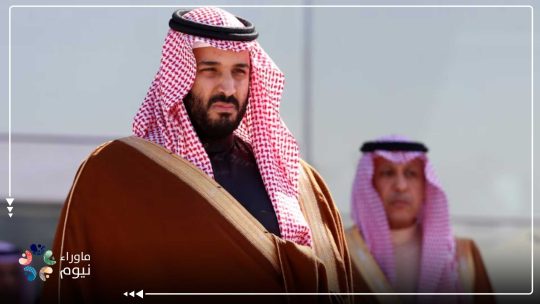
It is striking how the much-repeated promises of reform, change and liberalisation that accompanied Mohammed bin Salman’s investiture as Crown Prince have swiftly transformed into a new level of repression aiming to close the public space to people of all ideological persuasions, especially those interested in reform. Journalists and their work have suffered severely from this onslaught, and the murder of Jamal Khashoggi in the Saudi consulate in Istanbul in 2018 gave a particularly clear indication of this new reality.
Reporters Without Borders (RSF), an international NGO that focuses on freedom of information, publishes an annual “World Press Freedom Index” based on a poll of experts – covering aspects such as media pluralism, independence, self-censorship and the legislative framework in 180 countries of the world – together with data on abuses and acts of violence against journalists and media outlets. For 2021, it ranked Saudi Arabia 170th out of the 180 countries and colour-coded it in black, meaning “very bad” (the lowest category).
The Saudi authorities continue to arrest and prosecute journalists for doing their job and to tighten restrictions on the press, targeting journalists for arbitrary arrest, enforced disappearance, torture and even murder, as in the case of Jamal Khashoggi.
The Saudi authorities employ these tactics in order to silence critical voices and restrict the flow of information to members of the public. This creates an atmosphere of self-censorship, which rules out the possibility of any independent journalism, amid the fear of meeting the same fate as journalists already in Saudi jails. The authorities meanwhile seek to discredit independent journalism and the dissemination of independent information and ideas by trying to associate it with terrorism, thereby creating a climate of fear and intimidation that prevents and restricts the sharing and publishing of information.
Journalist Turki al-Jasser was arrested on 15 March 2018 in a raid on his home and forcibly disappeared for nearly two years. Finally, in February 2020, in response to a submission from the Special Procedures of the UN Human Rights Council, the Saudi authorities said he was being held in Al-Ha’ir prison and allowed him to make a phone call to his family for the first time. However, since then he has been denied any further contact and remains forcibly disappeared.
Blogger Khaled al-Alkami has been under arrest since September 2017.
Journalist Fahad al-Sunaidi was sentenced by the Specialised Criminal Court (SCC), supposedly set up to try terrorist cases, to three and a half years in prisons for allegedly “supporting the Arab Spring revolutions” and “posting tweets calling for the release of certain prisoners”. He was released on 3 February 2022, nearly a year after his sentence expired in March 2021.
The media community were stunned when in April 2016 Alaa Brinji was handed a seven-year prison sentence, with an eight-year travel ban to follow his release. A prominent journalist working for well known newspapers like Okaz, Al Bilad and Al Sharq, he was arrested in 2014 and tried in the SCC on charges – based on Twitter posts in which he backed the right of women in Saudi Arabia to drive, and supported human rights defenders and prisoners of conscience – that included “insulting the country’s rulers”, “stirring up public opinion” and “accusing security officers of killing demonstrators in Al-Awamiya”. He was released from prison in February 2021 but remains banned from travelling.
Academic Abdullah al-Maliki was sentenced to seven years in prison for his cultural activities and intellectual views, as well as comments he posted on Twitter.
Reformist writer Zuhair Kutbi was arrested in 2019 in brutal fashion, being beaten and humiliated, and remains under arrest despite being in poor health. Broadcaster Wajdi al-Ghazzawi is serving a 12-year prison term, due to be followed by a 20-year travel ban, for comments made in his YouTube programme Fadfada.
Foreign journalists have also been targeted. Sudanese journalist Ahmed Ali Abdulqader was arrested on arrival at King Abdulaziz Airport in 2021 because of his criticism of Saudi policies in Sudan and Yemen. And Marwan al-Muraisy, a Yemeni journalist and blogger living in Saudi Arabia, was arrested from his home on 1 June 2018 and forcibly disappeared for almost a year. He was not brought before a court until October 2020, and he remains in prison while his trial continues. He has been denied access to a lawyer and family visits.
The list goes on. There have been many arrests of journalists and others working in the media as a way of expressing their opinions and publishing and disseminating information.