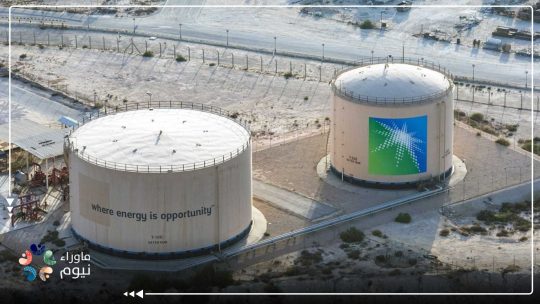

The countries of the Middle East have the headquarters of many regional companies, amounting to more than three hundred international companies, but Saudi Arabia has only 7% of the capital of these companies, despite the fact that the Saudi economy is the largest in this region, and Saudi Arabia is among the twenty largest economies in the world.
In an attempt of the Saudi government to bring multinational companies to its territories, the government announced, at the behest of the Saudi Crown Prince, in mid-February, a decision to compel international companies to move their headquarters to the city of Riyadh; otherwise these companies won’t be able to get any contracts for tenders inside KSA.
The Saudi economy faced many challenges recently, the most important of which is the link between the Saudi economy and oil prices, and it affects the rise and fall of the economy because it is the only source of income for KSA.
The Saudi government said that its decision has many goals, perhaps the most important of which is transforming Riyadh into a commercial and financial center with headquarters of foreign companies contributing to creating a greater economic and financial movement, and an influx of foreign investment. In addition to benefiting from foreign companies that have dealings with the Saudi government and its agencies, institutions and funds, by linking the activities of these foreign institutions and companies with government institutions.
It also aims at providing quality jobs in various fields for Saudi citizens, which contributes to solving the problem of unemployment that worsened during the years of rule by Salman and his son, in addition to reducing economic leakage, and reducing the outflow of foreign capital from Saudi Arabia to other regional countries.
It also seeks to ensure the implementation of the main products and services that are purchased by the various government agencies in Saudi Arabia at an appropriate local level.
Saudi Arabia wants to achieve a set of political goals by adopting huge projects such as the “NEOM” project and its pursuit of owning the largest sovereign fund in the world, but the capabilities of the Saudi Crown Prince are not qualifying the Kingdom for such major successes.
The collapse of oil prices due to the outbreak of the Coronavirus created huge pressures on the Saudi economy, which directly affected the budget and the decline in oil prices caused severe damage to the non-energy sectors that Saudi Arabia is trying to develop in order to achieve diversification, forcing it for the first time in its history to adopt severe austerity measures on citizens, raise tax rates, and raise prices of government services.
Despite the successes achieved by multinational companies in countries at their economic and political levels, there are a set of challenges facing the implementation of the decision to move the headquarters of international companies to Riyadh, which we detail in our next report.