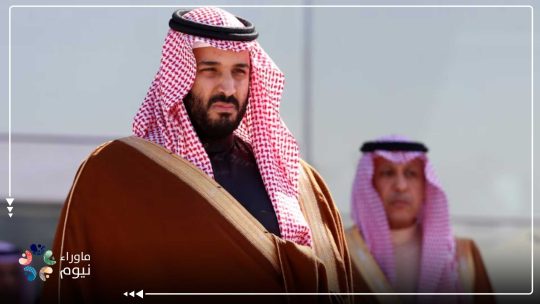

The prominent Saudi writer, Madhawi Al-Rasheed, said in an article published by the British Middle East Eye website, that the successive setbacks faced by Saudi Crown Prince Mohammed bin Salman have forced him to retreat in front of all his regional opponents, declaring his courtship and rapprochement with them.
Al-Rasheed added that the misleading regional policies of Mohammed bin Salman in recent years have caused great damage to Riyadh, and increased its enemies due to its bad policies towards peoples and governments that reject bin Salman’s policies.
Al-Rasheed also said that Mohammed bin Salman’s policy during the first months of 2021 changed from attacking other countries for believing that he was stronger than them and richer in money to control them, but as 2021 draws to a close, the crown prince appears determined to turn the tide, adopting a conciliatory tone, with several regional initiatives already underway, but some of his previous misguided decisions continue to hamper his ability to successfully convince his neighbors that he is now a man Peace, not a tumultuous young leader who antagonized many potential regional allies during his early years in office.
So far, since Bin Salman began the retreat plan, confidence in his strategic transformation is still in short supply.
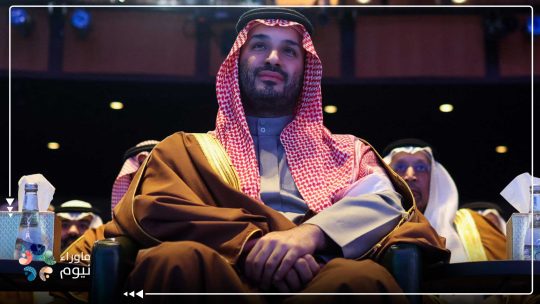
Holding international film festivals on the shores of the Red Sea or Formula 1 car races has not dispersed the heavy gray clouds that hung on the state’s art in The Gulf region Since Mohammed bin Salman has become Saudi Arabia’s leader since 2017.
Mohammed bin Salman has adopted a new strategy, starting with ending the boycott of Qatar and seeking to restore the unity of the Gulf Cooperation Council.
In recent days, bin Salman conducted a Gulf tour that began in Oman, a country that Saudi media previously accused of providing a way for arms smuggling to Yemen, where the weapons ended up in the hands of Ansar Allah (Houthis), his archenemy of Yemen since 2015, and the new leadership in Oman after the death of Sultan Qaboos may be under economic pressure to roll out the red carpet for the Saudi crown prince, but historically, Oman was not an easy way, and its foreign policy has always stopped from the black and white Saudi approach, as bin Salman considered all countries to be enemies unless they were subject to the whims of the policy of Riyadh.
Now the State of Qatar shows that it has reconciled with and forgave Mohammed bin Salman, as Qatar survived the years of the blockade because it is a rich country and enjoys the support of its ally the United States and others in the region until it gave a pivotal role in addressing the chaos created by the United States in Afghanistan, and helped build bridges With the Taliban, and the evacuation of thousands of fleeing Afghans who worked with the occupying force for two decades, which the Kingdom of Saudi Arabia did not enjoy under the leadership of the teenage boy, but rather isolated it from its regional surroundings and its international center. If you can beat them, join them.
Outside the Gulf region, and under pressure from the US, Mohammed bin Salman appealed to the Iraqis to facilitate talks with Iran, but negotiations reached a dead end, despite the resumption of trade between Iran and Saudi Arabia after their suspension in 2020, reaching a non-aggression agreement with Iran would not be possible without a new international agreement to deal with Iran’s nuclear program, but renewed Saudi trade with Iran does not seem to pave the troubled relationship between the two countries.
The Saudi boycott on Lebanon due to a minister’s criticism of the Yemen war, along with the Saudi position on Hezbollah, showed the complexity of peace with Iran, which has a strong influence in Lebanon, rather than facilitating talks.
Communication with Turkey and President Recep Tayyip Erdogan, whose country is under enormous economic pressure after the Turkish lira crises, seems like a good idea, but Turkey will remain under internal pressure to bring the perpetrators to justice in the case of the murder of journalist Jamal Khashoggi, and Ankara will remain ready to use this heinous crime as a bargaining chip with the crown prince, especially if bin Salman re-launches a media campaign against Erdogan, and the government of Turkey is unlikely to be part of a regional Sunni alliance against Iran, if Mohammed bin Salman adopts this idea, as Turkey has stable relations with Iran, and the Kurdish case on both sides of their borders has always been an important criterion for their policies. Turkey also continues to depend on imported oil from neighboring countries, notably Iraq and Iran.
Finally, the ongoing war in Yemen will remain a pesky quagmire that will drain Saudi resources and further isolate Riyadh diplomatically.
Even if peace is achieved, the wounds in Yemen will take decades to heal, and the kingdom will be left with a wounded enemy on its southern border, so Mohammed bin Salman will need more than a permanent cease-fire and a peace treaty to get rid of the ghosts of Yemen.
The kingdom’s recent diplomatic shift may not signal a good change in Saudi policies, after the extremist regional stances adopted by Mohammed bin Salman over the past six years have severely damaged Saudi Arabia’s regional standing, leaving it with more enemies than friends.