
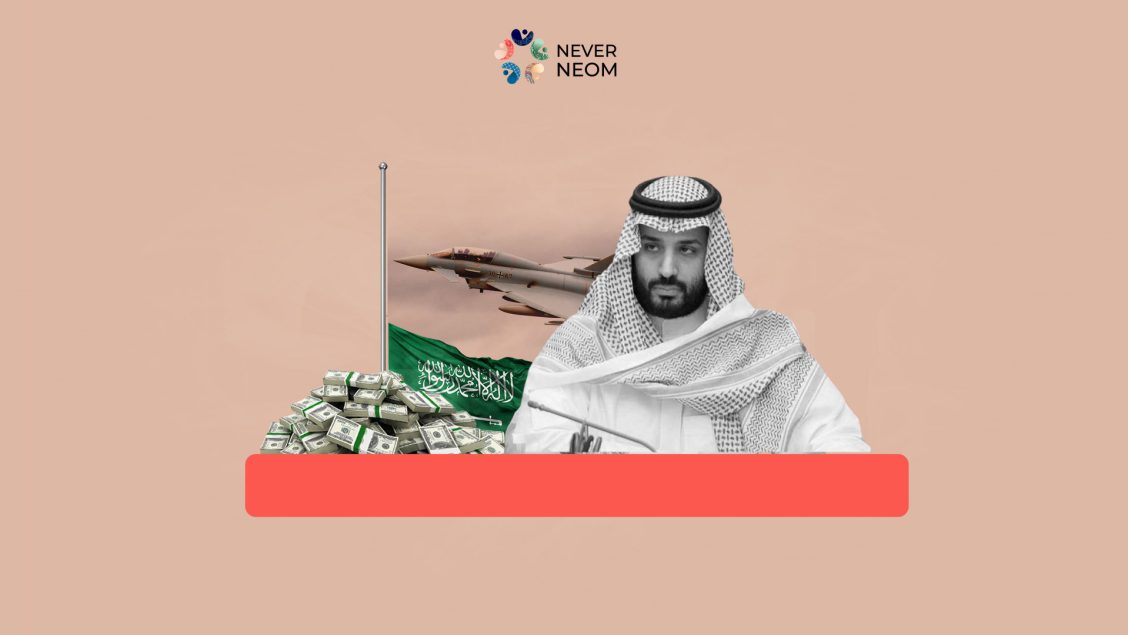
The Saudi Crown Prince Mohammed bin Salman (MBS) has signed a Memorandum of Intent with the UK government to purchase 48 Eurofighter Typhoon multirole fighter jets, security and military sources revealed.
The Royal Saudi Air Force currently has 72 Eurofighter Typhoons in its inventory. The aircraft is manufactured by a consortium that includes Leonardo, Airbus, and BAE Systems.
Opposition politicians and activists in the UK have campaigned to stop arms sales to Saudi Arabia over human rights issues and the war in Yemen.
Meanwhile, Saudi Arabia and Israel held secret meetings which led to an estimated $250-million deal, including the transfer of Israeli espionage technologies to the kingdom.
Some of the spy systems, which are the most sophisticated systems Israel has ever sold to any Arab country, have already been transferred to Saudi Arabia and put into use after a Saudi technical team received training in operating them, the report added.
The exclusive report also revealed that the two countries exchanged strategic military information in the meetings, which were conducted in Washington and London through a European mediator.
This revelation highlights the Kingdom’s increasingly aggressive spy apparatus under the Saudi Crown Prince — used to heighten attacks on journalists and dissidents living abroad, as evidenced by the recent killing of Saudi journalist Jamal Khashoggi.
In recent months, Saudi Arabia has signed a number of high-profile defense deals.
MBS has for years expressed his desire to advance his country’s military, lamenting that high military spending has not led to correspondingly high military performance.
Experts suggested that MBS’s desire to advance his military weapons aims to tighten his grip on power over the Kingdom.
The sources also confirmed that senior officials in the Saudi interior ministry do not trust each other due to the rising slander within the ministry.
The sources further pointed out that senior security officers enjoy imaginary salaries and privileges, while soldiers and security forces receive very law salaries, which led to a large gap between officers and their soldiers, raising serious concern over the national security of the Kingdom.
Since taking office in 2017, MBS created the Presidency of State Security, combined counterterrorism and intelligence operations under one entity and disconnected the body from the Ministry of Interior. The activities of the Presidency are under the direct supervision of the Crown prince.
This change was mainly aimed to spy on human rights activists and opponents, according to the Toronto-based Citizen Lab.
In 2019, MBS appointed 800 new security officers. The elevation of a whole generation of younger officers who are already loyal to the crown prince or stand to benefit from the avenues he is opening up for accelerated promotion and meaningful command will further secure MBS’s position.
MBS has been using cybercrime laws to secure convictions against protesters, raising questions about British co-operation on cybersecurity including training provided to Saudi police. Last year it emerged the College of Policing in Britain had trained Saudi police in intelligence gathering on protesters despite concerns that it could be used to identify people who would be “tortured or subjected to other human rights abuses”.