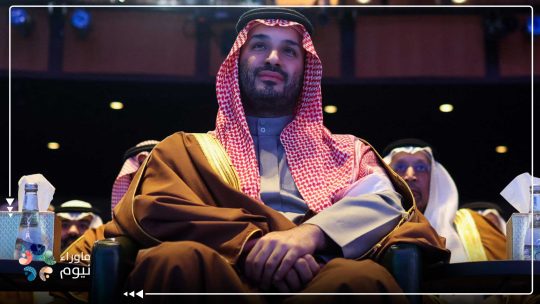


On the 20th anniversary of its founding, ten human rights organisations have issued a joint report exposing the Saudi Human Rights Commission (HRC) as a propaganda tool rather than a watchdog for rights. Titled “The Saudi Human Rights Commission: 20 Years of Polishing the Kingdom’s Record”, the report dismantles the façade of independence the Commission has projected since 2005, revealing it to be a direct extension of state power, complicit in repression and silence.
Born Attached to Power
Established by royal decree in 2005, the HRC claimed to be an “independent” body reporting directly to the king. But this direct link rendered it ineffective by design — not a check on power, but a polished extension of it. It has never issued bold, evidence-based reports or advocated for victims of arbitrary detention or execution. Instead, it has either remained silent or parroted the government’s narrative.
Families of high-profile detainees, such as Manahel Al-Otaibi and Dr. Mohammad Al-Qahtani, have testified that the Commission ignored their complaints and actively obstructed their advocacy. This isn’t negligence — it’s a policy: to deny victims a voice and turn a supposed haven into another wall of suffering.
Silent on the Execution Machine
Most shocking is the Commission’s silence amid mass executions. Between January and August 2025 alone, 272 people were executed — over half of them foreigners, including many from the Shi’a minority. Despite UN experts’ condemnation and international uproar, the HRC made no statement. In a country that executes dozens in a single day, such silence is tantamount to complicity in state-sanctioned killings.
Deaf to Women’s Suffering
From Loujain Al-Hathloul, still under restrictions despite her release, to Manahel Al-Otaibi, imprisoned for peaceful online expression, the pattern is clear: the Commission has failed to protect women’s rights activists. Travel bans, arbitrary arrests, and harassment continue unabated — and the HRC remains mute, shielding state repression under the guise of reform.
A Government Spokesperson in Global Forums
Internationally, the Commission has acted as a government mouthpiece. During the 2024 Universal Periodic Review at the UN Human Rights Council, it rejected calls to abolish the death penalty, protect activists, or ratify key treaties. It even denied discrimination against Shi’a citizens before the Committee on the Elimination of Racial Discrimination and celebrated so-called “reforms” while ignoring ongoing arrests.
No Global Recognition, No Oversight
Unlike legitimate national human rights institutions, the Saudi HRC never sought accreditation under the UN’s Paris Principles, which guarantee independence. It has also avoided membership in the Global Alliance of National Human Rights Institutions. This evasion is strategic — keeping the Commission fully under royal control and immune to international accountability.
Polishing, Not Protecting
Despite its dismal record, the HRC continues to sign memoranda of understanding with the EU and UN bodies and host “capacity-building” workshops. But human rights groups warn: these partnerships grant the Commission false legitimacy and allow Saudi authorities to use them as diplomatic cover to avoid scrutiny. Even EU-Saudi human rights dialogues have ended without serious discussion of systematic abuses.
A Familiar Pattern of Facade
The Commission is part of a broader strategy: institutions designed to mask repression, not reform it. Just like the economic “reform councils” and “women’s empowerment initiatives,” these are PR projects — costly distractions from harsh realities on the ground.
A Commission Without Rights, An Institution Without Humanity
Twenty years after its creation, the Saudi Human Rights Commission has delivered none of its promises. It is not independent, it does not protect victims, it produces no credible reports, and it has never stood up to repression. It is, simply put, part of the regime’s propaganda machinery.
“The Saudi Human Rights Commission: 20 years of silence on bloodshed and polishing repression instead of confronting it.”