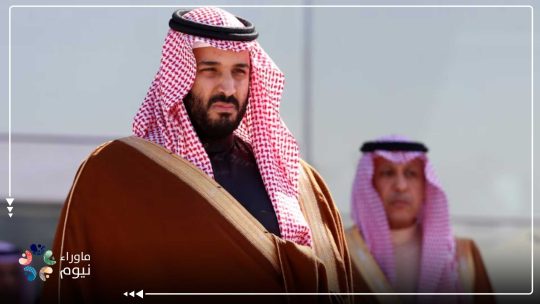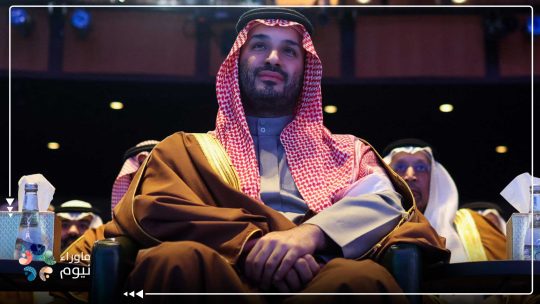

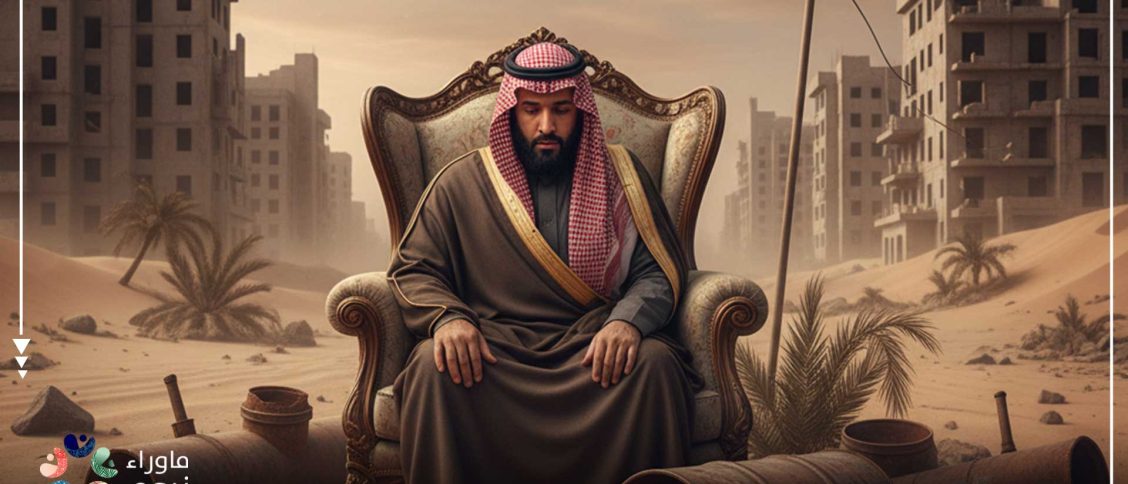
The latest Stratfor intelligence leak is not a think-tank analysis. It is a clinical diagnosis of a state that appears stable from the outside but suffers from deep internal fragility that threatens its long-term survival. The information published by the U.S. intelligence platform reveals that Mohammed bin Salman’s political-economic model does not rest on solid foundations. It sits on oil-soaked sand—unable to withstand even a single major shock.
The regime that brands itself as the leader of a “new economic revolution” in fact operates on an old and exhausted formula: buying loyalty through subsidies and massive state spending instead of building an economy capable of enduring crises. According to Stratfor, this model has reached its limit. Any shock—war, oil price collapse, global recession, or even a mild ideological shift—could ignite internal instability.
Stratfor goes further. The MBS era is not an era of reform; it is an era of power consolidation and full-spectrum repression. Vision 2030 rests on ambitious slogans with no measurable political foundation. The kingdom, according to the assessment, is moving not toward a modern state but toward a “one-man state”—a closed security regime that grows increasingly fragile the more it tightens its grip.
The most alarming question raised by Stratfor is strategic:
Can the Saudi regime withstand a prolonged military confrontation with a rival like Iran?
The answer is blunt: No.
Saudi Arabia lacks the political, social, and psychological structure required for sustained conflict because the ruling system never cultivated genuine nationalism or collective sacrifice. Loyalty was purchased—not built. The result is a state with weapons but without a nation.
This triad—a fragile economy, total repression, and inability to endure war—reveals a regime approaching a moment of reckoning.
“A Political Economy Built on Purchased Loyalty—One That Will Collapse at the First Shock”
Stratfor explains that the Saudi state avoided direct taxation for decades but never succeeded in creating an economy independent of oil or capable of protecting living standards. The kingdom’s political economy is a simple equation: the state pays subsidies and citizens remain politically silent—under the absolute red line of no politics, no accountability, no participation.
This model is now unsustainable. Stratfor points to three pathways to major internal instability:
- declining oil revenues,
- the state’s inability to sustain the lifestyle it once guaranteed,
- and a major geopolitical shock.
All three have already occurred:
Oil prices plunged several times in the past decade.
Subsidies were slashed after 2015.
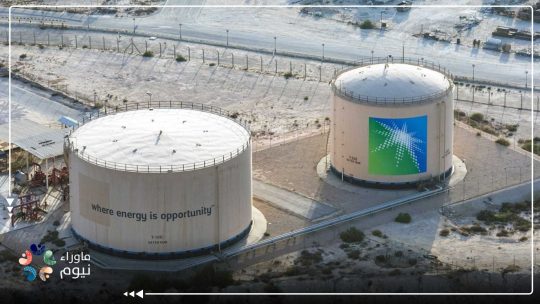
And Iran’s 2019 attack on Aramco proved how vulnerable the kingdom remains.
Under MBS, Saudi Arabia is borrowing at unprecedented levels, burning through reserves, pumping billions into vanity mega-projects like NEOM, while foreign investment collapses, unemployment rises, and the middle class shrinks. Stratfor warns that this trajectory cannot survive even one economic downturn.
The kingdom is not a diversified economy—it is a single-commodity state facing a world slowly shifting away from oil.
The regime has delayed the crisis, not solved it. And every delay raises the cost of the inevitable reckoning.
“The MBS Era: A State Emptied of Politics, Ruled by the Fist, Not Institutions”
Stratfor describes Vision 2030 as “measurable” only in limited economic terms, but “fully aspirational” and unmeasurable in all social and political dimensions. Crucially, the vision contains no political objective whatsoever:
- No political reform.
- No shared governance.
- No judicial independence.
- No elected bodies.
- No press freedom.
- No checks, no balances, no participation.
It is a vision without politics, without good governance, and without institutional reform.
This contradicts earlier periods—such as under King Abdullah—when even symbolic municipal elections were used to relieve internal pressure.
But MBS chose the opposite path: total suppression.
Mass arrests of activists, academics, journalists, tribal leaders, even ordinary social-media users.
The Ritz-Carlton purge of 2017.
The elimination of rival centers of power.
The removal of all spaces for dissent, debate, or autonomous institutions.
Stratfor interprets this not as modernization but as a shift toward a closed security state where every lever—judiciary, media, economy—is controlled from the top.
The MBS era is not reform.
It is seizure.
It is not modernization.
It is reconstruction of authoritarian power on a scale unseen since the founding of the kingdom.
“A Regime That Cannot Fight, and a Military Without National Spirit”
The most dangerous part of the Stratfor assessment concerns national defense and political psychology.
Saudi Arabia’s military failures in Yemen exposed a regime unable to build real public support for prolonged war. And when Iran struck Aramco in 2019, the kingdom stood in shock—no national mobilization, no communal resolve, no psychological preparedness for confrontation.
The issue is not technical: Saudi Arabia buys some of the most advanced weapons on earth.
The issue is structural.
A state built on subsidizing silence cannot suddenly ask its citizens for sacrifice.
A state without political participation cannot demand national duty.
A state without institutions cannot produce collective resilience.
Modern nations fight for shared identity, not for a ruling family.
MBS has weapons, but not a nation behind him—only subjects with no stake in governance.
Stratfor’s conclusion dismantles the myth of Saudi Arabia as a rising regional military power. Military strength is not hardware—it is social cohesion and political legitimacy. And these are precisely what the regime lacks.
“Stratfor Says What Saudi Citizens Cannot: A Fragile Economy, One-Man Rule, and a Military Without Spirit—MBS Is Steering the Kingdom Toward the Storm”
The intelligence assessment leaves no room for illusion:
Saudi Arabia under Mohammed bin Salman is not moving toward stability, but toward internal erosion.
The kingdom rests on:
- an economy without security,
- governance without institutions,
- a military without doctrine,
- and a population without political participation.
Each component is a vulnerability.
Together, they form a roadmap to collapse at the first major shock.
No country can build strength on rentier spending, legitimacy on repression, or national power on imported weapons without a social contract.
MBS centralizes power more than any ruler before him—
but he does not centralize stability.
He builds palaces, not institutions.
He raises slogans, not a nation.
And Stratfor puts it plainly:
Saudi stability is not guaranteed.
And the current trajectory leads toward a dangerous future.