

What is happening in Saudi Arabia today cannot be described as “social openness” or “modernisation,” no matter how aggressively the regime tries to sell those labels. The country is not liberalising; it is shedding its skin entirely—tearing away the moral costume it wore for decades while attempting to present itself as the guardian of Islamic values and the custodian of the world’s holiest sites. The latest revelations from Semafor, Reuters, and the scenes emerging from Jeddah expose a state not undergoing reform but undergoing demolition, a controlled demolition of identity carried out by a leadership that believes in nothing except its own survival.
For years, the Saudi regime used religion as both shield and sword. It justified repression in its name, justified censorship in its name, justified executions in its name, and justified silencing its citizens under the claim of “protecting values.” Today, the same regime is dismantling those very values in the shadows, replacing them not with a clear vision but with imported aesthetics, foreign lifestyles, and commercialised morality sold to the highest bidder.
The quiet expansion of alcohol sales is not an isolated decision. It is the clearest sign of a political project that moves in silence and lies in public. Semafor’s report shows that the regime did not accidentally stumble into this shift. Since 2021, the groundwork has been laid deliberately: the first diplomatic liquor store in Riyadh, framed as a tightly controlled “exception,” was never an exception at all. It was the opening shot. Reuters removed any remaining ambiguity when it confirmed that new alcohol shops are being prepared—one exclusively for foreign Aramco workers in Dhahran, another for diplomats in Jeddah, both under a regulated system that no longer looks experimental but structural.
This is not a policy test. This is a blueprint. A state that built its legitimacy on banning alcohol is now building its commercial infrastructure through it—while still insisting, with a straight face, that “nothing has changed.”
But everything has changed. The rhetoric is the only thing left untouched, repeated mechanically for an audience the regime no longer respects but still needs to manage.
At the same time, a video of an Italian tourist in Jeddah went viral, calmly explaining how women can swim in bikinis on private beaches “without any issue,” as if this were the natural evolution of a country supposedly governed by religious conservatism. It is not evolution—it is a contradiction so sharp it borders on satire. The same state that criminalises its own citizens for a tweet, the same state that silences activists under the banner of “Islamic values,” now offers bikini beaches and selective freedoms to tourists while denying them to its own population.
This is not openness. It is a transactional rebranding. Freedom is no longer a right; it is a purchasable privilege available only to foreigners whose presence benefits the regime’s marketing agenda.
But the most explosive indicator of the kingdom’s transformation came from the arrival of Emily Austin, the Zionist American media figure who spent the past months justifying Israeli massacres in Gaza, mocking Palestinians, and promoting extremist narratives. Her official presence in Riyadh as a DAZN correspondent is not a slip, not a misunderstanding, not a miscalculation. It is a political statement—one made possible because DAZN is owned by Len Blavatnik, a billionaire with deep Zionist ties and one of the most financially influential men behind Saudi Arabia’s entertainment and sports season. A man Turki Al-Sheikh works with closely, a man whose business interests align perfectly with the regime’s obsession with spectacle.
The logic is brutally simple: as long as the money flows, the doors stay open—even to those who spit directly on the blood of Palestinians.
This is not coincidence; this is policy. A regime that once claimed leadership of the Islamic world now welcomes those who openly dehumanise Muslims—because the price is right and the partnerships are useful.
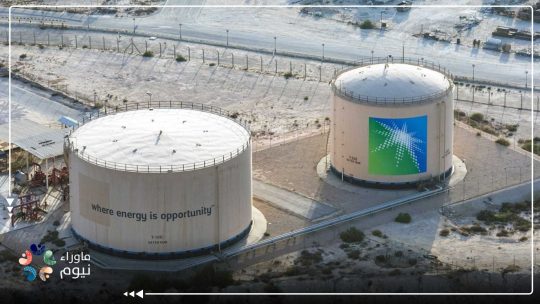
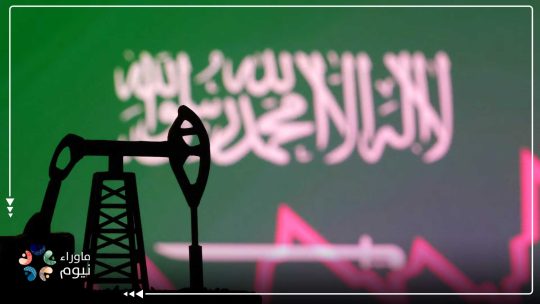
And when one connects the dots, the picture becomes unmistakably dark. A kingdom selling off Aramco’s assets to plug its financial gaps, a suffocating economic crisis hidden behind fireworks and stadiums, a quiet legalisation of alcohol, bikini beaches marketed to tourists, Zionist media figures hosted as VIPs, cultural and economic normalisation with Israel advancing through entertainment rather than diplomacy—all while the religious narrative remains in circulation only to police the local population and silence dissent.
Saudi Arabia is not being reformed; it is being stripped. It is not being opened; it is being reconstructed without its people. It is not embracing the future; it is abandoning its identity in exchange for global applause and foreign investment.
What we are witnessing is not a visionary transformation. It is a kingdom losing its compass, peeling off its moral and cultural skin one layer at a time, replacing it with a glossy façade created for tourists, billionaires, and political deals.
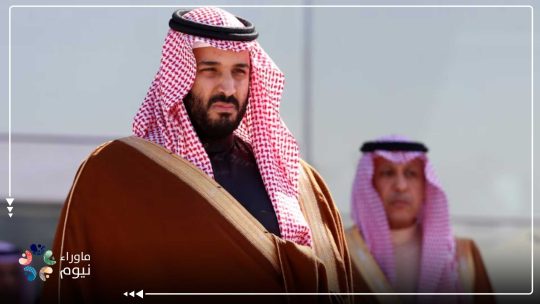
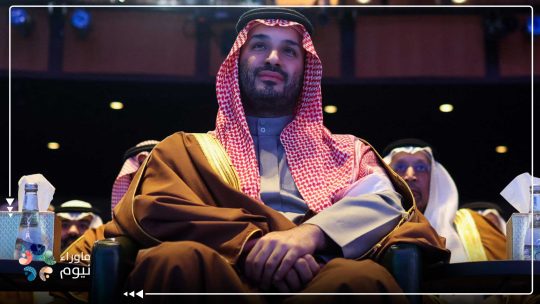
Saudi Arabia has changed—but not for the better. It has changed because it is being shaped today by a ruler who sees identity as costume, values as props, religion as branding, and society as an obstacle.
And beneath all the slogans, the kingdom stands stripped, hollow, and increasingly unrecognisable.
Never NEOM — we expose the kingdom they refuse to show.