
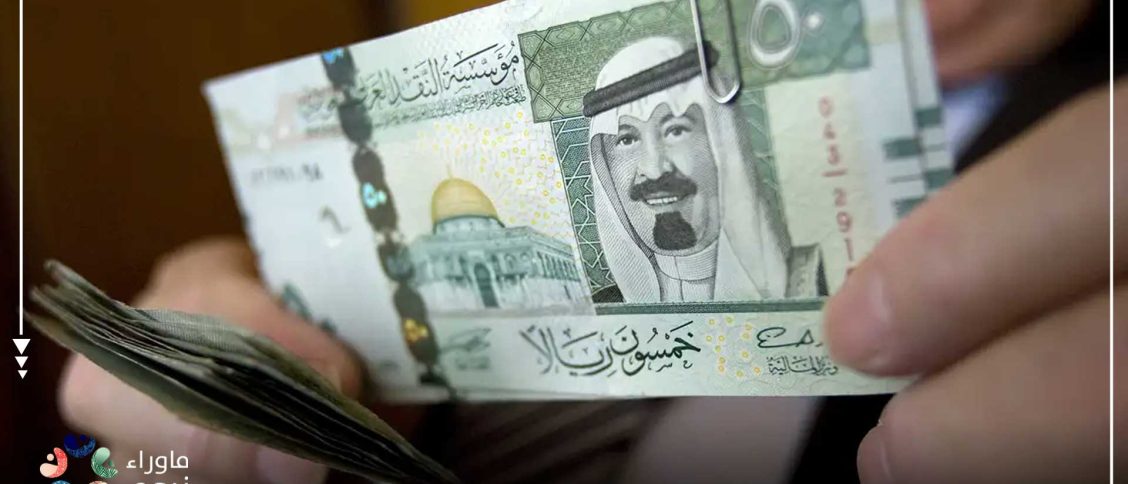
Saudi Arabia’s economic indicators are no longer moving in a coherent direction. Instead, they reveal a sharp duality between a financial reality showing clear signs of slowdown and spending policies that continue to surge uncontrollably toward entertainment, sports, and high-cost acquisitions. While specialized reports point to growing pressure on the banking sector and rising funding costs, the state persists in pouring vast sums into failed sports deals and entertainment projects that generate no real economic value—as if the real economy operates separately from the economy of spectacle.
This contradiction is not abstract. It is visible in numbers and outcomes: banks facing shrinking profit margins, footballers who cost hundreds of millions and delivered almost nothing, and growing ambitions to absorb global entertainment companies at a moment when fiscal restraint—not expansion—should be the priority.
Banks Under Pressure: A Quiet Slowdown Behind the Stability Narrative
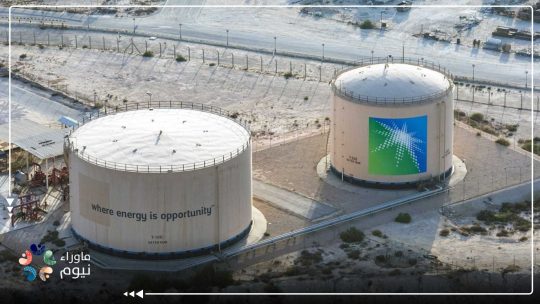
According to a recent report by IBS Intelligence, citing analysis by Alvarez & Marsal, the Saudi banking sector posted a superficially stable performance in Q3 2025. Beneath that stability, however, lie unmistakable signs of deceleration. Rising funding costs and weakening deposit growth have begun to squeeze profit margins, forcing banks to adopt a more cautious approach to liquidity and risk.
While lending remains intact and asset quality has not collapsed, the underlying reality is clear: Saudi banks no longer operate with the flexibility that characterized the boom years. As government borrowing expands and global interest rates remain elevated, banks are increasingly caught between financing the state, preserving profitability, and avoiding deeper systemic risk.
This silent slowdown cannot be separated from broader economic policy. As the state leans more heavily on debt and funds core projects through borrowing, the banking sector becomes both the first line of defense—and the first to absorb the consequences of prolonged imbalance.
Sports Deals With No Return: Cancelo as a Case Study in Waste
On the other side of the ledger, the contradiction becomes impossible to ignore in football spending. João Cancelo’s transfer to Al-Hilal is not merely a failed signing; it is a concentrated example of spending entirely detached from rational economic calculation. A $30 million transfer fee, an $18 million annual salary, followed by marginal participation and eventual loan to Barcelona for a fraction of the original cost.
The result: a club effectively backed by public funds absorbed massive costs for negligible sporting return. This season, Cancelo reportedly played only two matches, turning each minute on the pitch into an extraordinarily expensive exercise. This was not an isolated misjudgment but part of a recurring pattern in sports management, where star names are treated as promotional tools rather than long-term investments.
Placed alongside mounting pressure on banks and tightening financing conditions, the question becomes unavoidable: what economic logic justifies such spending while society is asked to absorb the costs of “reform,” higher prices, and fiscal adjustment?
Entertainment as a Substitute for Development
Football is only one dimension. Reports suggesting that Saudi Arabia’s General Entertainment Authority may pursue the acquisition of WWE expose an even broader expansionist mindset. Analysts argue that hosting major events like the Royal Rumble could be a preliminary step toward full ownership, signaling a shift from sponsorship to outright control of global entertainment platforms.
This ambition arrives at a particularly sensitive economic moment. Rather than channeling resources into productive sectors capable of generating sustainable employment or reducing oil dependency, capital is being poured into an industry built on spectacle, media rights, and volatile audience preferences.
Entertainment is no longer presented as a complementary sector—it is increasingly positioned as a symbolic replacement for genuine development and as a mechanism to occupy public attention while structural economic challenges deepen beneath the surface.
An Economy With Two Faces
What Saudi Arabia faces today is not a single crisis but a dual economic reality. On one side stands an official narrative of resilience, efficiency, and shock absorption. On the other lies a measurable slowdown in banking activity, rising funding costs, and the continuous hemorrhaging of billions into sports and entertainment ventures with little to no tangible return.
This contradiction cannot be concealed indefinitely. When banks are under pressure, citizens are asked to bear the cost of adjustment, yet spectacle-driven spending remains untouched, the issue is no longer a single deal or acquisition—it is the overall economic direction.
Money can either be deployed to build a solid productive base or burned as fuel for a temporary show economy that dazzles quickly and fades even faster. Continuing down the current path does not resolve the problem; it merely delays confrontation with reality. Economies do not collapse from noise, but from the silent accumulation of imbalances—until the cost of correction becomes far higher than the cost of early acknowledgment.