

By late 2025 and early 2026, Saudi Arabia’s negative economic indicators could no longer be dismissed as cyclical fluctuations or temporary slowdowns manageable through official reassurances. Taken together, rising unemployment, weakening non-oil growth, tightening financial conditions, and falling oil prices now form a coherent picture of a structural strain deepening beneath an ambitious political narrative. These pressures converge most visibly in the growing crisis surrounding mega-projects—chief among them The Line—exposing a widening gap between vision and economic reality. What is unfolding is not a passing implementation delay, but a serious stress test of the vision itself, measured not by slogans but by hard data.
A Labour Market Backslide After Years of “Reform”
The most alarming shift is occurring in the labour market. After years of promoting declining unemployment as a flagship achievement of Vision 2030, the unemployment rate among Saudi nationals rose to 7.5% by the third quarter of 2025, up from 6.3% at the start of the year. This second consecutive quarterly increase reveals the fragility of the earlier gains, which were driven largely by state spending and employment linked to Public Investment Fund (PIF) projects rather than by a durable, private-sector-led transformation.
More telling still is the decline in labour force participation. A growing segment of citizens has quietly exited the job search altogether. This silent withdrawal is a more serious signal than the unemployment rate itself: when people stop looking for work, it reflects not choice but disillusionment with the market’s ability to absorb them. It indicates that promised opportunities are no longer credible.
This trend cannot be separated from spending cuts and the slowdown among companies tied to mega-projects. Entities once presented as engines of job creation have begun scaling back expansion and tightening hiring criteria, directly limiting their capacity to absorb national labour.
A Private Sector Losing Momentum and Tightening Finance
Economic activity data reinforce this picture. The non-oil Purchasing Managers’ Index slipped to 57.4 in December 2025, its lowest level in four months. While still technically in expansion territory, the downward trend signals weakening new demand, rising costs, and inflationary pressure on firms. This slowdown strikes at the core of the “strong non-oil economy” narrative that underpins Vision 2030’s promise to move beyond oil dependence.
At the same time, Saudi banks are facing mounting pressure. Higher funding costs and slower deposit growth squeezed profit margins in the third quarter of 2025, even as lending activity and asset quality remained relatively stable. This combination is unsustainable: banks are extending credit in a more expensive funding environment, increasing systemic risk if conditions persist.
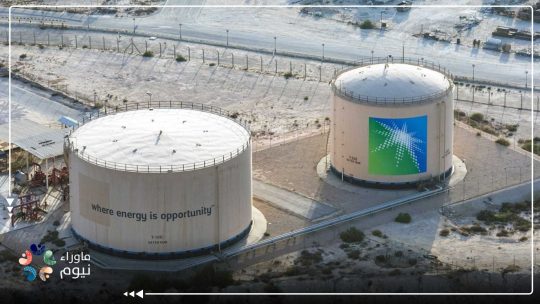
These stresses are compounded by a roughly 20% decline in oil prices over 2025—the worst annual performance in years. The impact was immediate in financial markets, with the Saudi index closing lower and major bank stocks falling. In an economy still fundamentally tied to oil revenues, such a price drop functions as an early warning signal that cannot be neutralised by optimistic rhetoric.
Debt as a Permanent Tool, Not a Temporary Fix
Confronted with these realities, Saudi Arabia approved a borrowing plan of 217 billion riyals for 2026 to cover deficits and refinance maturing debt. This figure marks a clear shift: borrowing is no longer an exceptional bridge but a semi-permanent financing strategy. Each new debt cycle narrows future policy space and raises the cost of debt servicing on the budget.
What makes this more troubling is the social context. Since 2016, citizens have borne the cost of “fiscal reform” through indirect taxes, higher energy prices, subsidy cuts, and declining purchasing power. Yet despite these sacrifices, reliance on debt has not diminished. This raises an unavoidable question: if years of austerity and reform have not delivered fiscal sustainability, where does the problem lie—on the revenue side, or in the spending model itself?
The Line: From Future Icon to Present Burden
At the centre of this dilemma stands The Line, once marketed as the embodiment of an unprecedented urban and economic revolution. A 110-mile linear city with no cars, zero emissions, and an estimated cost approaching $500 billion was presented as the spearhead of diversification. Today, accumulated realities have reversed that image.
Strategic reviews, declining foreign investment, and oil price volatility have forced a drastic downsizing of the project. Population projections have fallen from millions to fewer than 300,000 by the end of the decade, while what may be completed by 2030 is expected to cover no more than 1.5 miles. This contraction does not merely affect execution details; it undermines the project’s symbolic foundation as a diversification engine.
Fiscal data reveal the depth of the problem. Saudi Arabia now requires oil prices near $96 per barrel to balance its budget, and above $110 to finance mega-projects—while prices have hovered in the mid-$50s. This gap explains the wave of reprioritisation: revised designs, workforce reductions, staff relocations, and postponed timelines—all signs of genuine financial stress.
Even the engineering concept itself has become a liability. A mirrored structure rising 1,500 feet high and stretching across harsh terrain would require unprecedented construction speeds. Experts had questioned the feasibility of the timeline from the outset, noting that execution would demand building rates without historical precedent. Those doubts are now materialising as hard constraints.
Numbers, Not Narratives
The emerging picture is not one of a brief stumble, but of an economic model strained by over-commitment, debt dependence, and projects whose scale exceeds the state’s financial tolerance under current conditions. The numbers do not describe a temporary adjustment; they expose what prolonged promotion and spectacle concealed.
Saudi Arabia’s challenge is no longer how to sell ambition, but whether it can recalibrate before accumulated pressures force harsher corrections. Economies rarely collapse amid noise and celebration. They falter through the quiet accumulation of imbalances—until the cost of adjustment becomes far higher than the cost of early recognition.