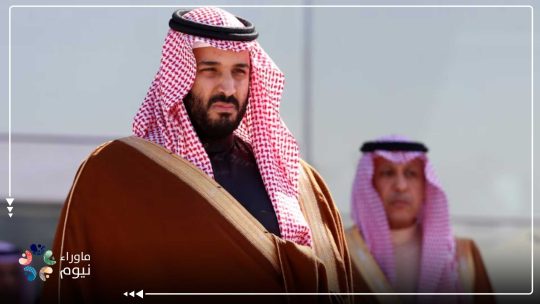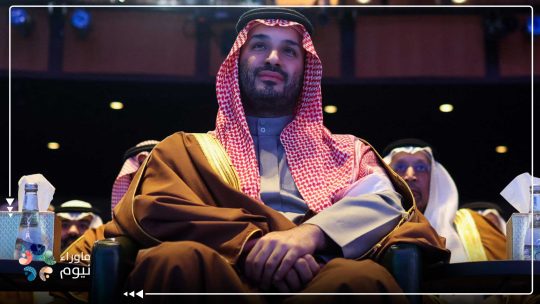


Mohammed bin Salman’s political behavior can no longer be separated from a growing sense of internal fragility. Beneath the language of strength, spectacle, and ambition lies a convergence of economic, social, and political pressures that have hollowed out the foundations of the Saudi state. Rather than confronting these crises at home, the leadership has increasingly sought protection abroad—treating external alliances not as strategic partnerships, but as shields against domestic weakness. What emerges from international political and media analysis is not an ideological shift, but a logic of fear: fear of a slowing economy, a society exhausted by repression, and a political order sustained by coercion rather than consent.
A Fractured Interior: Governance by Spectacle, Not Reform
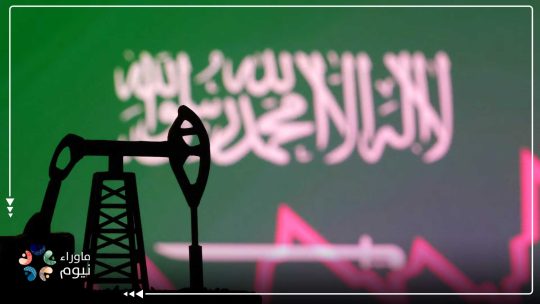
The past several years have demonstrated that Saudi Arabia’s proclaimed “reforms” have failed to produce structural stability. Unemployment among citizens is rising, living costs continue to climb under the weight of taxes and fees, and the middle class is steadily eroding. At the same time, mega-projects once sold as engines of transformation are being scaled back, delayed, or quietly reconsidered.
Socially, repression has expanded to encompass clerics, youth, activists, and any independent voice, producing enforced silence rather than genuine consensus. Politically, the state has been reduced to a highly centralized system of personal rule: institutions stripped of influence, media reduced to amplification, and accountability rendered nonexistent. This internal vacuum cannot be filled with marketing campaigns or entertainment spectacles. It is a deficit of legitimacy, not visibility.
The 2019 Aramco Shock: When the Illusion of Protection Collapsed
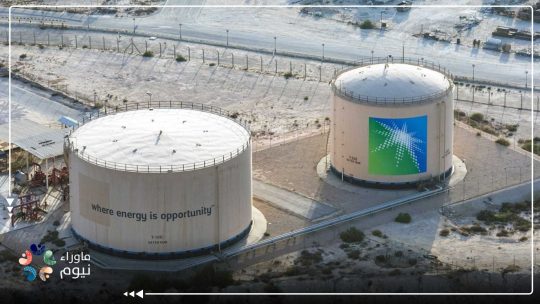
The attack on Aramco facilities in 2019 marked a critical rupture. In that moment, the Saudi leadership confronted an uncomfortable reality: Western security guarantees were neither automatic nor unconditional. Promises did not translate into protection when tested.
Instead of drawing inward lessons—building credible deterrence, reforming institutions, or reducing reckless regional interventions—the response was external shortcutting. Reopening doors in Washington through influence networks, recalibrating red lines, and redefining political taboos became tools to restore perceived protection. This was not an ideological transformation; it was a security-driven pivot rooted in vulnerability. Normalization and alignment were framed not as choices, but as lifelines.
Erratic Alliances and Directionless Campaigns: Foreign Policy as Crisis Management
Recent regional behavior reflects this strategic confusion. Abrupt rhetorical campaigns against former partners, rapid attempts to build security ties with Turkey and Pakistan, and renewed airstrikes in southern Yemen aimed at dismantling separatist structures all point to reactive policymaking rather than coherent strategy.
Confident states do not constantly recalibrate their compass. They do not open and close fronts according to momentary pressures. What is visible instead is a pattern of permanent crisis management—foreign policy as an extension of domestic anxiety.
This volatility erodes credibility. Allies hesitate to rely on leadership that shifts positions without institutional grounding. Adversaries are not deterred by impulsive moves. Regional influence weakens not because rivals are stronger, but because decision-making is unstable.
The False Bet: Protection Without Reform
Within international policy circles, a growing consensus has emerged: betting on Riyadh as a stable strategic anchor has become increasingly risky, particularly as more predictable actors such as India rise in prominence. This conclusion is harsh but revealing. States that seek protection without internal reform become liabilities, not partners.
Security guarantees are extended to systems with internal resilience—robust economies, cohesive societies, and functioning institutions. A state governed by fear will continuously demand greater assurances while offering deeper concessions. External protection cannot compensate for internal decay.
No Savior for Fear: States Are Built from Within or Hollowed from Without
Attempting to offset domestic weakness through shifting alliances is not strategy—it is flight. Neither Washington nor any other capital can rescue a system unwilling to confront its structural failures. The only viable path forward lies in genuine reform: reopening public space, ending systematic repression, restoring institutional balance, and aligning economic ambition with actual resources.
Absent this reckoning, the search for a “strong external protector” will remain a symptom of weakness, not strength. Saudi foreign policy will continue to mirror an expanding internal fear—one that grows louder the longer meaningful reform is postponed.