
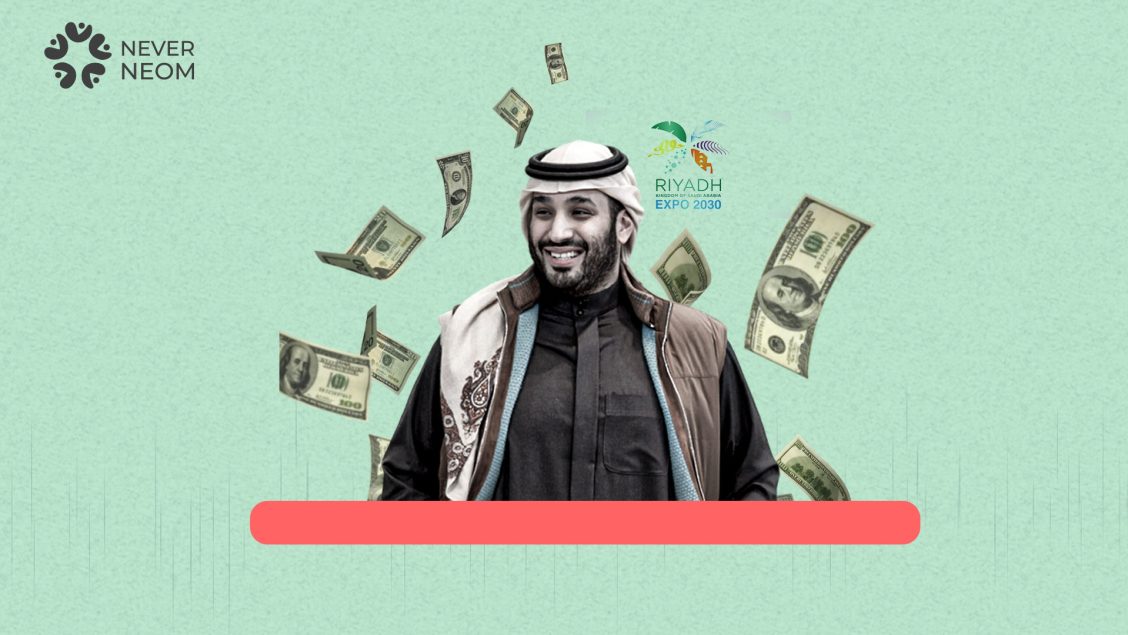
Saudi Arabia’s Public Investment Fund was once presented as the engine that would transform the kingdom into a diversified economic powerhouse beyond oil. Today, however, a growing number of its most expensive ventures are raising a different question: how many billions can be poured into entertainment and sports before investors are forced to ask where the returns are?
As Saudi Arabia grapples with widening budget deficits, rising public debt, delayed mega-projects, and increasing financial pressures, the kingdom continues to commit enormous sums to industries that have yet to demonstrate sustainable profitability. The latest figures are striking: roughly SAR 50 billion invested in gaming and esports, alongside more than SAR 18.7 billion spent on LIV Golf. Together, they represent one of the most ambitious attempts anywhere in the world to use state wealth to manufacture entirely new industries from the top down.
The problem is not the size of the investment alone. It is the growing gap between spending and measurable returns.
Chasing Headlines Instead of Profits
Over the past several years, Saudi Arabia has directed billions toward sectors capable of generating global publicity. International sporting events, gaming tournaments, celebrity partnerships, golf leagues, football acquisitions, and entertainment festivals have become central pillars of the kingdom’s global branding strategy.
Yet publicity and profitability are not the same thing.
Gaming is frequently promoted as a sector of the future, and the global gaming industry is undeniably large. However, Saudi Arabia’s own gaming ecosystem remains heavily dependent on government funding. Many of the projects, tournaments, acquisitions, and initiatives associated with the sector continue to rely on direct state support rather than self-sustaining commercial success.
If government funding were withdrawn tomorrow, significant parts of the ecosystem would struggle to survive in their current form.
That reality raises an uncomfortable question: has Saudi Arabia created a genuine industry, or simply a government-financed ecosystem that exists because state money keeps flowing into it?
The contradiction is difficult to ignore. Officials repeatedly speak about reducing dependence on oil, yet many of the new sectors being promoted remain dependent on oil-funded state investment for their survival.
LIV Golf and the Cost of Buying Relevance
If gaming represents the newest Saudi bet, LIV Golf remains one of the clearest examples of the risks associated with spending first and asking questions later.
Since its launch, Saudi Arabia has reportedly committed more than $5 billion to LIV Golf. The strategy was simple: recruit some of the world’s biggest players with enormous contracts, offer prize pools far beyond industry norms, and challenge established golf institutions through sheer financial power.
The spending succeeded in attracting famous names.
It did not automatically create a profitable business.
Television audiences have remained below expectations. Sponsorship growth has been limited. Media rights revenues—the financial backbone of most successful sports leagues—have not emerged as a transformative source of income. Even supporters of the project have acknowledged that profitability remains years away, if it arrives at all.
As a result, LIV Golf continues to depend largely on Saudi funding to operate.
Instead of becoming a commercially successful sports property, it increasingly resembles a project sustained by state wealth rather than market demand.
The Real Cost of Every Billion
The debate surrounding these investments is ultimately not about sports or gaming. It is about priorities.
Every riyal allocated to loss-making ventures is a riyal unavailable for other purposes. At a time when Saudi Arabia is reviewing major infrastructure projects, delaying components of Vision 2030, and expanding borrowing to finance spending commitments, questions about opportunity cost become unavoidable.
The issue becomes even more significant given that these investments are taking place during a period of rising debt and increasing fiscal pressure.
In previous years, such spending might have been financed comfortably through oil windfalls. Today, however, the economic environment is different. Funding increasingly relies on borrowing, financial restructuring, and careful prioritisation of state resources.
That reality means the risks associated with these projects are no longer confined to the investments themselves. They become part of a broader fiscal challenge facing the Saudi economy.
When the State Becomes Investor, Banker and Operator
Perhaps the most revealing aspect of Saudi Arabia’s entertainment strategy is that the state has become almost everything at once: investor, financier, promoter, organiser, and, in many cases, the primary source of demand.
Rather than creating industries led by private-sector growth, the current model often relies on the Public Investment Fund as the central engine behind expansion.
This raises a fundamental question about Vision 2030 itself.
Was the objective to build self-sustaining industries capable of attracting private capital and generating independent growth? Or has the kingdom simply replaced dependence on oil revenues with dependence on a state investment fund financed by those same revenues?
The answer remains uncertain.
What is clear is that after years of open-ended spending, many of the flagship projects still require continuous injections of capital while struggling to demonstrate the level of financial performance that would justify the scale of investment.
The Billions Keep Flowing While the Returns Remain Elusive
The central question is no longer how much Saudi Arabia has spent on sports, gaming, and entertainment.
The real question is what it has received in return.
The projects promoted as future engines of economic growth continue to consume public resources while searching for sustainable business models. Gaming remains heavily dependent on state backing. LIV Golf remains reliant on Saudi funding. Other ventures continue to require substantial financial support despite years of investment.
As budget deficits widen and fiscal pressures grow, Saudi policymakers may soon face a more difficult challenge than launching new projects: explaining why so many existing ones continue to consume billions without delivering the transformative economic returns that were promised.