

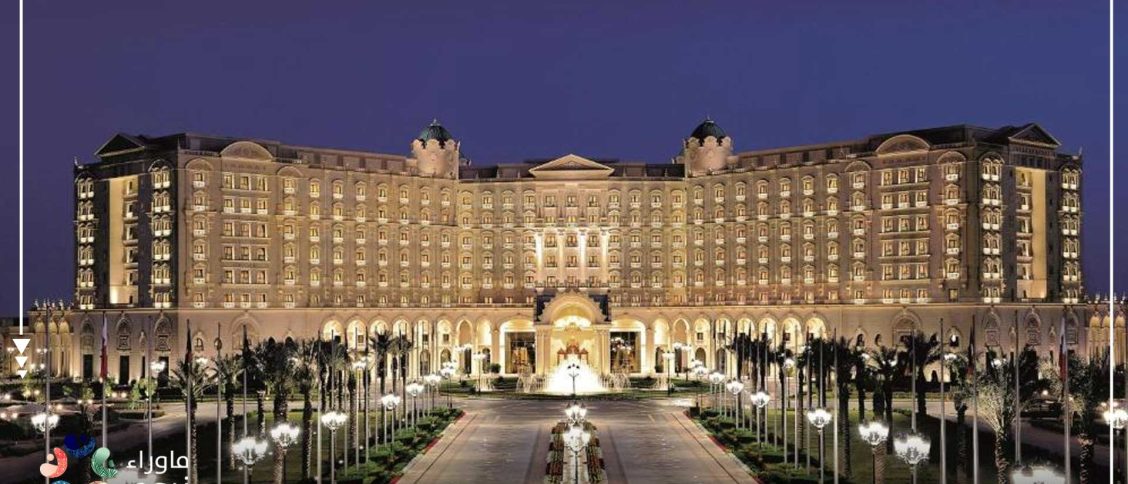
The Ritz-Carlton in Riyadh was supposed to represent the polished face of modern Saudi luxury: marble interiors, chandeliers and suites designed for presidents, royalty and wealthy visitors.
Nearly nine years after the hotel became the centre of Mohammed bin Salman’s sweeping anti-corruption purge, however, accounts of what allegedly happened behind its closed doors continue to surface.
They describe doors being removed from rooms, detainees being blindfolded and a gym that one former detainee characterised as a “torture zone”, where the sounds of beatings and screams could allegedly be heard.
One of the latest and most detailed accounts concerns Rami al-Naimi, the son of Ali al-Naimi, Saudi Arabia’s former oil minister and former chairman of Saudi Aramco. According to the Financial Times, Rami’s wife, Mira, says her husband told her that he was tortured during his detention and questioned extensively about money and assets.
A separate account from Salem al-Muzaini describes hearing people being beaten and screaming inside a restricted part of the hotel.
These are extremely serious allegations. They must also be described accurately: they are accounts provided by former detainees and their families, not findings established by a publicly available independent judicial investigation.
Saudi authorities have repeatedly rejected allegations that Ritz detainees were abused, maintaining that those held received appropriate treatment, including medical care and access to legal representation.
But an official denial does not resolve the underlying issue.
If the allegations are false, why has one of the most controversial mass detention operations in modern Saudi history never been subjected to a transparent, independent investigation capable of establishing what actually happened inside the hotel?
When a Five-Star Hotel Became a Detention Centre
The Ritz-Carlton operation began in November 2017 under the banner of fighting corruption.
The stated principle was legitimate: recover public money suspected of having been misappropriated and hold powerful individuals accountable regardless of their wealth or status.
But a credible anti-corruption system is not measured by how many princes, ministers or billionaires a government can detain in a single night.
It is measured by the law used to prosecute them, the transparency of the proceedings and the ability of the accused to challenge the state’s evidence before an independent court.
That was always the fundamental problem with the Ritz operation.
Dozens of influential Saudis were detained not in an ordinary prison or conventional judicial setting, but inside a luxury hotel closed to the public. Financial settlements were negotiated behind closed doors, and some detainees were subsequently released after agreeing to surrender substantial assets or funds.
The renewed torture allegations make that lack of transparency considerably more serious.
According to Mira’s account, the first days of her husband’s detention were almost confusingly normal, as though he had entered the Ritz as a guest rather than a detainee. She says the situation then changed: doors were removed, detainees were blindfolded and her husband was subjected to abusive interrogation and torture.
If substantiated, such conduct could not be dismissed as an administrative irregularity.
Torture does not become lawful because the person being interrogated is wealthy. Nor does coercion become legitimate because an operation is labelled an anti-corruption campaign.
The Body as Financial Leverage
Perhaps the most disturbing element of the al-Naimi account is not simply the alleged abuse, but what his family says interrogators were trying to obtain.
According to Mira, her husband told her that interrogators claimed his father was being tortured in an adjoining room and offered him 5% if he revealed where his father’s money was located.
There is no independent public evidence available to verify that this exchange occurred, and it should therefore remain explicitly attributed to the family.
But if accurate, it would fundamentally change the character of what happened.
This would no longer be an allegation of coercive interrogation aimed at establishing responsibility for a clearly defined criminal offence. It would amount to an allegation that physical and psychological pressure was being used to locate and extract wealth.
The account intersects with the family’s claim that Rami was confronted with a proposed financial settlement initially estimated at around SAR 5 billion before being reduced to SAR 1 billion.
It would be inaccurate to state simply that he “paid SAR 1 billion for his freedom”. What is publicly available is the family’s allegation that he was pressured to agree to a financial commitment or settlement of that scale.
But that distinction does not eliminate the questions.
How was the amount calculated?
If public funds had been stolen, where was the judicial process establishing precisely what had been taken?
If the detainee had committed a crime, why should a financial settlement substitute for the public presentation of evidence and a court judgment?
And if he had not committed a crime, on what legal basis was such a payment demanded?
Another Detainee Describes a ‘Torture Zone’
Salem al-Muzaini’s account adds another dimension.
According to his testimony, he was taken to a restricted section of the Ritz where entry was prohibited. There, he says, he heard people being beaten and screaming and described the area as a “torture zone”.
His account does not independently prove every allegation made by the al-Naimi family. It does not establish who was allegedly being beaten, who carried out the abuse or who authorised it.
But when separate accounts begin to overlap around the same location, conditions and alleged methods, the argument for an independent investigation becomes stronger.
That is the crucial distinction in a serious human-rights investigation.
A government denial is not sufficient evidence that abuse did not occur.
Nor should allegations automatically be treated as proven simply because former detainees or their relatives make them.
The institutional answer is an independent investigation based on evidence.
Who was detained at the Ritz?
Who conducted the interrogations?
What medical records exist?
Were injuries documented?
Who issued operational instructions?
Did detainees submit complaints?
If they did, were those complaints investigated?
Nearly nine years later, these basic questions remain unresolved in public.
Human Rights Are Not Separate From Vision 2030
Saudi Arabia today is very different from the country that entered 2017.
Under Mohammed bin Salman, the kingdom has undergone an extraordinary transformation of its international and domestic image. Women were permitted to drive. Entertainment expanded rapidly. International tourism opened up. Global sporting events, celebrities and corporations arrived. Hundreds of billions of dollars were committed to new cities, industries and infrastructure.
Vision 2030 has been presented as a transition from an older Saudi model towards a modern, globally integrated state.
But economic modernisation cannot substitute for the rule of law.
Riyadh can become an international centre for finance, entertainment and business, but investors evaluating a country do not look only at airports, luxury hotels, growth figures and tax incentives.
They also ask what happens when an individual or company comes into conflict with the state.
Is there an independent court?
Can a detainee freely obtain legal representation?
Can assets be seized without a transparent judicial process?
Is private property protected by law?
Can the judiciary stand between an individual and executive power?
That is why allegations of torture and opaque financial settlements are not separate from the economic story of Vision 2030.
The rule of law is part of the infrastructure of an investment economy.
The Ritz Affair Never Entirely Ended
The Ritz might have been dismissed as a controversial chapter from 2017 and 2018 had the cases surrounding it simply ended there.
But the case of Rami al-Naimi, according to his family’s account, continued.
His family says he did not simply return to ordinary life after leaving the Ritz. He was released under restrictions, later detained again in 2022 and eventually held at al-Ha’ir prison, while his case continued through different legal proceedings.
The issue is therefore not purely historical.
It concerns accountability after almost nine years.
Any government can deny allegations of misconduct. The more difficult test is whether it permits an independent mechanism capable of establishing whether those allegations are true.
Such an investigation would not necessarily weaken the Saudi state.
If individual officials committed abuses without authorisation, an independent investigation could distinguish their actions from official policy and hold those responsible accountable.
If the allegations are false, a credible investigation could establish that too.
Continuing silence does neither.
It leaves one of the most consequential episodes of Mohammed bin Salman’s consolidation of power trapped in a legal and historical grey zone.
Anti-Corruption Cannot Mean Power Without Limits
There is a broader principle at stake.
Corruption can be deeply destructive. Powerful individuals should not be immune from prosecution because they are princes, ministers or billionaires.
But anti-corruption becomes dangerous when the institution fighting corruption is itself insulated from scrutiny.
A government cannot credibly establish the rule of law by suspending its protections whenever it confronts people accused of violating it.
If money was stolen, prosecute the theft.
Present the evidence.
Establish the amount.
Allow the accused to defend themselves.
Obtain a judgment.
Recover the assets through law.
That process may be slower and less dramatic than detaining dozens of prominent figures in a luxury hotel, but that is precisely the point.
The rule of law exists to place limits on state power even when the state believes its cause is justified.
The Doors Can Be Removed. The Questions Cannot.
Perhaps the most disturbing image emerging from accounts of the Ritz is not one particular allegation of electric shocks or waterboarding.
It is the account of a detainee who reportedly wanted to sleep inside a wardrobe to escape the sounds of what was happening outside.
If such testimony is accurate, a hotel once presented as the headquarters of a historic anti-corruption campaign instead became the setting for abuses requiring investigation and accountability.
If the testimony is false, the seriousness and persistence of the allegations still warrant an independent process capable of demonstrating that.
What should not exist is a third option in which torture allegations circulate for nearly a decade while the government and its critics remain locked into competing narratives that no independent institution is permitted to resolve.
The Ritz affair is therefore no longer merely an old human-rights controversy.
It is a test of the political project Mohammed bin Salman has built around himself.
Not a test of whether Saudi Arabia can construct The Line, buy international companies and sports assets, host major tournaments or turn Riyadh into a global business centre.
A simpler test.
Can an individual be protected from torture when the state itself becomes his adversary?
A modern state does not demonstrate strength by showing that it can force billionaires to submit. Nor is its strength measured by how much money it can recover from them or how quickly it can dismantle old centres of power.
Its strength is demonstrated by its willingness to bind itself to law even when dealing with people it accuses of corruption.
That is why the most serious question surrounding the Ritz is not merely whether detainees were beaten, shocked or subjected to other forms of abuse behind the doors of a luxury hotel.
It is that nearly nine years later, there is still no transparent, independent public answer to the fundamental questions:
What actually happened behind those doors?
Who knew?
Who authorised it?
And if Saudi Arabia’s anti-corruption campaign did turn into torture in parts of the Ritz-Carlton, who will ever be held accountable?