

Eleven years after Saudi Arabia went to war in Yemen to prevent the Houthis from becoming a permanent threat on its border, Riyadh is asking four countries for air-defence support while Washington refuses to fight its war. The kingdom spent billions building one of the region’s most expensive militaries. It is now searching for help to protect its skies from the same enemy it entered Yemen to defeat.
More than a decade after Saudi Arabia launched its military intervention in Yemen, the war has arrived at a moment that exposes an extraordinary strategic contradiction.
The kingdom has spent vast sums over decades purchasing American weapons and building one of the most expensive military arsenals in the Middle East. In 2015, it assembled a coalition and entered Yemen with the stated aim of restoring the internationally recognised government and preventing the Houthis from becoming a permanent Iranian-aligned military threat on Saudi Arabia’s southern border.
Eleven years later, the Houthis remain capable of firing ballistic missiles, cruise missiles and drones deep into Saudi territory.
And Saudi Arabia is looking for other countries to help defend its skies.
According to two regional officials who spoke to the Associated Press, Riyadh has approached France, Britain, Pakistan and Egypt seeking air-defence assistance as its stocks of missile interceptors come under growing pressure. At the time of the report, none of the four countries had committed to deploying the support Saudi Arabia was seeking.
The pressure is no longer theoretical. On 19 September, Saudi authorities said they had intercepted a Houthi ballistic missile targeting Riyadh, in the first attack on the capital since the latest escalation. The Houthis have also claimed attacks against other Saudi locations and infrastructure, while Saudi air defences have continued confronting missiles and drones.
There is nothing inherently extraordinary about a country asking allies for military assistance. Alliances exist precisely because even major military powers cannot maintain unlimited capabilities in every theatre simultaneously. The United States itself has seen pressure on its interceptor stocks after months of war with Iran.
The problem for Saudi Arabia is not that it needs allies.
It is that, after eleven years of war, military spending and alliance-building, it needs them to confront the same strategic problem it went to war in 2015 to solve.
Saudi Arabia Bought One of the Region’s Most Expensive Militaries. Attrition Does Not Care How Much the Fighter Jet Cost
The pressure on Saudi interceptor stocks exposes one of the fundamental weaknesses of modern high-cost warfare.
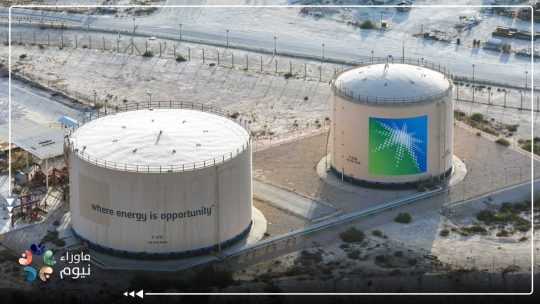
Saudi Arabia can own advanced combat aircraft, sophisticated radars and some of the most expensive air-defence systems available. The Houthis do not need anything remotely comparable to create a strategic problem.
The economics of the confrontation are asymmetric.
An attacking force can repeatedly launch drones and missiles while the defender must maintain radars, command networks, air bases and interception systems across an enormous territory containing cities, airports, oil facilities and other critical infrastructure.
Every interception consumes ammunition.
Every new wave requires more.
Even an air-defence system that destroys most incoming threats can therefore be placed under sustained pressure if attacks continue for long enough.
That is precisely why the Saudi request for assistance matters.
The kingdom spent decades buying access to the American military ecosystem. Those purchases were not worthless: without sophisticated Saudi air defences, the damage from Houthi attacks could have been substantially worse.
But the current crisis exposes the difference between buying weapons and building defence independence.
What did decades of dependence on American military systems ultimately produce if, at the moment of prolonged regional attrition, Saudi Arabia must urgently search for additional layers of protection from four other states?
The question is not whether the Patriot battery works.
It is whether Saudi defence strategy created sufficient industrial capacity, stockpiles, supply chains and strategic depth to sustain a prolonged confrontation when its principal supplier had other priorities.
In 2026, the answer is being tested under fire.
Washington Will Help Riyadh. It Will Not Necessarily Fight Riyadh’s War
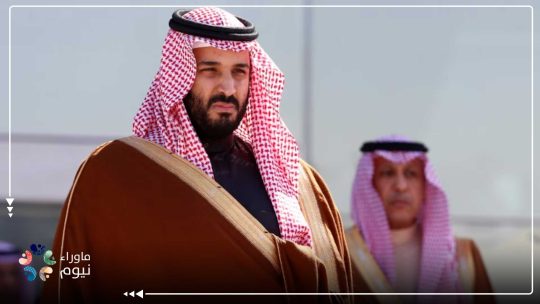
The more uncomfortable development for Mohammed bin Salman is not simply the pressure on Saudi ammunition stocks.
It is the American response.
According to Reuters, the Saudi crown prince asked Donald Trump for military assistance against the Houthis as the crisis escalated. Trump held at least two calls with Mohammed bin Salman, but Washington ultimately told Riyadh that it was not prepared to take direct military action against the Houthis at that stage. The United States was instead willing to provide intelligence sharing and targeting assistance.
That distinction reveals the limits of the Saudi-American security relationship more clearly than dozens of diplomatic communiqués.
Washington is willing to help Saudi Arabia.
It is not necessarily willing to fight Saudi Arabia’s war.
The calculation is not sentimental. The United States has its own wars, its own military requirements and its own diminishing stocks of certain munitions. Opening another direct front against the Houthis would consume aircraft, ships, intelligence capabilities and additional interceptors.
More importantly, Washington has developed its own relationship with the Houthi problem.
US officials met Houthi representatives in Oman this month, Reuters reported, following the ceasefire reached between Washington and the group in May 2025. According to sources cited by Reuters, Houthi representatives gave assurances during the latest talks that they would not target American or Israeli vessels and indicated that their confrontation would remain focused on Saudi ships.
The United States has not become an ally of the Houthis. Nor has it abandoned its extensive security relationship with Saudi Arabia.
But the distinction is strategically devastating in its simplicity:
America wants to protect American interests.
That does not automatically mean fighting every enemy Saudi Arabia wants America to fight.
When the Houthis Can Keep America Out, the Bill Becomes More Saudi
This may be the most significant element of the new confrontation.
If the Houthis can preserve an understanding under which American interests remain outside their Saudi confrontation, they achieve through diplomacy something missiles alone cannot deliver: they separate their adversaries according to their individual interests.
Washington does not need to like the Houthis for that strategy to work.
It simply needs to decide that entering another war is not worth the cost.
And that is precisely where the Saudi calculation becomes uncomfortable.
For decades, Riyadh built much of its security architecture around two assumptions: that enormous purchases of American military equipment would provide sophisticated defence capabilities, and that the strategic relationship with Washington would ultimately provide a wider security umbrella.
September 2026 is testing both assumptions simultaneously.
Saudi Arabia is discovering that its interceptors are finite.
It is also discovering that American willingness to intervene is finite.
When the United States needs to conserve its own weapons and avoid another front, Riyadh is left searching elsewhere — France, Britain, Pakistan and Egypt — for countries capable of sharing the burden.
The problem has therefore moved beyond buying an air-defence system.
Saudi Arabia is now searching for other countries with enough available military capacity to help it sustain the cost of using one.
From an Offensive War in 2015 to Searching for a Shield in 2026
This is the most damaging contradiction in the legacy of Mohammed bin Salman’s Yemen war.
Saudi Arabia entered the conflict in 2015 from a position of initiative.
Saudi-led coalition aircraft crossed into Yemeni airspace. Riyadh assembled regional partners. The stated objective was to restore the internationally recognised government, weaken the Houthis and prevent an Iran-aligned armed movement from establishing itself permanently along the kingdom’s border.
Eleven years later, the strategic question has been reversed.
Saudi Arabia is strengthening its defences.
Houthi missiles and drones are being launched towards the kingdom.
The group has made important territorial gains along Yemen’s Red Sea coast, including the port of Mokha and strategic islands, increasing the sensitivity of the Bab el-Mandeb corridor at a time when regional energy routes are already under severe pressure. Reuters described the Houthi advance as exposing Saudi intelligence failures and the collapse of some Saudi-backed Yemeni forces.
On 19 September, the threat reached Riyadh itself again, when Saudi Arabia said a ballistic missile targeting the capital had been intercepted.
This does not mean Saudi Arabia has been militarily defeated in the conventional sense. Its armed forces remain vastly better equipped than the Houthis.
But wars are not ultimately judged by which side owns the more expensive aircraft.
They are judged against political and strategic objectives.
If one of the fundamental purposes of the 2015 intervention was to prevent the Houthis from becoming a permanent security threat to Saudi Arabia, then the situation in September 2026 makes it impossible to say that objective was achieved.
Eleven years after Riyadh entered Yemen to neutralise the threat, the threat is reaching Riyadh.
The New War Bill Arrives at the Worst Possible Time for Vision 2030
The financial context has also changed.
The Saudi Arabia that entered the Yemen war in 2015 is not operating under the same economic constraints as the kingdom confronting renewed escalation in 2026.
Saudi Arabia is simultaneously trying to finance an extraordinary domestic transformation through Vision 2030. NEOM, Qiddiya, Diriyah, Red Sea tourism, aviation, artificial intelligence, data centres, mining, sport, manufacturing and infrastructure all compete for capital.
Defence spending competes for it too.
And missile interceptors represent one of the harshest forms of expenditure for a state pursuing an enormous economic transformation.
An interceptor does not generate revenue.
It does not build a factory.
It does not establish a university.
It does not produce a return for the Public Investment Fund.
Once launched, it is gone.
Yet when a ballistic missile or drone is approaching a city, airport or oil facility, the expenditure becomes unavoidable.
That distinguishes military spending from almost every Vision 2030 megaproject.
A phase of NEOM can be delayed.
A property development can be redesigned.
A sporting budget can be reduced.
An investment can be postponed.
An air-defence commander cannot tell an incoming missile to wait until the fiscal position improves.
Yemen therefore returns to compete with Vision 2030 for money, political attention and strategic capacity at precisely the moment Saudi Arabia needs all three elsewhere.
And Yemen Is Still Paying the Largest Bill
There is an even larger cost that cannot be reduced to Saudi military budgets.
Yemenis continue to bear the human consequences.
The renewed fighting has displaced at least 125,000 people since early September, according to UN humanitarian figures cited in recent reporting. Families have fled fighting along the western coast and around Taiz, while aid organisations warn about inadequate food, shelter, sanitation and access to assistance. More than 22 million people across Yemen already require humanitarian support.
After more than a decade of war, the pattern is painfully familiar.
The Houthis advance.
Saudi Arabia strikes.
Yemeni forces fight.
Regional governments negotiate.
And Yemeni civilians flee again.
Whatever strategic calculations are made in Riyadh, Washington, Tehran or elsewhere, a war that continues to displace families eleven years after the Saudi intervention began is difficult to present as the foundation of the stable Yemen that the original campaign was supposed to help produce.
The Problem Is Not That Saudi Arabia Needs Allies. It Is That It Needs Them for the Problem the War Was Supposed to Solve
France relies on allies.
Britain relies on allies.
The United States relies on allies.
Seeking military assistance is therefore not, by itself, evidence of strategic failure.
The context is what turns the Saudi request into an accounting of eleven years of policy.
Saudi Arabia did not suddenly discover the Houthis in 2026.
It has fought them since 2015.
It bought the aircraft.
It bought the air-defence systems.
It conducted the air strikes.
It backed Yemeni forces.
It attempted negotiations.
It tried to extricate itself from the war.
And now it is again approaching foreign governments for help protecting Saudi territory from the same armed movement.
At the same time, Riyadh is confronting another uncomfortable fact: the United States — the ally around which much of Saudi Arabia’s security architecture has historically been built — has its own wars, its own ammunition requirements and its own diplomatic calculations.
Protecting Saudi Arabia does not automatically mean Washington will enter another war for Saudi Arabia.
That is not merely a temporary ammunition problem. It goes to the heart of Saudi strategic autonomy.
A state seeking genuine defence independence needs more than enough money to buy weapons. It needs domestic industrial capacity, reserves, logistics, doctrine and alliances capable of functioning when its principal supplier is occupied by another conflict.
Perhaps nothing summarises the outcome of eleven years more starkly than the contrast between 2015 and 2026.
In 2015, Saudi Arabia was assembling a coalition to enter Yemen and eliminate the Houthi threat.
In 2026, it is assembling allies again — this time not to enter Yemen, but to help prevent Yemen’s missiles and drones from entering Saudi Arabia.
Between those two moments lie billions of dollars in military expenditure, years of bombing and fighting, enormous civilian suffering, a devastated Yemen and a Houthi movement that did not disappear.
Saudi Arabia has discovered that possessing one of the region’s most expensive arsenals does not mean possessing unlimited ammunition.
And its leadership has discovered that an alliance with the world’s most powerful military does not mean that military will fight every war Riyadh wants fought.
So the most important question is no longer which country will send Saudi Arabia another air-defence battery.
It is how a war launched in 2015 to prevent the Houthis from threatening the kingdom reached a point, eleven years later, where the kingdom is searching abroad for help defending its skies from them — while Washington protects its own interests, talks to the Houthis and leaves Riyadh facing the bill for a war that never truly ended.