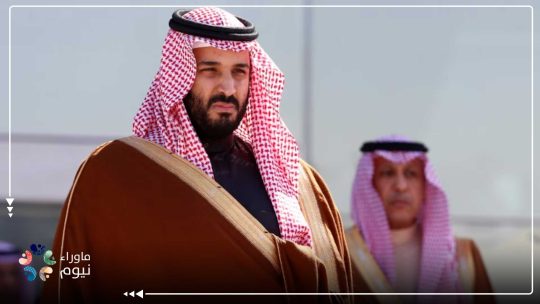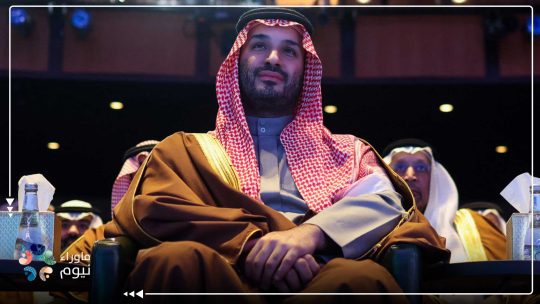

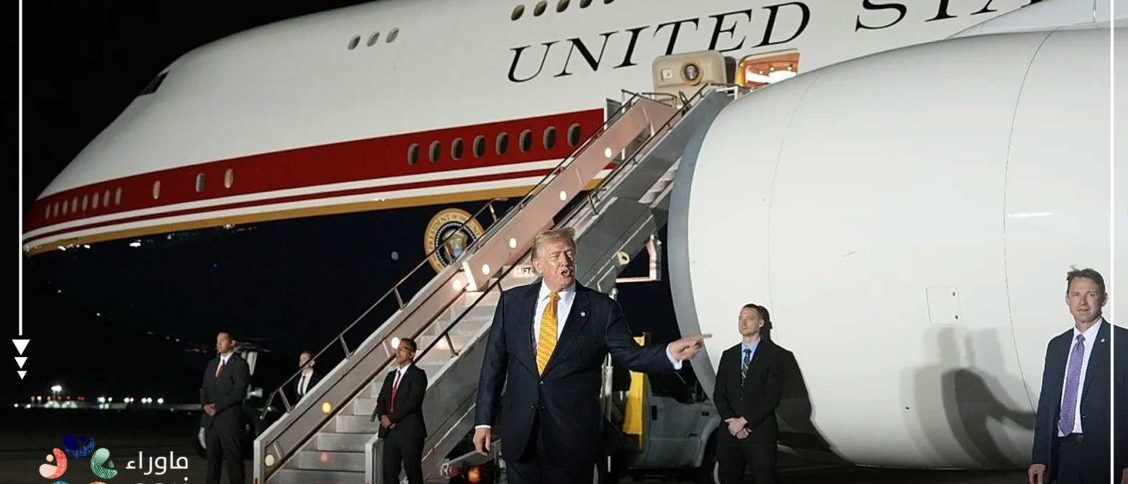
There are moments that reveal the nature of an entire relationship more clearly than dozens of summits, defence agreements and diplomatic statements. The reported sight of American aircraft being prepared for strikes against the Houthis, only for Donald Trump to stop the operation before it was carried out, is one of them. According to an account first published by The New York Times and subsequently reported by Reuters, Saudi Crown Prince Mohammed bin Salman had urged Trump to intervene directly against the Houthis as the crisis intensified. Preparations reportedly reached an advanced stage, with targets selected and munitions being loaded onto aircraft, before Trump decided not to proceed, at least for the time being. Reuters said it could not independently verify every detail of those final preparations, but confirmed the broader reality: Washington has so far resisted repeated Saudi requests to enter the war directly.
The episode deserves to be examined beyond the immediate question of why Trump changed his mind. For Riyadh, the more uncomfortable question is what Saudi Arabia has actually bought through its exceptional relationship with Trump if the decision it needs most at the moment of crisis remains entirely in the hands of the American president. Over the previous year, the US-Saudi relationship had involved far more than diplomatic courtesies. Saudi Arabia announced enormous investment commitments in the United States, signed a defence package worth nearly $142 billion and expanded cooperation with American companies across technology, artificial intelligence, energy and other sectors. In November 2025, the White House said Mohammed bin Salman had increased Saudi Arabia’s announced US investment commitment from $600 billion to almost $1 trillion. These figures represent commitments, proposed investments, agreements and projects of varying structures and timelines; they do not mean Riyadh transferred $1 trillion in cash to Washington. But the distinction does little to soften the strategic contradiction. Mohammed bin Salman can promise investments approaching $1 trillion in the United States and Saudi Arabia can spend tens of billions more buying American weapons, but neither can purchase the one thing Riyadh needed in this crisis: the American president’s decision to use American force.
From $600 Billion to Nearly $1 Trillion — But No Blank Security Cheque
When Trump visited Riyadh in May 2025, the White House celebrated a Saudi investment commitment worth $600 billion alongside what it described as the largest defence sales agreement in US history: a package worth nearly $142 billion covering air and missile defence, air-force capabilities, maritime and coastal security, border security, communications, training and support. Six months later, during Mohammed bin Salman’s November visit to Washington, the White House announced that the crown prince had increased Saudi investment commitments in the United States to almost $1 trillion. The administration explicitly promoted those commitments in terms of the benefits they would bring to American infrastructure, technology, industry, workers and supply chains.
These are not trivial figures that can be dismissed as diplomatic theatre, nor should every Saudi investment in America automatically be portrayed as a concession. Riyadh receives weapons, technology, commercial opportunities and deeper economic relationships in return, while some of those investments may generate genuine financial returns. It would therefore be misleading to say Saudi Arabia simply “paid Trump $1 trillion”. But the broader political bargain being advertised was unmistakable: Saudi Arabia would inject enormous amounts of capital into the American economy, buy American weapons and tie growing parts of its technological and defence ambitions to US companies, while Riyadh expected an exceptionally strong political and security relationship with Washington.
The Houthi escalation provided a far more meaningful test of that relationship than any summit could. The group is not a peripheral security problem for Saudi Arabia. Its missiles and drones threaten Saudi territory and infrastructure, while developments in Yemen have increased the strategic pressure around the Red Sea and Bab el-Mandeb. This was therefore not a moment when Riyadh needed another photograph of Mohammed bin Salman shaking hands with Trump. It was the moment when Saudi Arabia needed to know what the word “partner” meant when translated from investment announcements into military action. Mohammed bin Salman asked for American intervention and, according to the published account, the US military moved close to execution. Then Trump said no. That decision exposed a fact no amount of Saudi investment can erase: Riyadh can buy American weapons, but it cannot buy American sovereignty over the decision to use force.
Trump Put America First — Exactly as He Said He Would
The crisis exposes a longstanding weakness in the Saudi approach to Washington: the temptation to confuse purchasing an exceptionally close relationship with purchasing the decisions that come with it. Trump has never hidden the transactional character of his foreign policy. “America First” means precisely that American interests, as he defines them, come first. When he travelled to Saudi Arabia in May 2025, his administration openly celebrated Saudi commitments in terms of what they would deliver to the United States: investment, jobs, defence contracts, technology deals, infrastructure spending and opportunities for American companies. The White House itself presented the $600 billion commitment as a victory for American economic and industrial interests and highlighted the $142 billion defence package as a major opportunity for the US defence industry.
Saudi Arabia wanted deeper American security and economic ties; Trump wanted Saudi capital, purchases and investment for America. Both sides understood that transaction. The strategic mistake begins only if Riyadh assumes that pouring sufficient money into the relationship means the American military umbrella will automatically open whenever Saudi Arabia needs it. Washington has its own wars, its own ammunition requirements, its own military priorities and its own domestic political calculations. A previous American campaign against the Houthis in 2025 lasted for weeks without eliminating the group’s military capabilities, making another open-ended confrontation in Yemen neither simple nor cost-free.
The Houthis have also exploited the difference between American and Saudi interests. Their understanding with Washington has given the United States a reason to separate the security of its own vessels and personnel from Saudi Arabia’s confrontation with the group. This does not make Washington an ally of the Houthis, nor does it mean the US-Saudi security relationship has disappeared. It means something more uncomfortable for Riyadh: an enemy that Saudi Arabia considers a major security threat does not automatically impose the same cost calculation on Washington. From an American perspective, Trump can ask why he should reopen a direct war with the Houthis if American interests can be protected without doing so. From a Saudi perspective, however, the question is much harsher: if the kingdom’s closest security partner does not regard attacks on Saudi Arabia as sufficient reason to intervene, what exactly is the strategic value of everything Riyadh has built around that partnership?
The contrast with the previous year makes that question particularly damaging. In May 2025, Trump stood in Riyadh celebrating hundreds of billions of dollars in commitments and agreements. By November, the White House was celebrating an increase in Saudi investment commitments to almost $1 trillion. Yet in September 2026, when Mohammed bin Salman sought direct American military action against the Houthis, Trump could bring the US military close to executing an operation and then stop it. The agreements had not disappeared; they simply never constituted an insurance policy giving Riyadh the right to summon American military power. That is a lesson any state seeking long-term strategic autonomy should understand before allowing a personal relationship with a foreign leader, however warm or lucrative, to become confused with control over that country’s national interests.
Eleven Years After Entering Yemen, Riyadh Is Again Looking Abroad for Protection
The problem, however, is larger than Trump. The deeper question concerns Mohammed bin Salman’s own record in Yemen. Saudi Arabia entered the conflict in 2015 with overwhelming advantages in air power, military expenditure and equipment, with Mohammed bin Salman, then defence minister, emerging as the most prominent Saudi figure associated with the intervention. The stated purpose was to restore the internationally recognised government and prevent the Houthis from becoming a permanent Iran-aligned security threat on the kingdom’s southern frontier. Eleven years later, Saudi Arabia is still confronting the same adversary, and the Houthis remain capable of imposing military and economic costs on the kingdom.
This does not mean the Houthis possess greater conventional military power than Saudi Arabia; they clearly do not. The problem is that Saudi Arabia’s overwhelming conventional superiority did not translate into a political and security outcome that removed the threat. Hundreds of billions spent on military capabilities did not eliminate dependence on outside powers. The Saudi-backed Yemeni camp did not develop into a sufficiently cohesive force capable of decisively ending the conflict. When the danger intensified again, Mohammed bin Salman returned to the same mechanism Saudi security policy has relied upon for decades: calling Washington and asking the United States to intervene. When the requested American action did not materialise, Riyadh widened its search for assistance, including approaches to Britain, France and regional partners. Britain has already agreed to provide limited air-to-air refuelling support for Saudi aircraft following a Saudi request.
This is where the gap between Saudi Arabia’s rhetoric of military localisation and the reality of strategic dependence becomes difficult to ignore. Vision 2030 has repeatedly presented the localisation of defence industries as part of the kingdom’s transformation. Saudi Arabia continues to acquire some of the world’s most advanced weapons, and Washington recently moved forward with a potential $24.3 billion sale involving 48 F-35 fighter aircraft and associated engines, on top of the enormous defence package announced in 2025. Yet when the current crisis reached the decisive moment, the central question was not how many advanced aircraft Saudi Arabia owned. It was whether Trump would order American aircraft into the fight. That is the difference between possessing an expensive arsenal and possessing genuine security independence.
Billions Can Buy Weapons. They Cannot Buy the Decision to Use American Power
None of this means the United States is obliged to fight every Saudi war. No ally can reasonably claim that buying weapons or investing in the American economy gives it control over the US military. But that fact is precisely what makes the current episode so revealing. Mohammed bin Salman spent years cultivating an exceptional relationship with Trump and surrounding it with enormous economic interests. Saudi investment commitments began at $600 billion and were later raised to almost $1 trillion. The 2025 defence package was valued at nearly $142 billion. Cooperation expanded across artificial intelligence, energy, mining and technology, while another potential arms package involving F-35s would be worth tens of billions more. Each of those arrangements may serve genuine Saudi interests, but none of them placed a red button in Riyadh capable of controlling American aircraft.
When Mohammed bin Salman needed that button, it remained in Trump’s hands. According to the account published by The New York Times, the targets had been prepared and munitions were being loaded when the American president decided against proceeding. Whether Trump ultimately judged another Houthi campaign too costly, strategically unnecessary or simply contrary to American priorities, the result for Riyadh was the same: Saudi Arabia had reached the limits of what money and personal access could purchase.
Trump, meanwhile, had already received much of what he could present to Americans as evidence that “America First” was working: Saudi investment commitments, contracts, weapons purchases and opportunities for American companies and workers. When Saudi Arabia sought the most sensitive security return from that relationship, however, it discovered that such a return had never been automatic. The asymmetry is stark. Riyadh can be one of America’s largest arms customers, promise hundreds of billions of dollars in investment and give Trump deals he can celebrate as victories for the American economy. But when Riyadh asks Washington to put Saudi Arabia first in a decision about war, it has no option but to wait for the answer.
After eleven years of war in Yemen, this may be the most uncomfortable bill Mohammed bin Salman has received. The problem is not merely that the Saudi intervention failed to eliminate the Houthi threat. It is that the conflict has ultimately brought the kingdom back to seeking foreign military power to contain the very problem it entered Yemen to solve. The aircraft reportedly prepared for the Houthi strikes therefore matter for more than the operation that never happened. They expose the limits of a security model built around enormous arms purchases, vast investment commitments and an unusually close relationship with an American president, while leaving the final decision over Saudi Arabia’s most critical security needs somewhere else.
The question, then, is not simply why Trump refused Mohammed bin Salman’s request. It is why Saudi Arabia spent years building this network of arms deals, investment commitments and promises of military independence if, at the moment of danger, the kingdom could still find its security dependent on a decision made by one man in the White House.