
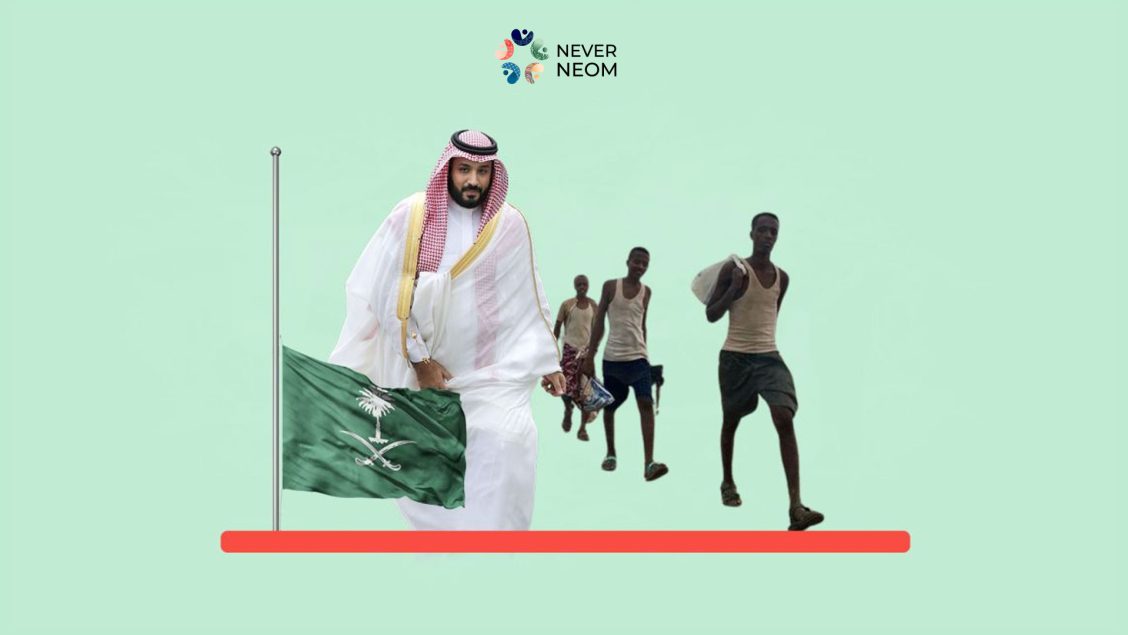
Hundreds of Ethiopian immigrants are suffering inhuman living conditions in Saudi Arabia after being abandoned by their smugglers and left for their own in the face of Saudi arbitrary, racist, and dehumanizing treatment.
Every day we are scared of dying. We beg people in the village to give us flour and bread, and then we go back into the mountains,” said Mohammed, 30, from a makeshift shelter near Saudi Arabia's southern border with Yemen.
“People here are very scared to help us find job opportunities since it's illegal, so we consider ourselves trapped between life and death.”
Hundreds of thousands of African migrants each year brave the perilous “Eastern Route” across the Red Sea and through war-scarred Yemen to reach Saudi Arabia, a desperate ploy to pull their families out of grinding poverty.
Human Rights Watch earlier accused Saudi border guards of killing “at least hundreds” of Ethiopians trying to cross into the Gulf kingdom between March 2022 and June 2023, using explosive weapons in some cases. Riyadh dismissed the group's findings as “unfounded and not based on reliable sources”.
AFP has interviewed six migrants and four smugglers, all of whom asked to be identified by first names only over security concerns.
These interviews indicate that even when Ethiopians like Mohammed reach Saudi soil, it is far from certain they will find work and turn their lives around.
“Every two metres (yards) you find dead Ethiopians,” one of the migrants said.
“Saudis open fire on Ethiopians as if we are not human beings, as if we are garbage.”
Sara, a 23-year-old Ethiopian, has secured a job as a nanny for a family in Riyadh that she said treats and pays her well.
But she described a grim existence: without papers, the fear of leaving her employer's compound means she has effectively worked non-stop for four years.
Saudi authorities issued a brief response in which they denied the rights reports, but other media and human rights sources confirmed the testimonies and called on the Saudi government to reconsider its policies towards Ethiopians.