
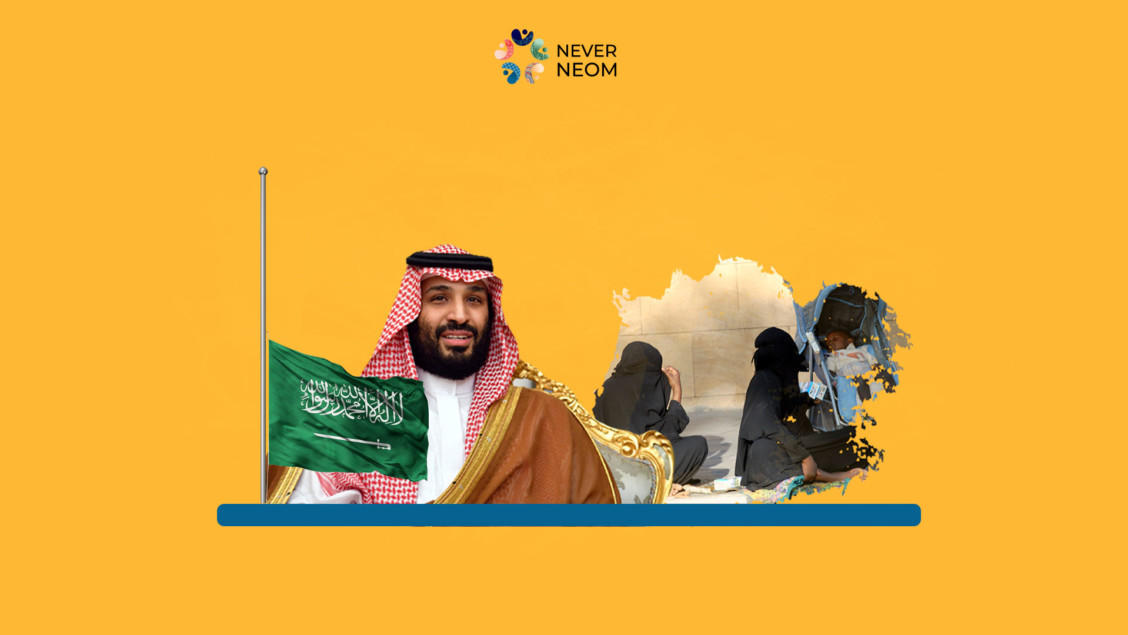
Several human rights organisations have pointed out to the suffering of marginalised groups in Saudi Arabia due to the unfair policies of Crown Prince Mohammed bin Salman. While the world is celebrating the international day against discrimination, many groups of Saudi society suffer discrimination, marginalisation and restrictions, especially the Bidoon, in addition to opponents and prisoners of conscience and their families. They face deprivation of their rights, pensions and jobs, restrictions, prosecution and arrest, as well as denying them the right to self-determination.
The United Nations confirmed that the focus this year is on “Voices for Action against Racism”, to highlight the importance of enhancing public participation and meaningful and safe representation in all areas of decision-making; to prevent and combat racial discrimination.
The Bidoon also attributed the responsibility for the exacerbation of their crisis to the rulers of Saudi Arabia. Given the ongoing marginalisation and deprivation of their rights, immediate naturalisation of those entitled, especially those with higher degrees from the original sons of the Kingdom, would be the only solution for their crisis.
Sanad Human Rights Organisation has called for an end to the marginalisation of the Bidoons, who have been deprived of their legitimate rights to naturalisation.
Likewise, The European Saudi Organization for Human Rights stated that the case of individuals deprived of citizenship in Saudi Arabia is still in place despite promises made to resolve their problem. However, the Saudi government targets defenders of the rights of Bidoon to silence their voices and prevent the spread of their cause.
United Nations special rapporteurs shed light on the issue of deprivation of nationality, where the Special Rapporteur on the human rights of migrants, the Special Rapporteur on minority affairs, and the Special Rapporteur on contemporary forms of racism and racial discrimination sent a letter to the Saudi government in February 2019, referring to the issue of the Palestinian citizens Khatam Faraj Allah and his father, Majed Faraj Allah, who despite holding the Palestinian citizenship, they became stateless, and they also indicated that the right to citizenship is recognized and protected under international law. The UN experts also referred to multiple groups suffering from the same injustice.
The Saudi regime is considered one of the worst in terms of violating human rights, marginalizing tribes and abusing their most basic rights, in addition to its racial discrimination practices, which violates international laws and human rights charters.
The Bidoon have lived in Saudi Arabia for decades under arbitrary and unjust systems. They lack the necessary hospitalisation, education, marriage, financial transactions and other basic rights granted to the ordinary citizen in any country that respects human rights. The number of Bidoon in the Kingdom of Saudi Arabia is more than 150 thousand people.
For many years, they have filed thousands of cases through human rights organisations to demand justice for their families at no avail.
The Bidoons are made up of several displaced tribes spread north of the Kingdom of Saudi Arabia, including Anza, Shammar, Bani Khalid and Al-Asa’ada tribes from Otaiba, and groups of Arab tribes of nomadic Bidoons living between the Saudi, Iraqi, Kuwaiti, Syrian and Jordanian borders. Their suffering began when the political borders were established between the countries of the region.
The rest of Saudi society is not in a better condition than the Bidoon. Detainees in prisons have spent many years in complete deprivation of family contact, family visits and communication with lawyers, in addition to the torture and violations practiced against them.
Likewise, all the activists who were working under well-known organisations are now being chased out by the Saudi authorities after fleeing from bin Salman's brutality, his regime and tyrannical law.