
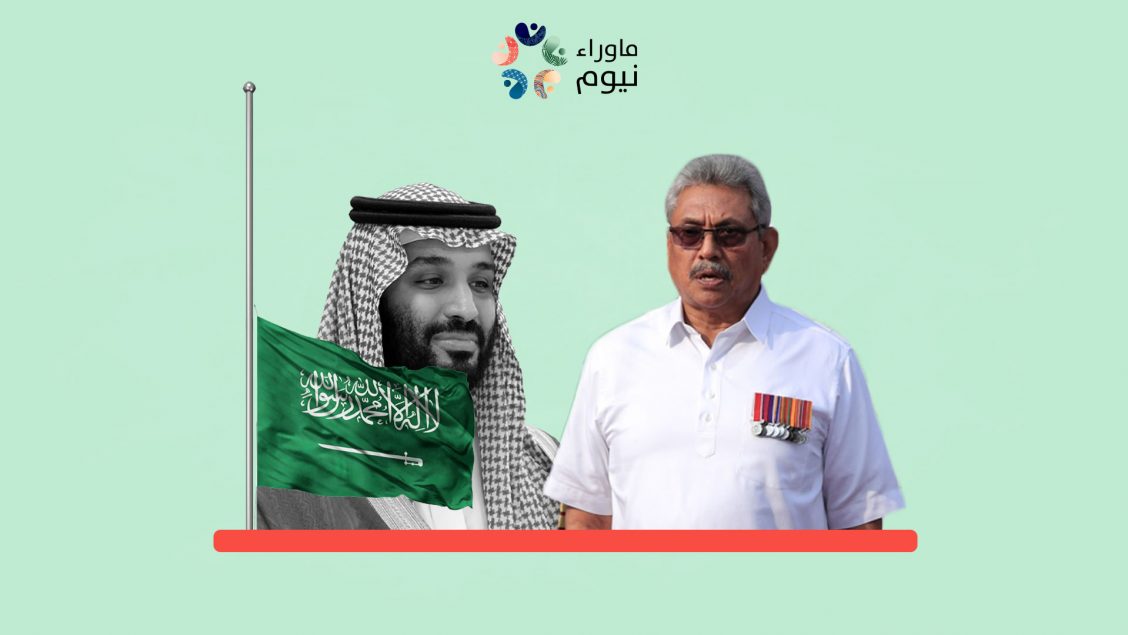
Sri Lanka President Gotabaya Rajapaksa is headed to Saudi Arabia via Singapore, the Associated Press reported, citing unnamed Maldives officials.
The leader missed a Wednesday deadline to submit his resignation after he fled the country for the Maldives as months of inflation-fueled protests gained momentum. Rajapaksa is taking a Saudi Arabian airline, the AP added without any other details.
From Uganda's tyrant Idi Amin to rulers from Pakistan, Tunisia, and Yemen, the Gulf kingdom has long been a safe haven for embattled leaders.
The Middle East Eye also said that Sri Lanka’s beleaguered President Gotabaya Rajapaksa would add him to an uncomfortable list of fallen leaders forced to seek asylum in the kingdom.
If his final destination is the Saudi coastal city, Rajapaksa would join an unenviable list of toppled rulers fleeing to the Gulf kingdom, either as a quiet retirement home or a pit stop on the path back to power, The Middle East Eye reported.
Tunisian dictator Zin el Abidine Ben Ali chose the quiet life too, fleeing for Saudi Arabia in January 2011 following the revolution which began in his country and sparked the Arab Spring uprisings across the whole region.
Like Amin, little was known about Ben Ali’s life in Saudi Arabia – aside from a 2013 Instagram post showing the former dictator, who ruled Tunisia for 23 years, smiling in striped pyjamas.
Not every ousted-leader-turned-Saudi-resident disappears into obscurity; some use it as a pit stop before attempting to return to power.
Former Pakistani Prime Minister Nawaz Sharif was deposed in 1999 on charges of kidnapping, hijacking and corruption, and sent to exile in Saudi Arabia with 18 members of his family.
His successor Parvez Musharraf later wrote in his memoirs that if not for the intervention of then Saudi king Fahd, Sharif would have been executed. Riyadh later offered asylum to Musharraf himself, after he was charged with high treason.
Sharif returned from the kingdom in 2008, and spent five years as an opposition leader, before once again leading Pakistan in 2013.
The country’s current prime minister, Sharif's younger brother Shehbaz Sharif, also spent years in Saudi exile along with the rest of his family.
“As fellow authoritarians, the Saudis empathise with the threat of popular unrest and prioritise regime security over everything else. Those on the receiving end of popular unrest have often found refuge in the kingdom,” Andreas Krieg, assistant professor at the Defence Studies Department of King's College London, told MEE.
“The Saudis see themselves as counterrevolutionaries who try to protect the authoritarian status quo.”
“This policy of hosting ousted and out-of-favour leaders from around the world reflects a traditional self-view that the Saudi leadership has of the country as a neutral, apolitical space,” Andrew Hammond, historian at Oxford University and author of a book on Saudi Arabia, told Middle East Eye.
“On the one hand that means there can be no political parties, protests, petitions and other modern phenomena related to representative electoral politics.
“But on the other, it means the country can be open and welcoming to people of many stripes and origins, as long as they steer clear of politics or act within lines approved by the government.”
In most cases of asylum, leaders are given refuge at the Saudi government’s expense.