

Saudi Arabia’s current economic and social strategy is no longer revealed through official statements alone, but through the stark contradiction between what is being delayed, downsized, and repriced under financial pressure, and what continues to receive unlimited funding regardless of cost or failure. While major infrastructure projects—most notably the stadiums for the 2034 World Cup—face serious delays, forced redesigns, and cost-cutting measures due to declining oil revenues and tightening fiscal space, the state continues to pour money into sports festivals, boxing events, and loss-making gaming projects with remarkable determination.
This contradiction is not accidental. It reflects a deliberate policy of distraction, one that targets young people in particular, aiming to keep them absorbed in entertainment spectacles while economic anxiety deepens and long-term prospects shrink.
Delayed Stadiums and a Tightening Economy: When Vision Hits the Ceiling of Cash
The Guardian’s revelations about delays in World Cup 2034 stadium projects are not minor scheduling issues. They are structural indicators of a deeper financial strain. Architectural firms have been instructed to resubmit designs deemed “too expensive.” Contractors have been told construction will not begin on schedule. Threats of contract withdrawal have been issued unless “significant savings” are achieved. There is even widespread speculation that the number of stadiums will be reduced from the originally planned fifteen.
These are not cosmetic adjustments. They are forced retreats driven by fiscal reality.
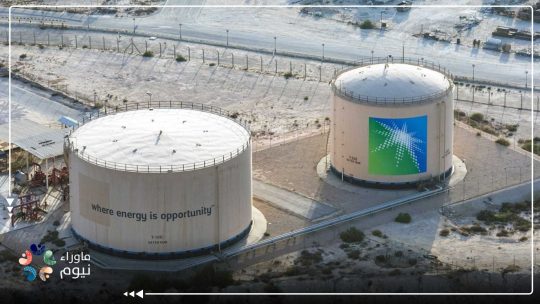
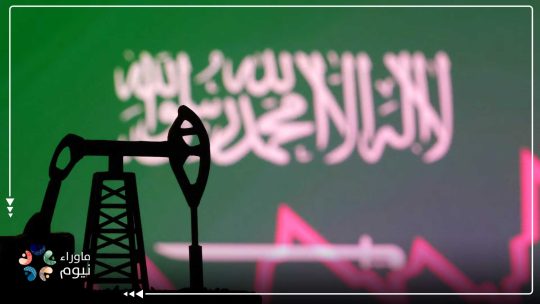
The Public Investment Fund, which leads much of this transformation, has made clear its desire to cut costs—an implicit admission that projects once marketed as symbols of limitless economic power are now being managed with austerity logic. As oil prices soften and margins narrow, the narrative of absolute abundance collapses. When it comes to long-term infrastructure, the state recalculates, delays, and scales back because it can no longer sustain the promises it once broadcast with confidence.
Bread and Circuses, Digitised: Gaming as a Method of Governance
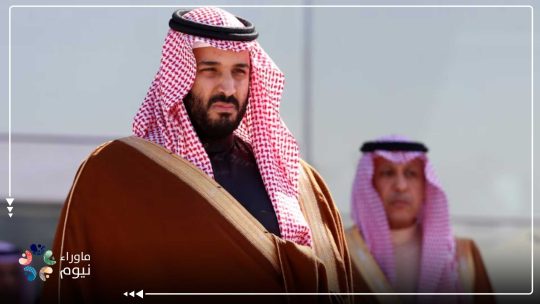
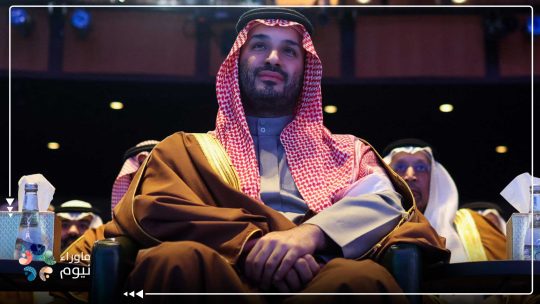
In sharp contrast to this restraint, spending on gaming, esports, and spectacle-driven sports continues with little hesitation. As the Washington Post has noted, Saudi Arabia is pursuing a modernised version of the ancient “bread and circuses” formula. The state proudly announces that it has over 23.5 million gaming enthusiasts, presenting this not as a social trend but as a national achievement. The Crown Prince’s personal enthusiasm for games such as Call of Duty and Final Fantasy is marketed as part of a rebranded national identity.
This focus is neither innocent nor purely cultural. It is political.
Gaming and sports are not being deployed to cultivate skills, build a sustainable knowledge economy, or foster genuine creative industries. They are being used to consolidate loyalty among the youth—the largest demographic group in the country—by immersing them in virtual worlds, tournaments, celebrities, and constant stimulation, rather than allowing space for questions about unemployment, debt, political exclusion, or shrinking economic opportunity.
As journalist Karim Zidan has put it plainly, this is organised distraction: entertain the public, and let power operate without scrutiny. It is an old formula, repackaged with digital tools.
Financing Failure Without Hesitation: When the State Insists on Losing
Perhaps the clearest signal of this strategy is the state’s refusal to abandon failed entertainment projects even after their collapse becomes undeniable. The acquisition by Mohammed bin Salman’s Misk Foundation of 96% of the Japanese gaming company SNK in 2021 was framed as a strategic entry into the global gaming industry. The outcome, however, was Fatal Fury: City of the Wolves—a title that failed to generate meaningful public interest despite massive promotion, global marketing, and the inclusion of Cristiano Ronaldo as a playable character, directly tied to Saudi-funded boxing events.
The failure was so evident that the company’s CEO resigned just weeks after launch. Yet funding did not stop. No public review followed. No debate took place about feasibility, losses, or accountability.
The state that re-evaluates stadium budgets and delays construction shows no such restraint when it comes to entertainment—even when losses are obvious. This contradiction is not economic; it is political. Infrastructure can be postponed. Distraction must continue.
Distracting a Generation From a Deteriorating Reality
A clear pattern emerges. As economic growth slows, flagship projects stall, costs are compressed, and the grand vision is quietly recalibrated under financial pressure, the state accelerates spending on entertainment, gaming, and spectacle—not because these sectors are profitable or successful, but because they perform a direct political function.
Young people, who should be the core of genuine development, are instead redirected toward carefully curated triviality. Their ambitions are reduced to tournaments, games, and celebrity culture, while the harsher realities of debt, uncertainty, and constrained opportunity are pushed out of view.
A State That Delays Construction and Fast-Tracks Distraction
What is unfolding in Saudi Arabia today is not a misalignment of priorities, but a priority in itself. When money tightens, stadiums are delayed and designs cut back. Entertainment funding, however, remains untouched—because it has ceased to be an economic sector and become an instrument of governance.
Saudi Arabia’s version of bread and circuses distributes fewer loaves and far more screens, games, and spectacles. It seeks to drown public awareness in noise and novelty so that the deep fractures in the economy and society remain unseen.
It is a dangerous gamble. Societies can be distracted for a time, but reality does not disappear. A state that invests more in distraction than in construction may postpone reckoning—but it does not cancel it.