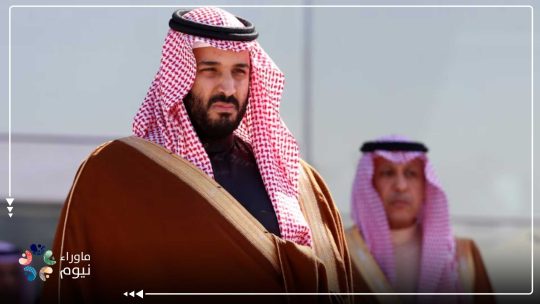


Nearly a decade after its launch, Saudi Arabia’s Vision 2030 is no longer being framed as a transformative economic success story, but increasingly as a project under pressure. What was once presented as a historic shift away from oil dependency is now undergoing what officials describe as a “strategic review”—a process that, in practical terms, reflects mounting financial strain, shifting priorities, and growing doubts about long-term feasibility.
A 2026 report by The New York Times captures this transition clearly, describing a shift from expansive megaprojects to what can best be understood as selective retrenchment. This change is not the result of gradual economic maturation, but a reactive adjustment after years of aggressive spending that exceeded sustainable limits.
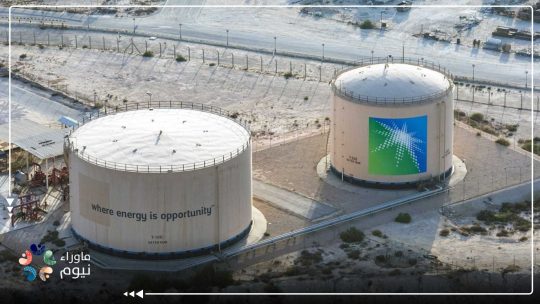
One of the central goals of Vision 2030 was to reduce reliance on oil revenues. Yet, after ten years, the Saudi economy remains closely tied to energy markets. Government spending continues to rise and fall with oil prices, much as it did before the reform program was introduced.
During the oil price surge of 2021 and 2022, increased revenues enabled a wave of ambitious initiatives—from futuristic cities to large-scale entertainment and sports investments. However, the subsequent decline in prices exposed the structural weakness of this approach. Many of these projects were not built on self-sustaining economic models, but on temporary financial surpluses.
This dynamic underscores a broader failure to achieve structural diversification. Rather than reducing dependency on oil, the strategy effectively postponed the problem—leaving the economy vulnerable to the same external shocks it was meant to overcome.
The current review has extended to several flagship initiatives that once symbolized the future of the Saudi economy, including large-scale developments such as Trojena and the New Murabba project. Delays, downsizing, or reassessment of these initiatives suggest that costs have outpaced available funding and that projected returns were overly optimistic.
Reporting by The Wall Street Journal has also pointed to difficulties within major projects such as NEOM, where construction has slowed and questions about long-term economic viability remain unresolved. These developments indicate that the challenge is not isolated, but systemic—affecting the broader investment strategy underpinning Vision 2030.
The role of the Public Investment Fund (PIF), intended as the primary engine of economic transformation, has also evolved under pressure. Statements by Yasir Al-Rumayyan about prioritizing efficiency reflect a shift toward cost control and project reassessment. However, this adjustment does not amount to a comprehensive strategic overhaul. While some initiatives are being scaled back, investments continue in sectors such as artificial intelligence, gaming, and global events.
This dual approach—simultaneously cutting and expanding—highlights the absence of a clearly defined set of priorities. Instead of a unified economic direction, the current strategy appears fragmented, balancing fiscal restraint in some areas with continued high spending in others.
Fiscal data further illustrates the strain. Saudi Arabia has recorded budget deficits in most years over the past decade, with projections indicating that this trend may continue. Efforts to increase non-oil revenues through taxation and fees have not yet been sufficient to offset volatility in energy markets.
Regional developments have added another layer of pressure. Escalating tensions, including conflict involving Iran, have increased defence spending and disrupted parts of the energy sector. While these factors have intensified the situation, they have also revealed underlying vulnerabilities that predate the current crisis.
At the same time, the government continues to commit resources to high-profile international events, including Expo 2030 and the 2034 FIFA World Cup. This juxtaposition—cutbacks in some areas alongside continued spending in others—suggests that decision-making is influenced not only by economic considerations, but also by political and reputational priorities.
A further issue complicating the current phase is the lack of transparency. While the “review” is presented as a proactive measure, there is limited disclosure regarding the scale of losses or the accountability mechanisms involved. In a highly centralized decision-making environment, responsibility for underperforming projects remains unclear.
What is unfolding is not simply a policy adjustment, but a shift from expansion to crisis management. Vision 2030, once framed as a long-term roadmap for transformation, is now being repositioned as a framework for limiting financial exposure and stabilizing existing commitments.
The gap between ambition and execution has become increasingly evident. Large-scale initiatives that were intended to drive economic diversification are now being reassessed under financial constraints, while the core dependency on oil remains largely unchanged.
The broader implication is clear: the challenge facing Saudi Arabia is not a lack of ambition, but the absence of a sustainable framework to translate that ambition into long-term economic resilience. The current phase of retrenchment may be necessary, but it comes after a decade of high-cost experimentation—leaving behind financial, political, and structural pressures that will take years to address.